(00:00):
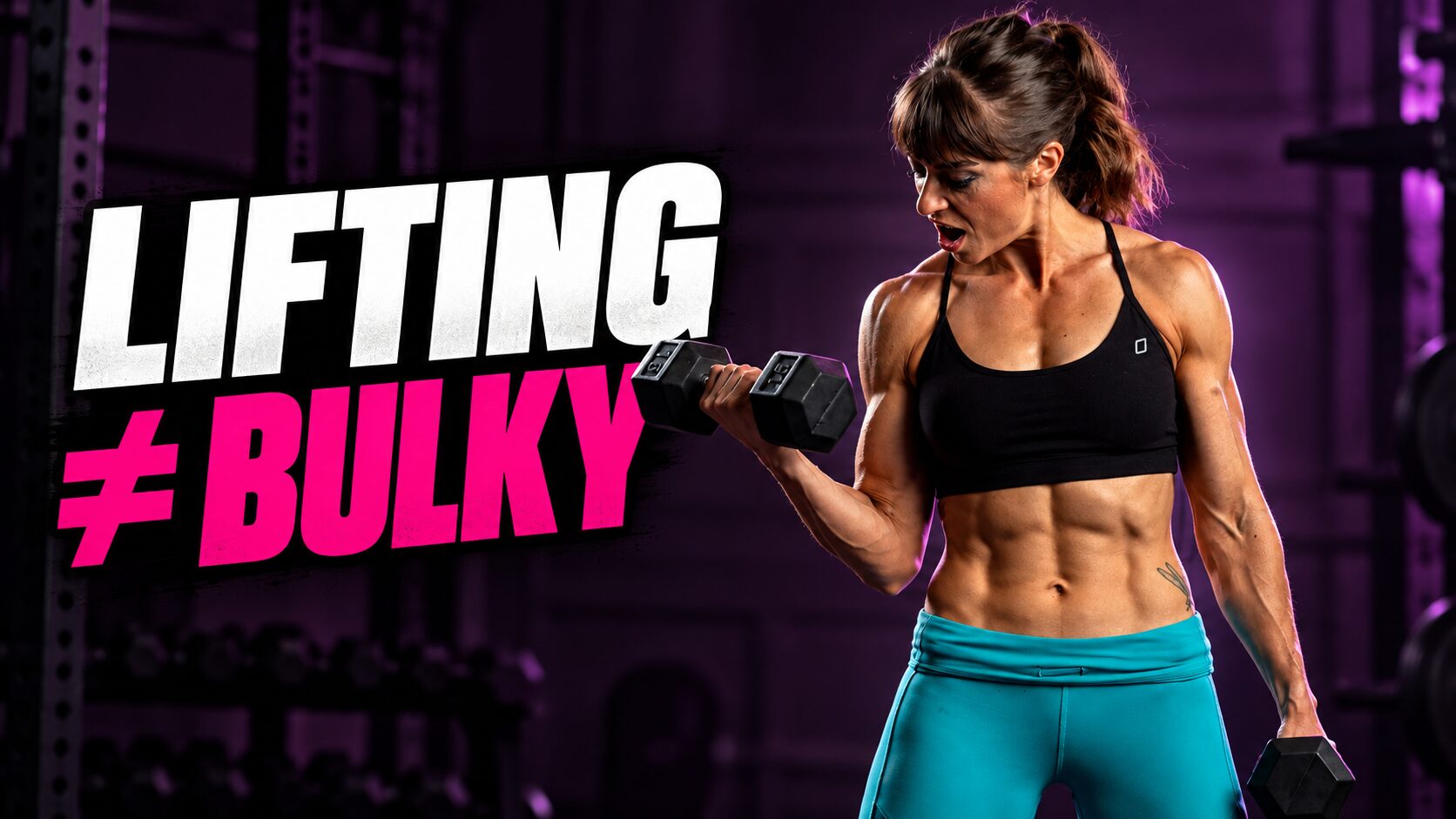
Lifting won't make you bulky, but it will make you strong, capable, confident, and metabolically powerful. I posted that recently on social media and I love the response I got. I love that lifting and muscle are getting the love they should, but I still got those comments of women fearing lifting heavy and getting bulky. The women who even tried it in the past and felt like they did just get bigger. The ones who are nervous about it, even partly because of an injury standpoint. And honestly, the fear does make sense because we do all want different aesthetics and we do all want different looks. But today I do want to dispel the bulky myth and I want to make a case for why muscle is truly magical and why everybody does need to use some version of lift heavy. And I want to give you five strategies to build a body that's lean and defined in a way that actually matches what you want.
(00:48):
So go for a walk, listen as you meal prep or get comfy on the couch because by the end of this, you'll be wanting to lift to build that amazing lean muscle. So I first want to go into what getting bulky really is and how getting bulky can really happen because I think when we say lifting won't make you bulky, we're kind of denying the fact that it can make you bulky, but what we think is happening isn't really what's happening. It's not actually that we're building all this lean muscle and turning it into the hulk. It's that most of the time we're gaining fat over the muscle that we actually want to build. And the annoying part about this thing and some of the nuance I've realized actually more in recent years is that this might be something that we see a lot more frequently because of previous improper dieting and training practices.
(01:32):
So A, if you eat in a surplus, you're going to gain amount of fat. And if you're building lean muscle underneath that, you're gaining fat and muscle at same time, you're going to look bulkier. The fat over the muscle is covering it. It's what adds bulk. So all in all, usually when we get bulky, it's fat, not muscle, it's fat. And it comes from overeating. However, especially if you're going through perimenopause and menopause and you're really working on this metabolic adaptations, you were actually eating extremely low calorie, like 800 to 1200 calories, and all of a sudden you're trying to fuel more because you've heard about this importance of eating more to lose fat, but you feel like you're trying to embrace that, but all you're seeing is the scale creep up. Yes, you're feeling stronger in the gym, but you're actually feeling like you are adding bulk.
(02:10):
And guess what the reality is to some extent you are adding bulk because you are adding fat over that muscle. You are building muscle, but in the process of trying to reverse out of that calorie deficit you've had because you've seen metabolic adaptations, your body is going to do what it is meant to do to heal, I put in air quotes heal, but also reverse the metabolic adaptations by building muscle first because muscle drives that metabolic engine. It is what requires more energy to be maintained. It's what helps upregulate all the other processes. It helps you find hormonal balance. So in order to utilize that energy efficiently, part of that process is building muscle before you lose fat. So if you're like, well, I am lifting heavy and actually I was undereating and now I'm trying to do this whole reverse dieting thing and I feel like I am getting bulkier.
(02:54):
Well, guess what? You are gaining some fat slash you haven't lost the fat over that muscle and your body's going to prioritize building muscle first. The thing is you have to go through that process and you have to lift heavy to build and maintain a lean muscle, which will ultimately make your metabolism regulate back up. You'll reverse those adaptations. You'll see a healthier metabolic rate.You'll actually be able to eat more while getting leaner. That's where you're going to then see that definition. But first you build the muscle before your body trusts you enough to lose the fat because it has to know that energy is continually coming in because when it's building muscle, it's like, well, this also requires more energy to be maintained. And if we go back to that extreme calorie deficit, I can't maintain these metabolic processes in this way. And your body wants to survive.
(03:35):
So that's why you build muscle before you lose the fat. So I do just want to highlight that because you can feel like, well, but I am getting bulkier and you're not getting bulkier because of lifting. You're not getting bulkier because you're just building massive amounts of muscle. It's actually the fat over it. And the fact that in the process of reverse dieting to increase your metabolic rate, to ultimately see that recon that you want happen, happen, you're building muscle before you're losing the fat. So that's where it's key. You recognize bulk is generally fat hiding muscle. Those women that we see that really are bulky and big, they really strategically had to do things to build that muscle. A lot of times the bodybuilders are on a lot of gear, they're using performance enhancing drugs, but there's also a lot of strategy in how they lift, how they fuel and the constant calorie surplus and even adding more and more as they build, the way they're dialing in their macros, the way they're using supplements, there is so much to it because truly women do not have that hormonal environment to add that much bulk.
(04:30):
We can add muscle very efficiently and effectively, but we have a fraction of the testosterone that men really have, which is part of what really builds that bulk. So I can tell you if you're afraid of gaining massive amounts of muscle, unless you're really being strategic and trying to gain it, you're just not going to. So bulk from muscle is just not going to happen unless you're really, really, really, really trying to. So yeah, it can happen if you try, but you really have to be strategic in trying it. And the strategies I'm going to go over will help you make sure that you are putting on the amount of muscle you want because we also all do have different genetics, which means that we do put on muscle faster or slower, lose fat faster or slower from specific areas. And so this can even help you navigate managing building the physique you want because there are areas that some of us want to build a little bit more because they're smaller than we want and there's areas that are bigger than we want and we want them to be a little bit smaller.
(05:20):
So losing the fat there might be beneficial. So I do want to go over that nuance because that does play into how you design your workouts. But all in all, do not fear that lifting heavy is going to make you bulky because lifting heavy also doesn't mean one rep max lifts. It means lifting a challenging weight and you can do that in a diversity of rep ranges. There are lots of ways to create progression, but do not fear that challenge. Do not fear pushing heavy loads. You need to build that lean muscle. And if you felt like you looked a little bit bulkier, take a look at some of these strategies and how you're implementing them because it's probably the fat over the muscle and it might be a part of the process you have to embrace before you ultimately look leaner. And if you do want to add bulk, because I know there's some women who do want to add bulk, be very strategic in how you eat and probably go against some of these strategies and do the opposite because that would be the strategy to add bulk where you want.
(06:04):
Now, I want to make a case for muscle even too, if you're not sold on, okay, I'm starting to buy into lifting heavy won't make me bulky, but why should I care so much about muscle? And I actually wrote out the list because I was trying to think of every single reason because it's a lot more than, ooh, look leaner and look amazing, which does look really nice and I'm very vain and shallow and I like looking amazing, but I want to be strong, independent, capable till my final day on this planet. I want to be able to eat more food, feel like I stay leaner while enjoying life. I want to have a youthful vibrance to me. I want to be cognitively with it till my final day. So muscle actually contributes to so many of these different things. It really is just not looking good or even being strong to tackle everyday life.
(06:46):
It has an impact on your skin health, on your brain health, on your overall immune health. But just to list out a few, muscle is the metabolically active tissue I mentioned, which means that it's what increases your metabolic rate and keeps your metabolism healthy as you get older because we can see metabolic decline with age, but a lot of it is due to losing muscle as we get older because muscle becomes harder to build and retain, which also means lift heavy more because it's going to be even harder anyway to build that lean muscle as you get older. Muscle creates that definition that we truly want. Yes, we can lose weight, but you won't necessarily look more defined. It's why people even sometimes say I look skinny fat because they don't have that lean muscle underneath. They haven't prioritized building lean muscle. That's why I like to take a muscle first approach to fat loss.
(07:28):
Muscle protects your metabolism even during fat loss. So when you're preferentially training and fueling for muscle, you're going to see more fat being lost over losing both. And often when we just chase faster changes on the scale, we do lose both and that's why we don't look leaner. We end up looking softer as we diet down and it becomes actually harder to maintain the results we fought for because we don't have that muscle that has protected our metabolism throughout. Muscle improves insulin sensitivity, which means better blood sugar regulation, less fat storage, even fewer cravings. It actually helps improve bone density through the process of building it, the resistance training. We keep our bones healthier. We actually protect them by having more lean muscle. We protect our joints as well, which means we move better till our final day on this planet and are more likely to stay independent.
(08:09):
More muscle also means that we're doing all the things that keep us reactive, powerful, able to catch ourself from falls and fractures. So it really does help with that independence and capability and it supports longevity and functional strength. Muscle also makes fat loss more effective and more sustained. So a lot of times when we think we have to do vastly different things to lose fat or we're gaining muscle, often if we prioritize gaining muscle, especially in our training, we're going to lose fat faster and see the definition we want a lot quicker. Muscle supports brain health, which I think is an important thing to really recognize and also a reason to use one of the strategies I'm going to go over because sometimes the awkward, uncomfortable moves that we don't want to do are the best for making sure that we have that neuromuscular connection.
(08:50):
We're able to recruit muscles efficiently and effectively to catch ourselves, to have better balance, all of that jazz. So not only does it help our brain from the standpoint of challenging us through the movements we do and the training that we do, but it actually does support cognitive function, memory and reduces cognitive decline. Myokenes released during strength training signal the brain directly and research shows consistent lifting reduces the risk of dementia and cognitive decline as you age. Yeah, I'm going to keep lifting. It's going to make me look fabulous and still be smart and with it. Heck yes. Anyway, muscle also supports skin health. And I bring this up because I do think there are changes to our skin health that happen with age. It does become a little bit more fragile. We can see the creepy skin I've heard women complain about, but by building lean muscle, not only do you fill out your skin a little bit better and that actually really helps, but all the things you do to build muscle will improve your skin health from the protein which helps keep skin more elastic, but also the lifting helps cellular turnover, which helps your body repair more quickly and efficiently.
(09:51):
So there's lots of things that improve the processes and keep your skin looking healthier and happier, not to mention the hydration you have to do also improves the plumpness of skin, the healthiness of skin as well. And all of these different things support that collagen synthesis, which helps keep your skin healthier. So the things you're doing to build muscle will pay off in that way too, win-win in my opinion. So now if you're not sold on building muscle, I don't know what will because it really does help you just in every area. And we can even say behavioral and mindset wise, lifting and going into the gym to train can be very helpful too. So there's also that win with training. But I want to go over the five strategies so that you can build the look that you want because I will own, everybody wants a different look.
(10:35):
Some people do want a little bit more muscle mass, some people don't want as much. And so knowing how you can impact the different variables to still build muscle to get all those benefits while achieving the look that you want is really key. So strategy number one is knowing your recomp goal because if you want to build and you are like, I actually do want more bulk, which isn't a bad word to everybody, but you're going to want to focus your recomp on building muscle. However, if you want to look leaner and more defined, you're going to focus on fat loss. And so I want you to really think about where you are. And I think this is where people even ask this question of like, well, I want to do both, but I have 50 pounds to lose. You're going to focus on fat loss first.
(11:13):
It's only once you're really at the leanest level that you want that you're like, okay, I'm skinny. I don't really have any weight to lose, but I'm not as defined as I want, that you're going to focus more on the build to see that definition without adding any bulk. But you want to know your focus because that's how you're going to design your workouts. It's how you're going to include your cardio. It's how you're going to adjust your nutrition even to match. So know what you want to truly achieve because if you focus on building muscle and you still have a lot of weight to lose, that is where you're going to see more bulk come on because you're probably going to build that lean muscle while you still have a lot of fat covering it, so you're going to look bigger. Also know that in the process of seeing that recomp, if you do have to do that reverse diet, you're going to build muscle first.
(11:48):
So you're going to have to be patient through building muscle before you lose the fat. But owning that and owning that part of your goal and understanding that focus for your recomp is super key. That's why I say the first thing to really do is really assess what your recomp goal is and what is needed to achieve it. Then strategy number two is be strategic with your cardio. So when we're trying to just build muscle, generally cutting back on endurance steady state sports is something we want to do, right? If you're like, well, I'm building lean muscle, but I don't want to build too much and I'm a little bit more nervous about it, keep in your endurance steady state sports. That's going to be a little bit catabolic. Fight against the gains you're making in the gym, but if you also enjoy it, it could be your balance.
(12:28):
So you can sort of do both at the same time. Now, I'm not encouraging you to overtrain or do too much because that's going to fight against you and you're going to see a point of diminishing returns get injured. Also, recognizing that if you are wanting to go into seeing a little bit more definition, you probably are going to want to back off the mileage. So when I'm talking about using cardio strategically, it's not about adding more distance, especially if you don't enjoy it. When I'm talking about using cardio strategically so that you're getting that lean defined look while building lean muscle, what I often do with clients is include sprint work because that sprint work is very metabolically beneficial. It helps them build and retain lean muscle, but you're also working on your conditioning, your energy systems, you're supporting brain health, but you're also going to be burning fat.
(13:10):
So that's going to help you lose the fat as you're building lean muscle, which can help avoid you looking bulkier because fat loss is really what creates bulk or not bulk. So including sprint work is really key strategically, but also including things like walking after you lift and especially for more stubborn areas where there might be more fat on because you mobilize more fatty acids from the surrounding tissues that you worked. So if you have more fat on your hips and thighs and you want to lose that fat because you don't want to get bigger or bulky, after a leg workout where you've mobilized those fatty acids from doing your lifts and your compound movements, go for a walk. You're going to utilize more of those mobilized fatty acids. You can't spot reduce an area, but this use of cardio can be really beneficial. And also on the flip side, if there's an area you want to add more muscle in because it's thinner or leaner and you want a little bit more muscle there, don't add cardio after because you want to make sure that you're able to fuel and repair and build back versus any risk of being catabolic to your muscle mass.
(14:09):
And even if you're going to include your endurance steady state, like running, riding because you really enjoy it, do it on a day after an area that you would like to be a little leaner and more defined and lose some fat from overbuilding. Don't put on the day of the muscle that you're really trying to work hard to build, but using cardio strategically in that way. And more of it if you want to lose a little bit more fat potentially and less of it if you really want to focus on that build side. But again, if you really want fat loss, you could just lift and see amazing results. But this is where you can use it strategically based on the exact aesthetic you want. Number three, use diverse forms of progression. So lifting heavy is important, but really at the heart of it, and I say this too, because sometimes in reality we can't lift anymore or we don't have access to the tools or we've sort of hit the ceiling in terms of our genetics because we've been lifting for a while, you need to use other forms of progression.
(14:57):
And lifting heavy isn't just like one to five reps, lift as heavy as you can. It's lift as heavy as you can for eight to 12. It's lift as heavy as you can for 15 to 25. It's using that rest pause to get out a few more reps with the weights that you use. So it's not just always adding loads, it's creating that challenge. But it's also recognizing that you can drive muscle growth and actually better muscle growth by acknowledging that there's lots of different drivers of muscle growth or there's three to be exact, mechanical tension, muscle tissue damage and metabolic stress. And often we underutilize everything but muscle tissue damage because those are the big heavy compound lifts generally that we're doing. But when we use different tools, we use different range of motion, we use different levels of stability, so unilateral moves, not only are we getting a lot of other benefits in terms of our brain health, in terms of our recruitment patterns and stability, but we're pushing that progression to actually build muscle.
(15:44):
If it challenges you, it changes you. And sometimes the most underutilized forms of progression are slight shifts in posture. Even taking a single leg deadlift and instead of using two weights, holding onto something, yes, which takes away the balance. So if your goal is really improving your balance, maybe you don't do this, but maybe you can load it down heavier to really target the glute by holding in the opposite hand from the standing leg. That might all of a sudden make you feel your glute so much more than you do when you're focused on balance with two weights in your hands. So there's lots of nuance to it where you're potentially not even lifting more weight. You've potentially taken out a challenge in the balance element, but you're actually going to see better results in terms of what goals you're working towards. So recognize there's lots of different ways from the different types of tools you use to the different types of movements, to the different postures and positions, to the range of motion and even tempos that you use that can impact the benefits you're getting from a move.
(16:32):
And these can all drive muscle growth and progression. Metabolic stress is often going to be created through using that banded work, that more pumper style work, those smaller ranges of motion where you're working even more towards where the muscle is already sort of like engaged and activated versus you do still want to use longer range of motion and even load a muscle more under stretch too. So there's lots of different ways to see benefit and you want to use all these tools at your disposal to really create not only the strength that you want, but the definition that you want and even the strength endurance that you want. Strategy number four is include isolation work for areas you want to build. And I'm bringing this up because I've heard a lot of times, I want to toe my triceps. And if you want to build an area, if you want to really focus on muscle and getting the activation, the work that it needs, this is where you want to include isolation moves.
(17:22):
So if you actually have a muscle, you're like, I don't want this muscle to get any bigger, you probably don't want to do a ton of focus isolation work for it. Include compound moves that's still targeted so you maintain that lean muscle mass and you target the other areas. But if you do a squat and you don't want your quads to be built from that squat, but you still want to include that squatting movement because you know it's important, then in a compound burner set, you could do squats and right afterwards follow it with a move that targets your glutes instead. But include isolation work for the muscles that you want to focus in on more and build muscle in. Don't just go to isolation work when you want to tone or lean down. Especially for fat loss, if you include more even compound moves overall, you're going to get more bang for your buck because they're working more large muscles than once and you're able to lift heavier loads.
(18:03):
So you're going to see a higher calorie burn from those workouts while also building that lean muscle. Isolation work should really be included for the stubborn areas, the stubborn areas that you want to build more. And strategy number five and final one is all about the nutrition. Don't fuel to gain unless gaining is the goal. And I say this because so often we don't realize that our diet just simply isn't dialed in. We're not paying attention to our macros. We're not paying attention to how much we're eating. If you're eating in a surplus and you're really not caring necessarily about where your macros are coming from, there's a lot more likelihood you're going to be gaining fat as well as gaining muscle. If you're very strategic in the surplus and literally 100 to 200 calories might be enough to start. And then sometimes you'll see that surplus become less of one as you do build muscle and you see your metabolic rate increase, but then you might increase.
(18:49):
But so often people go right to that 500 calorie surplus even when they want to build, when they haven't lost the fat, they haven't done any of that stuff, that's where they feel like they get bulky. So if you want to make sure that you are losing fat and seeing more definition, eating at maintenance or in a very small deficit might be the way to go. And then prioritize that protein. Yes, that is the building blocks of muscle, but this is what protects your metabolism and your muscle as you're trying to lean down, especially in the deficit. That's actually the funny thing. When you're in that deficit, the percentage of your calories coming from protein probably should actually go up because you're not getting enough of anything and you want to make sure that your muscles are getting the fuel they specifically need to build and repair.
(19:25):
Don't demonize carbs, don't demonize fat. But if you really want to make sure that you're losing fat, seeing that definition, focus on the calories, eating at maintenance or in a slight deficit and then prioritize protein. But don't be eating in a surplus if you don't want to gain. That is actually the biggest driver of bulk, I'll say, whether good or bad bulk, depending on how you're looking at it. I would love to hear which one of these strategies hit you the most or even if you did suffer from the fear of getting bulky in the past, because I know I even had that too. What finally got you over that hurdle and helped you embrace heavy lifting? Was it something I mentioned or something that I even missed?



0 Comments