Cori Lefkowith (00:00:00):
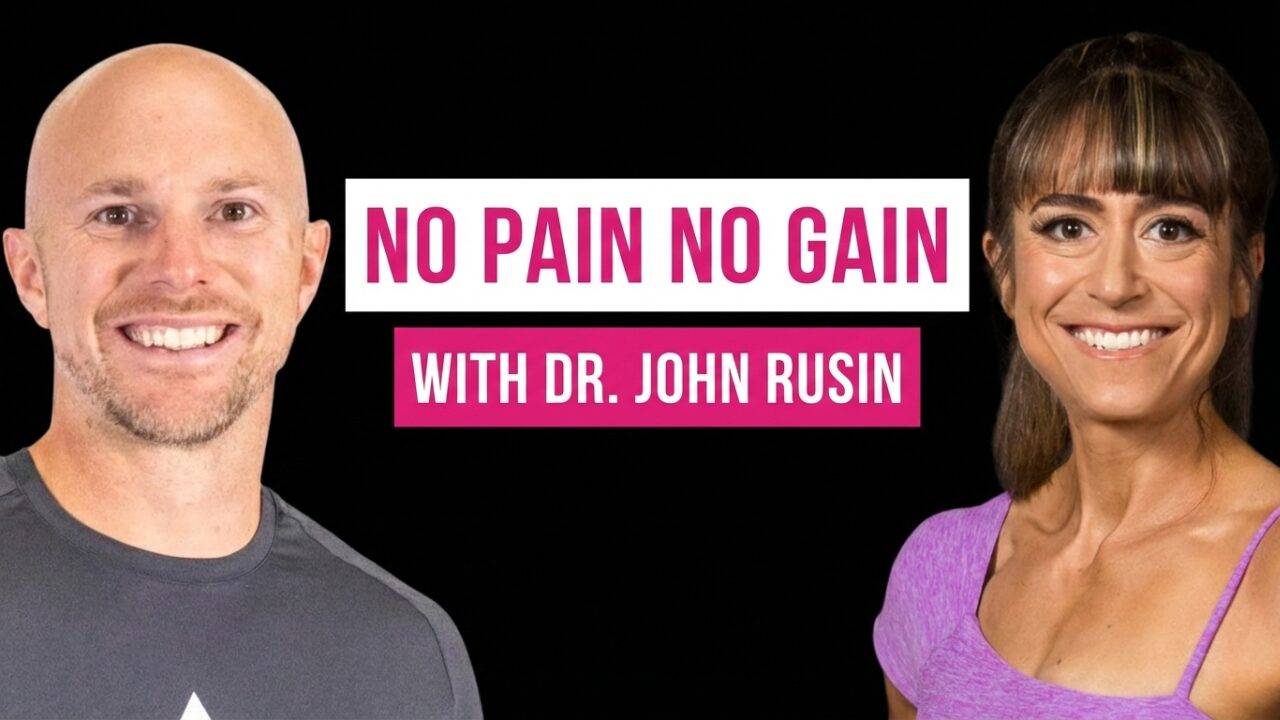
If your workouts are working, but your body always hurts, I'm going to say something that might piss you off. Your body isn't broken. Your training is most people don't get hurt because they're weak. They get hurt because they're falling programs that ignore how their body is actually built. Today on the Redefining Strength podcast, I'm sitting down with Dr. John Rusin, one of the world's top performance and rehab experts and the creator of pain-free performance to show you how to build real strength, stop force, feeding your body bad movement, and finally train in a way that actually lasts. Let's jump right in. I love your or what I perceive as your definition of what strength and being strong really means. So I'm super curious to hear your official definition of it, so to speak. So when you hear the word strong, what does it mean to you today and how has a definition evolved over the years?
Dr. John Rusin (00:00:59):
Strength is not just exercises, it's not just the squat, bench and deadlift, and it is so misunderstood because strength is a physical characteristic. Strength is something that we can have and it can display across many different movement patterns, exercise types, or even different challenges. But strength is essentially being able to lift a heavy weight, to be able to be straining, and it is not a specific exercise, but it is the ability to lift heavy and strain, which is actually like a slowing of a concentric rep, and that's how we get to form failure. That's how we get to the point where we are hitting neurological demand and also tissue demands where they can be stimulated and they can start rebuilding from. But strength is so misunderstood today because there's so many different ways to get strong other than just the big three lifts,
Cori Lefkowith (00:01:48):
And I think on top of that, it's not boxing yourself into having to do specific best moves, but it's also understanding that there is this push and pull that I think you balance so well in terms of you can't have the no pain, no gain attitude, but you've got to strain in order to create that challenge, that progression, but you've also got to stay focused enough on that pain-free movement. How do you help someone find that balance to build true strength?
Dr. John Rusin (00:02:15):
It's about moving for your body and not playing the comparison game to somebody else's movement or somebody else's body. I think that's very dangerous because we know that we're different than the person and left in the bus in gym, but we need to actually be training that way. We have a good concept of different limb lanes and different heights and different weights and different body sizes, but it's deeper than that. We have different anthropometry, we have different optimal movements and all the different movement patterns that we have available to us as human beings. The key to pain-free performance is being able to identify where you can move the most optimally for your body. AKA. You can maximize performance, minimize joint stress, and be able to have the test of time, be able to be pain-free training and then be able to identify that and train within it as your north star. It doesn't mean that we always have to train in only one way for our specific body, but if we dunno what is optimal for us, it's very hard to identify the mistakes that we would potentially be making force feeding specific movements or exercises,
Cori Lefkowith (00:03:14):
Force feeding specific movements. I like that way of putting it. I always think of it as we try and force an ideal, right? And then when we can't maintain that standard of perfection with that, we fall off and part of that falling off, especially with training can be that injury. How do you help someone find the movements that aren't them trying to fit themselves into a mold but actually built around them?
Dr. John Rusin (00:03:35):
It's an interesting one. So in pain-free performance, we have very simple screening and assessment protocols. That sounds super scary for people. It's like, oh my God, I'm going to be prodded, I'm going to have to go through these deep diving assessments. That keeps me away from training, but there's not that in a matter of a couple seconds, we look at screening, which is essentially how you're moving that day and it's a litmus test for how you are feeling. So we can actually put load or speed or challenge onto those movement patterns. It's the concept of good enough, what is good enough? We want to keep spinal neutrality, we want to maintain shoulder and hip position and we want to be able to manage rotational planes of motion, especially asymmetrical rotation that may be happening. So that is where the screen would come in. It's like, yeah, you're doing good enough to train safely that day, but many people, that's not good enough for them.
(00:04:21):
They want to look at the optimization plan for their specific body type. That's where our quick hitting assessments come in. They look at anthropometric variables, whether it be at the hip type, different shoulder type, lin lengths between the shin and the femur, and we're able to actually have concrete data in a matter of just a couple minutes that you can self-assess on and then be able to stand up and be able to set up and execute your movements specific to your needs and not somebody else's. But I don't think it needs to be super complicated. I spend the last 10 years perfecting these screens and assessments to make sure that they're simple and applicable not only to coaches with their clients, but also to end users so they could actually utilize them on themselves.
Cori Lefkowith (00:05:00):
It's really using these assessments to better understand your limitations but also your strengths. Understanding where you're flexible, where you're mobile, where you're strong, where you're not, what directions you can move in and what ones might be a little bit weaker so that you can build those weaknesses up to be stronger but also play to your strengths. Correct.
Dr. John Rusin (00:05:21):
Interestingly enough, mobility, stability and skill, those are all things that we can improve upon because there is a neural dynamic to them, but a lot of the assessments at pain-free performance, they're based on the things that we can't change unless you go into a surgical suite and get a hip replacement or a shoulder replacement or a knee replacement, it's at the deepest levels based on your bony anatomy, the things that are unchangeable, and these are the things that at the deepest level we need to assess for in order to then position us for biomechanical success. Now, biomechanics isn't the be all end all of everything, but we cannot have that not as our starting point. Our starting point needs to have biomechanical success for our bony anatomy and then around that we have our muscle physiology, we have the ability to move and develop motor skills through space, and then that needs to layer on top of one another. But I think the problem that I commonly see is that we are biomechanically training against our own body's needs and that ends up overloading the joints, overloading the tendons, minimizing muscular recruitment and ending up having exercise as not a great way to actually make forward moving progress.
Cori Lefkowith (00:06:30):
So you're making my nerd heart very happy right now talking about all of this, but breaking it down for someone who's like, who, wait, what? When we're thinking about this, it's almost thinking about if you take a basic movement like the squat and you have different torso to leg lengths and you're trying to force a specific posture because you've seen it as the ideal one on Instagram and then you're wondering why you have lower back pain, it might be because you're not actually working with your exact body structures trying to fit one mold of perfect form because really what it comes down to is in a weird way, there isn't one perfect form. There's variations based on your build.
Dr. John Rusin (00:07:08):
Exactly, yeah. And what we would think about is that something should feel good, it should function well, and it should leave you without pain or injuries after your session. I don't feel like that's a whole lot to ask from people, but it is very rare in today's fitness industry because we are squatting too wide when we needed to go narrow, we are squatting too deep when we needed to actually monitor our depth so we could actually keep our lower back in neutrality, and there's a lot of these different variables that we just can't get away from, but as intimidating that as that may sound, we have simple systems and people are able to get in within their first session or two sessions and go, wow, this feels awesome, and they're able to actually move differently and then start practicing that movement, loading that movement, getting fatigue into that movement pattern and then being able to build out a little bit more of a wide display of their movement abilities with the spectrum of all the different movement patterns. But I think that if we don't know exactly where our body feels and functions the best, it's very hard for us to make decisions of how we would target specific muscles or how we would get strong in specific patterns. We need to know our homeostatic point in terms of our body's needs.
Cori Lefkowith (00:08:18):
It's hard building that body awareness and I think it's partly because so often we are conditioned to just try and get through a workout, work harder, push harder, lift more, and this is where really owning that even a front lunge comes in so many different variations. Even I think it's one of your favorite, the balanced lunge or Bulgarian split squat can be done in so many different forms to really fit what we need, but also see progression through those different postures. And you mentioned recruitment patterns because it's not just what the movement looks like, it's actually what we feel working during it that's so important. How do we start to build that? My body connection
Dr. John Rusin (00:08:56):
Body, I think that we need to start slower, build up our skills and then have a potentiating point of you taking a step-by-step approach in order to load harder or have a bigger new movement challenge. Recruitment patterns are really an interesting thing because the body doesn't work in isolation. We're not working one muscle at a time no matter what exercise you're doing, squats all the way to bicep curls. There's always going to be multiple levels of recruitment across the entire body region or the whole body as a synergistic sling effect, AKA, everything from your head all the way down to your toes, from your fingertips all the way down into your toes on the opposite leg. Everything is interconnected and when we can make that our goal of being able to have things, be able to work as a functioning unit, really the big thing that we try to do is connect people's shoulders, hips and core together.
(00:09:48):
We call this the pillar complex and pain-free performance, and this is our central line of performance and stability, and that is the first thing that we teach in my training model is that we teach breathing, we teach bracing, and we make sure that we can control the ball and socket base joints of the shoulders and the hips and then also add air and add bracing into the core and have that even before we start moving, be something that we are playing with and we are recruiting and we're getting better at because there's very limited things that we do in our movement lives that don't include our breath and then some sort of either premeditated or reactive brace. We need to have control of these things. And if we do, all of a sudden then we have better abilities to go in and emphasize different muscles, whether it be activating the glutes, whether it be stretching out the hamstrings on something like a Romanian deadlift or really feeling the PEC contract doing something like a fly press. If we don't have that central line of stability at the pillar, it's very difficult to actually have that strong mind muscle movement connection. That's where we tend to have force leaks or we tend to hit the joints harder than the muscles, and that's the opposite of what we want to be doing.
Cori Lefkowith (00:10:54):
And those little leaks really add up, but it's hard sometimes. Yeah, they do, but it's hard even knowing that, right? I still get ego and trying to lift more push through. And how do you get yourself to step back when you feel you should be at a certain level, you've been pushing hard to a certain point to focus on those leaks out the foundation that if you don't address your future self will care about even if your current self doesn't want to step back and drop the ego to deal with now.
Dr. John Rusin (00:11:24):
Yeah. The two places where people tend to struggle with force leaking AKA, just losing great posture while lifting is when the loads get super heavy, so you're lifting really heavy weights or where you start to move faster than you can actually control the stability from. So both of those are challenges into the movement system, but it is counterintuitive somehow along the way we learned that as loads go up, your form should be looser and looser and looser in order to continue to move the weight that is, in my definition, ego lifting. And when it comes to long-term health performance and development and a pain-free performance model, we like good form, we like form that feels good and functions well, and that scales the test of time. We don't want to be cheating our weights and we also don't want to be cheating our health long-term.
(00:12:08):
So when it comes to loads getting increased over time, we need to actually be more cognizant of the way that we're setting our pillar, the way that we're breathing and our bracing, and we want actually better technique as the loads get heavier. Interestingly enough, you have more leeway as you have lighter loads or even something like a body weight movement in terms of the way that the spine can go into flexion, extension, side bending and rotation, or even the ways that the shoulders can actually get out of crated neutral positions or even the hips. But as the loads get heavier, we actually need to get tighter with our form and it goes totally against what most people are doing. We have a lot of freedom in the human body and it's a beautiful thing because we have a strong and robust system, especially at the spine and at the shoulders and the hips, but as loads go up, we need to tighten down that form and usually it becomes in a combination of mental and physical preparation before we go in for our sets.
Cori Lefkowith (00:13:02):
I think it's so key too to touch on the fact that when you're talking about form, it's not just how the movement looks, but also the muscles that you feel engaging and being very aware of what is actually working during it. But then also with that being said, when you're so focused on form, you move in so many different directions with exercises, you encourage a lot of that diversity of using joints through the full range of motion when I feel like so often now we'll see a lot more demonization of specific exercises because of the way they're bending something, but I feel like that user or lose it is so key. Even the doing explosive movements so that you can train fast, how do you get someone to embrace those things, especially as maybe aches and pains have added up as they're getting older?
Dr. John Rusin (00:13:47):
Gradual exposure is a beautiful thing when it comes to being able to callous your movement system. We are more vulnerable to pain and injuries in a couple of key factors that would actually come together and compound and leave you to the point where you have a wrist to reward that isn't very good. The first thing is novelty. When you're doing something brand new, you're going to suck at it, and that's okay. We're learning new skills and most likely we just need more practice on those new skills. So as novelty goes up, our risk goes up. So that means that most likely our loading and our total volumes need to go down. The next thing is that when we actually jump too much too quick, anywhere from about 10 to 12% of loading week to week is too much. So we need to be making gradual jumps in terms of our progressive overload.
(00:14:30):
So that's the second key factor. The third key factor is the overall fatigue in the system, meaning that your sleep hygiene matters, your nutrition matters, your stress matters. All of those factors coming into the session that day, that can be a make or break in terms of your safety in the gym. But what most people are doing out there today is that they have a brand new workout, single day novelty. They're trying to set PRS on that novel workout, which is too much loading too quickly, and they're burning the candle at both ends and they wonder why they're breaking down and feeling like shit, we just need to be controlling some of these base principles of strength and conditioning. And I think that it goes extraordinarily well for people when we have a little bit more of a slow step-by-step approach as to the all or nothing base approach, I know very well that when I have a client come in and we have a phase of training, we're training for four weeks.
(00:15:22):
We're not trying to set prs on week one, we're trying to progress week two to week three. We have a dabble and sprinkle into intensity in week four, and we know very well if we're going to change exercise or the programming with novelty, we're going to bring the load back down and make sure that the lifestyle factors are there to support it. But all the simple things that we've known for the last 20 to 30 years in the industry, it's almost like they're brand new again today with the inundation of social media and the unknowing of a lot of things, doing these base principles can really keep you healthy, but also when you're doing those things, you can compound your health into a lot of performance gains.
Cori Lefkowith (00:15:57):
We like the excitement of the new and there has to be a dose of new to keep us wanting to learn, wanting to grow, wanting to change, but it's going back to those basics constantly. And as you mentioned, it's not really, I think we so often frame it as over-training, right? But really it's under recovering. How do you go about structuring recovery to make sure that someone is able to train as intensely as they want in the gym?
Dr. John Rusin (00:16:21):
Well, usually it's not going to be just as you alluded to a training recovery problem. It's going to be a lifestyle recovery problem. And as we know, we have a lot of different things going on and our clients have a lot of different things going on in our life, but what we need to be doing as coaches and as clients and athletes setting ourselves up for success is being able to monitor at a minimal effective dose. Minimal effective dose essentially means that we hit that bare minimum threshold, whether it be strength or whether it be muscle mass or hypertrophy, whether it be cardio or conditioning, power, athleticism, mobility. Those are the six physical characteristics. What's the bare minimum that we need in order to actually elicit the desired response? And then when you look at programming like that, a little bit goes a long way and you can actually focus more in on your quality and you can be able to be in a recovered state.
(00:17:11):
I always say, if you have a recovery problem, the first place to look is your bedtime routine. The second place to look is the kitchen, and the third place to look is does your program actually have a recoverable amount of quality volume in it? And that is something that a lot of people have always been told, like more is going to be better when it comes to breaking yourself down and hit breaking yourself down with strength and conditioning work, and it's just not true. We need to be looking at what is the reality of our lifestyle with our nutrition? What can we recover from? But we really are breaking it down where we have alternating high low days. For many of my clients, they'll have a super high effort day, whether that be really pushing heavy weights or getting to relative intensities that are pushing the limits in terms of them hitting failure, and then we'll bring down a low day where they're more restorative based work with their zone two cardio, maybe dabbling into a little bit of high intensity work, and then finishing off with soft tissue recovery modalities like stretching or even just general movement prep to be able to have an active recovery process.
Cori Lefkowith (00:18:13):
It's really designing everything with intention. And you mentioned the minimum effective dose. Why do you think when most of us complain about having to do so much to see results, we're also so resistant to doing less to achieve more,
Dr. John Rusin (00:18:32):
When you're doing less, you need to be doing less at a higher quality. When you're doing more, you can kind of get away with lower quality and lower intensity. So intensity is like how hard you're working, how close to failure you are, or if you look at it from a traditional's definition, it would be like how much weight do you have on the bar in a percentage based scheme that needs to be high all the time. So if you're looking at actually quantifiable data in terms of minimal effective dose programming, we need to make sure that we're working hard and we're working smart, and that is hard for people to do, especially if when they spend the last years or decades going in and just getting movement in, they're going into something like a Les Mills class and it's like, man, that was hard today because I sweat.
(00:19:18):
I think I felt my abs on and while my heart rate was up for all 45 minutes of that class, but those aren't good key indicators of a quality movement session. Key indicators of a quality movement session are you're able to recover, you're able to get the desired result week to week, month to month and block to block, and you're able to actually stack the wins in creating momentum in your practice and then how it transfers into a lifestyle. But the way in which we define a good workout or we define progress needs to be more than just the superficial in session metrics, and it absolutely needs to be more than just chasing something out of the session like a scale weight,
Cori Lefkowith (00:19:57):
And it's not just progressing in terms of loads when we go to the gym, it is progressing in so many other forms. What other ways do you often use with clients to create that progression when they're looking to build that strength, build that stamina, build a great physique, but also create that true longevity and strength for life?
Dr. John Rusin (00:20:17):
We just add two and a half pounds on the barbell every week forever, and then they always hit prs. No, I'm just kidding. That's not what we do, and that's what people think that they need to do in terms of progressive overload because that's getting another hot button term in our industry today. But progressive overload, there's many different ways to load. Adding more weight to a movement is just one, adding more reps, adding more total volume, adding more range of motion, slowing down the eccentric, having less force leak, being more recoverable after the same load over weeks or months at a time. These are all ways to progress. We can add more variants, we can add more tool base, we can add more proprioception With tools like kettlebells versus dumbbells, there are endless ways to progressively overload, and I think that is awesome because it gives us the permission to go and chase a little bit of that novelty that you're talking about, keeping it fresh, keeping it exciting, but knowing very well that you have the checklist of things that are getting done on a week to week basis and that you're covering them all.
Cori Lefkowith (00:21:16):
So going off of that checklist and even thinking about the endless possibilities, because I know as when I was a new coach, I would see all these different variables and I would sometimes get a little analysis paralysis, designing even my own workouts where I'm like, oh, no, what is right? Where should I start? If you were to give someone starting out just like that checklist of here's what I want you to focus on as you're getting back into the gym, or if you're coming back after injury starting out for the first time, what would the fundamentals be that they would need to work in to really start to see progress and momentum build?
Dr. John Rusin (00:21:46):
Yeah, this is the first thing that I do auditing any new client's program or when I build my team training programs, is I look at the six foundational movement patterns. We want to have all six trained each and every week and hopefully exposure to two different variations in each of the six patterns. So it's squat, hinge, lunge, which is essentially your single legwork or asymmetrical lower body stance work, pushing and pulling at the upper body and carry, which is not only just farmer's caries, but it's locomotive patterns anywhere from walking to sprinting to heavy ass farmer's, caries. And if we can simply get all six of those foundational movement patterns exposure every week, we are going to be a well-rounded human being because that is a complete human movement system. I can tell you right now that is something that almost nobody is doing. They'll have 2, 3, 4, 5. Very rarely do I go in and consult with a team or a client or somebody who's coming in to work with me that has all six, and that means that they've been either unknowingly or knowingly neglecting multiple of these foundational movement patterns. That is the first thing to do to re-implement and to start to regain a complete movement system. It sounds super unsexy to say that, but that is the starting point that many people just miss, and then they wonder when they start to progress up why they're dealing with plateaus or pain issues.
Cori Lefkowith (00:23:07):
I think the hesitation for some people might be like, okay, I like that idea of all six movements, but I have back pain and so I'm afraid of hinging. How do you work with somebody to overcome that fear? Because I mean, I'm a big advocate of including all the movements, especially the ones we tend to want to avoid in some form because the only way to build back that movement is to actually build back the movement. But how do you get someone to embrace a movement pattern maybe that they're a little afraid of?
Dr. John Rusin (00:23:35):
Yeah, so there is a different starting point for every single person no matter where you are on your journey with health and fitness. So just because I say hip hinge doesn't mean that you have to hoist a one RM deadlift today in order to get that into your program. There are many different ways to progress. On top of what we use as a movement pattern pyramid, there are starting points for everyone to be accessible no matter what your injury history looks like, no matter what your fitness history looks like, and it's essentially things that you can start to implement right away, extraordinarily low risk and high reward, but we essentially go back into rebuilding these painful patterns or these neglected or misused patterns, and this is something that is super highly effective because all of a sudden we're putting together the pieces of the pattern and then over time, being able to integrate the pattern back, giving it the capacity and all the hard work that you did to actually build the pieces back, make it stronger and more resilient for the longterm.
(00:24:33):
This is something that I'm routinely doing with every single one of my clients because not everyone's paying free. Actually, we've learned that 97% of people that come into a fitness solution in America today have an ache, pain or injury. That's everyone. So just don't feel like you are the only one that has chronic shoulder pain. You're the only one that has lower back flareups one to two times per year. Everyone's dealing with this stuff. But I think the opportunity point is instead of going in and just having the vicious cycle of re-injury going right back to barbell deadlifts after they hurt you four months ago, that you go in a little bit smarter the next time instead of doing nothing, you go back in and rebuild it slow for sustainability. And as we like to say, we move slow to go fast eventually and sustain forever.
(00:25:18):
And that rebuild process is really organic too because we allow ourselves the time and also the control to be able to have low stress on something and then build back up to it. It's not just a physical thing, it's a mental and emotional thing. When it goes back to rebuilding your movement system, there's a lot that goes into the kind of effects that injury can have on you. It lingers for a long time. You have to not only just go back into it and work your way back up to going in and doing exactly the same thing that hurts you in the first time. You need to go back and do it smarter if you're planning on doing it forever.
Cori Lefkowith (00:25:53):
And I think that's such a key point because so often either we see people avoid movements once they've been injured with them or rest it feel better and then go right back to doing the movement in the same way where they haven't actually changed the recruitment patterns. They haven't really worked on what caused the overload in the first place. And it's not just like the prehab work, right? The stretching, the foam rolling, the activation, those types of things. But it's truly using the movement itself to improve your mobility as well, which I think is such a key component of what you practice and preach.
Dr. John Rusin (00:26:26):
It's practicing quality movement. The way that you move today will eventually be the way that you will move futuristically tomorrow, and we need to respect our movement, but we also need to know that it's a lifelong process. We're all going to have peaks and valleys in an unsure path forward, but as long as we continue to go forward and we're working at it, we're going to be able to build a more robust movement system that can serve our lives and have us thriving at any age. But really what we're trying to do is also always never neglecting something, keeping everything inside of your program, but we always try to identify like what's the hardest thing that you can do? Well, what is the hardest variation that you feel confident and competent in that you can go and load and get a desired training effect from, and how do we stack wins on that as opposed to, again, go into the top of the pyramid and not having done that for three or four months on something like squat bench or deadlift with a barbell and then getting reinjured and wondering why you fell down the flight of stairs when you jumped up with your eyes closed,
Cori Lefkowith (00:27:25):
And it's using the gym as that microcosm or that environment we'll say, to really train for life because you can be so intentional versus people will avoid movements there thinking, well, I don't want to be injured for everyday life, but you don't recognize how many of those fundamental movement patterns you are doing. So if you don't take that time to slow down and be intentional there, it's going to add up somewhere else.
Dr. John Rusin (00:27:49):
Yeah, the gym is a beautiful place because it's really the only place in our life if you're not a field or court sport athlete that you get to intentionally practice your movement, refine your skills, and be able to have those skills transfer back into the other 23 hours of the day. This is really the only movement exposure that a vast majority of us are getting in our daily lives. So we do need to maximize that time and we need to respect that time, but we also need to know that it's more than just building muscle or just burning fat or just having these aesthetic benefits. Those things will come, but in order to actually lock into the process itself, it's your ability to explore and be able to interact with your unique movement of how you recalibrate your body every single day. I'm a big fan of people going through 10 minutes of daily body maintenance.
(00:28:39):
I think that we should have a little bit of a check-in, no matter how busy you are or what your training schedule looks like, bare minimum of 10 minutes per day. That could either be your six phase dynamic warmup before a training session, or it could be something that you're doing in front of Netflix before you go out for your nightly walk. But I do think that we need to have litmus tests and little checkpoints that we go in looking at our soft tissue quality, our mobility, our ability to move through different patterns, and then just have a little bit of a less stressful environment to just practice some of the things in the motor skills that we're working on. This is what my healthiest clients do. They have a movement practice that happens seven days per week. Doesn't mean that they're training three, four hours in the gym seven days a week, but it means that they have a very finite amount of time daily that they check in and see how things are feeling.
Cori Lefkowith (00:29:24):
It's that routine and that habit that almost keeps the forward momentum, even if you weren't to be able to get to the gym like usual because something did come up in life. Now, going back to this too, because as much as we all like to think that we really care about our health, our movement for long-term, our future self, a lot of us do come to exercise because we want to gain muscle, we want to lose fat, we want to look a certain way.
Dr. John Rusin (00:29:52):
Oh yeah.
Cori Lefkowith (00:29:52):
Now, how would you argue to somebody about the benefits of some of this mobility work for those things? Because I think they're very connected, and if you're not doing some of that other work, you're not going to see the recomp happen that you actually want.
Dr. John Rusin (00:30:07):
It's all about sustainability, right? We've both worked with enough clients to know that people can make a huge transformation, and if it's built on a house of cards, they're going to end up right back where they were only with now a dysfunctional relationship with what got them there in the first place. That's a slippery slope. So I always look at each and every one of my clients and my athletes as we're going to set a foundation for you to be healthy. That's a generic term. What does healthy mean? We want you to be orthopedically healthy, not managing pain and injuries chronically. We also want you to be systemically healthy so you can recover, you can feel your best. You don't go to your doctor on your yearly checkup and they go, what the hell just happened to you? So you have those two key metrics of your health, and that could potentiate everything else.
(00:30:51):
Working with bodybuilders, working with Powerlifters, working with CrossFit athletes, major league baseball players, NFL athletes, the name of the game is health because if you're healthy, you're able to train consistently, you're able to train harder. You're able to actually put in the effort without the restrictor plate on your system in order to actually go chase down those world-class results. I agree with you. People are in terms of aesthetic benefits or performance benefits, but we can have both. The mistake that people make is that they put performance or aesthetics in front of their health and they lose both. Whereas my big tenant is being able to put health before performance in aesthetics to achieve both. And I think that that is unsexy to say. People are like, will I be training hard? You'll be training hard, but we're going to be training extraordinarily hard and smart from the get go in order for you to just sustain what we're after.
(00:31:46):
I am a big advocate for sustainability. I want to not only get results from my clients, but I want them to sustain it and eventually I want them to sustain it on their own with physical autonomy. I want them to be the determiners of their future and I want them to be in control, and that's a tall task for any coach out there, but I think ultimately that's what we need to be doing. We need to be coaching, we need to be teaching, we need to be educating, and we needed to be releasing them back into the wild of their own lives with skillsets and habits that can have them thriving for decades. But again, that's a really rare thing in the industry today,
Cori Lefkowith (00:32:22):
And even as a coach myself, sometimes I have a hard time getting myself to value the things I probably should. I want to skip that warmup. I want to rush to get to the good stuff, the stuff that I've been conditioned over. Years of sweat work hard lift weights, right? So how do you sell somebody on prioritizing their health so that they can repeat that mantra to themselves to do the things that they know will pay off long-term in a way that also reminds us of how important they are to potentially other goals we might be prioritizing? Right now,
Dr. John Rusin (00:32:54):
I'm in a very fortunate position that people are seeking my services out because they are hitting those challenging path changes in their life, whether they plateaued out on their performance, whether they got hurt, whether they've been sidelined with an injury and then are coming off of physical therapy. Shit went wrong for them and they know that they need to make some changes, but it would be a beautiful thing, and we're getting more and more into this model of a preventative based model versus a reactionary model and a preventative based model means that we don't have to make these mistakes. You don't have to blow out your back in order to train your lower back smarter. We don't have to go in and drip ourselves down in nutrition to the point where we're unrecoverable to go in and actually restructure your nutrition. We don't need to do all these mistakes because that's what the coach is for.
(00:33:39):
That's what a mentor is for. We've been there, we've all made the mistakes and we want to pay it forward to you guys. In terms of our experiences, I'll be the first one to say, write in the pain-free performance book. I will say all the mistakes that I made and where a lot of the origins from these methods came from, and I'm not too humble to say that. I will say that these are where they came from. These are the mistakes I made, but that's what I pay forward to my clients. But largely I think that people are feeling like shit. I think people feel bad and they don't even realize how bad they're feeling until you go, whoa, I'm feeling different today. I'm feeling better today, even after a first or second workout. Wow, I have energy. I don't feel like I'm going to puke in the bucket and be red line on my central nervous system for the next eight hours and feeling good.
(00:34:26):
That's a viral thought process. Feeling good is contagious. You want more of feeling good. There's not many sadists out there. There's not many people that are going in and trying to punish themselves. People are great. People want to feel good. People want to feel confident. They want to feel liberated, and they want to feel like they're doing something that's helping themselves. But I think that if we can deliver results in terms of the metrics of fat loss and muscle gain and strength that improves, and then we can have somebody feeling their best outside of the gym. That's how somebody changes their trajectory in health and wellness. If you can get the results and then change your life in the process and have it transferring into you being a better human being across the board, a better husband, a better wife, a better business owner, a better coach, a better father, man, that is the thing that you're never going to give up, and that's eventually where we want to get our clients to is that they cannot afford not to exercise, not to train intelligently because the rest of their lifestyle is demanding it.
Cori Lefkowith (00:35:29):
And I agree. I think we all do want to feel good. We all want to get out of the pain we're in. We all want to move forward, but change still such a challenge. And part of that I think is not just that we are slightly conditioned and even marketed the easy, but also that we don't realize that we are only comfortable being uncomfortable in certain ways and we will fall back into extreme diets, extreme workout plans that are hard but hard in a way we're oddly comfortable with. How do you shift that mindset and help someone embrace changes when there can be resistance? I mean, change is hard.
Dr. John Rusin (00:36:07):
Change is the hardest thing. Change is super hard, and then you add change into physical exertion and effort and you are essentially doing the impossible for many people. But I think that we need to be okay with the beginner's mindset. We need to get away from the comparison model. I'll use myself as an example. Physically I'm moving. Well, I'm pain free. I'm really happy with my results. I'm getting better and better each and every year, but I want to do things still that I suck at. So every year, my son and I, we figure out one thing that we're going to really suck at that we're going to start from the get go, and we are going to have a beginner's mindset and we're going to develop our skills. Three years ago was surfing. Two years ago, it was snowboarding. We got really good on the boards in two years.
(00:36:50):
So this year it was, Hey, we're going to go buy guitars and we are going to start learning how to hold the guitar because we've never held one before. But I think that people need to treat their training and their health and their fitness in a similar way is that we don't need to be looking for the quick fix. We don't need to be looking for the next quick jump to fat loss or muscle gain or any of these potions that are being sold on Instagram ads. What we need to be looking for is just being present with the process, knowing very well that you're on a lifelong journey and that every single time that you go in as an opportunity to learn something about yourself mentally, physically, emotionally, and be able to just enjoy the ride. I think that many people, they look at training or they look at their fitness as, Hey, I'm just going to go in.
(00:37:36):
I'm going to punch the clock. I'm going to kill myself mindlessly, and then I'm going to do that three days a week, and that's going to get me to where I want to be. That's not going to get you to where you want to be. It will only work for so long until you mentally or physically burn out. So if we can just simply engage with something that you're gravitating towards that's important. I'll be the first one to say that. I think strength and conditioning has the highest yield of any type of training out there. I think loading and getting the heart rate up VO two max and overall strength potential, those are two key indicators for healthspan and also lifespan. But maybe that's not your thing. There are so many different options in the fitness industry today. A more hybrid health model says that there are times and places for everything, whether you gravitate towards yoga or Pilates or run club or going into a hit style training two to three days per week, whether you're over at Orangetheory or you're taking group training at any time, fitness, as long as you're doing something, I think that is extremely important because something is going to lead to the next thing and to the next thing.
(00:38:39):
And you're going to have different seasons of life and you're going to have different times where you are wanting more out of a certain characteristic or you have an interest in dabbling in a certain tool or a certain skill. And I think that's what makes this fun. I know that 30 years ago when I started training, I'm not training exactly the same way today. I've built up a lot of skills along the way. Every couple of years, I'll pick up a brand new tool in the gym and I'm like, Hey, I want to have a mastery level of knowledge on this, and maybe it goes back up and then comes back down. But there's always something more, and that's the one thing in our fitness industry today. We have a lot at our disposal, but make sure that you're having at least a little bit of fun. Make sure that you are interested in what you're doing, and if you're not, find something that you are because it's just leading to that next step, knowing very well that if you're going to be successful with this, this is a lifelong endeavor, meaning that you're going to be trained hopefully forever, and it's a privilege to be training forever because of the work that you've put in previously.
Cori Lefkowith (00:39:36):
It really is a lifelong process, and starting with something we enjoy can build that momentum to allow us to embrace doing more and different. But I think what you hit on with your challenge of doing something that puts you back in that learner's mindset is that mindset is a muscle that needs to be worked, and the more we actually challenge ourselves to be uncomfortable in different ways, the more then we aren't turned off when something does make us feel awkward or that beginner or we've failed and had that bad feedback. So now I honestly want to be like, all right, this year, what's my comfortable challenge for the year so that I can make myself super in that beginner's mindset? Because I do think it's almost a practice to embrace that discomfort that then leads to us being able to grow and embrace the changes that we need and even not see those blips where we can't train as hard one day because other things in our life have happened as failures that derail us.
Dr. John Rusin (00:40:32):
Yeah, it's interesting because when people avoid the beginner's mindset, they go into the extremist mindset. Not going to throw my clients under the bus, but I have this awesome client that I started working with three or four months ago, and he's a powered lawyer making deals that are crazy and he's working all the time, and he is the man, and he had chronic shoulder pain. He had chronic lower back pain, and he really wasn't doing any of the basics. He wasn't doing any of the fundamental things that would make him feel better. But upon the first call I did with him, he wanted to know how to maximize dinner with his wife so he could get a squat workout in at the dinner table. I said, I don't think this is the right path for us right now. I definitely don't think it's the right path for your marriage, and I don't think we're going to elicit a hypertrophic training effect on your quads while you're eating chicken.
(00:41:23):
So it was like that was the definition of extremist mindset because he didn't want to go back in and necessarily go, Hey, I've just been neglecting the basic things that I need be doing, and you're there to be able to teach me how to. He didn't end up squatting and eating chicken. He ended up going right back into the basics, and he's doing really good now. But sometimes as a coach, you kind of have to talk people off the ledge of the extremist mindset. They go from, I haven't trained in six years, but I'm willing to put in three hours a day, seven days a week and eat ice cubes as my diet. You don't have to do that. I promise things are a lot simpler, but things aren't simple when we neglect the basic principles of what we need to be doing to achieve our goal sets long term
Cori Lefkowith (00:42:03):
A, I think that would be a phenomenal April fool's joke to make someone do a wall sit or a squat, hold the entire dinner if they ask that. I'm just throwing that out there.
(00:42:13):
I'm just throwing that out there. But B, I think it also is highlighting because we do fall victim to that, oh, well this worked. And I think it's calling into what working really is to ourselves because it worked maybe to get down to that weight to achieve that goal for a moment. But is that really what we want out of life, something that we can do just to achieve a moment that then sends us back into a cycle and potentially regaining the weight, having more injuries being worse off than where we started. But it's like a hard mindset to shift when you do see immediate progress. And most of us do crave that payoff for motivation and momentum.
Dr. John Rusin (00:42:53):
The absolute craziest thing that I see today is when people go in and you'll get a robust injury, history, background, health history, and it'll be the scenario of, you know what? I went to Orangetheory Fitness seven days per week for three straight months. I lost 24 pounds and it was the best I ever looked. Well, that was three months ago. Why are you here talking to me right now? Well, I plantar fasciitis bilaterally. My knees are on fire. My back is so broken that I can't stand up straight getting out of bed and oh yeah, I'm dealing with a rotator cuff tear on my right side. So short-term versus long-term, we want to be able to break down short, mid and long-term goals and they all need to sink together. So I think that they need to compound and they need to stack on top of each other.
(00:43:40):
Many times we are like the quick fix society. We are right here, right now. What can I do today? And I'm going to make up for all the stuff that I didn't do the last couple of years in one day today and then one day tomorrow. And that's going to lead into that vicious cycle of pain injuries or burnout. Burnout is a huge thing in the industry today. It's crazy that the average personal training client in America in 2024 only spent less than six weeks with their personal trainer before they quit. Over 50% quit because of injuries. The other 50% quit because of burnout, not thinking that they could sustain what they were doing. And these are people working with actual fitness professionals. What about everybody else that's just late going into the gyms themselves? We need to be looking and being able to communicate.
(00:44:27):
We're going to get you these wins right off the bat. Nothing creating results and momentum to keep creating more results and more momentum. So that needs to happen quickly. But as soon as that happens, you get that crazy buy-in, you get the consistency, you get them locking in, and then that's where that midterm goal comes in, anywhere from three to six months out. Where can we get to in that amount of time? And then as we're trying to achieve that midterm goal, now we're looking at long-term lifestyle goals. Where do you want to be in one year? I'm dealing with a lot of other clients today, different than even a couple years ago that are talking to me about their five and 50 year plans, and I'm like, this is awesome. You've been listening to Huberman and Atia. Good. Keep listening because this is really awesome.
(00:45:08):
I want to be a centurion. Those are the types of clients that are coming in. I'm like, holy shit. Okay, okay, let's podcast more training. We'll get you there. But these are mindset shifts that we have to go at with those long-term goals. And long-term isn't like, Hey, 12 weeks down the line, bare minimum of achieving any short-term goal is 12 weeks midterm goal, six months long-term goal is usually 12 to 18 months. But we're even looking at five to 10 years at this point in time with some slower moving metrics, sometimes like body composition that is sustainable and absolutely some of the blood metrics that we're trying to reverse. So we just need to be a little bit more real with people, and I'll be the first one to say, I will not be the right person that wants to come in and lose 30 pounds in 20 days. And I don't think anyone's the right person for that type of client, but we need to be able to service people with the realities of what we can do to make their lives better in the process, but also just set them up on the right path.
Cori Lefkowith (00:46:08):
I think it's really breaking down the cost and reward of everything that we want to achieve and every habit that we want to implement, because that allows you to even embrace, Hey, over the next six weeks, I really know I need to see this momentum build. I need to see these results. Okay, well, this is what the habits are going to cost you and this is the reward of them. But then things are going to shift and we have to balance that out. It's not only owning long-term what you could do, but recognizing that what you can do, and you even mentioned this when you said that your training has changed. You go back to tools, you relearn them. Even seasons can impact what we actually need in terms of our habits because outside stressors and different dynamics with our family can come into play. How do you work with clients to sort of almost forecast that for themselves? Because I think so often we think, oh, I'm building a lifestyle and I'm doing this for the rest of my life, and that's not really the case.
Dr. John Rusin (00:47:03):
Well, we're always having that north star out in front of us, but the way in which we continue to move towards that North star is going to be variable. Nobody is sitting at home today at 365 days a year being in the gym two hours a day, only eating meals in their own personal kitchen and having their lifestyle and their sleep locked into 10 plus hours a night. That's just not the way that life is working. I'm working with a lot of busy professionals, people that are traveling, people that are going to their kid's sports multiple days a week and then all weekend, and there's different ways to create these wins, but I think that we need to be more flexible in the process of going like, Hey, the trifecta for us is training, nutrition and lifestyle, and every single time that maybe your lifestyle is going to have an alteration, we need to be altering your training and also your nutrition.
(00:47:52):
Hey, your training is going to have an alteration. You can only train one day a week versus four. Okay, now we need to go back into lifestyle and then look at your nutrition. All these things synergistically work together and we can't isolate out one thing. This is the big reason that people go, oh, I started exercising for the first time and I gained weight because we didn't do anything on the lifestyle or the nutritional side of things. And we know very well that just by going in and actually exercising, people are overvaluing the amount of caloric expenditure that they're doing by three x, and then they're overeating what they think they need to do to rebuild by two x, and that's just a math equation. But a lot of these things, we just need to be more fluid with the process. We don't need to be doing an upper lower split for the rest of our lives.
(00:48:35):
We don't need to be doing full body hit the rest of our lives. We don't need to be doing a bodybuilding split the rest of our lives. We also don't need to always be high carb or low fat the rest of our lives. I think that the way in which we balance all three of these trifecta phases, it sounds simple, but it can be that simple, is that we call it out what it is. We call out the realities, not the theoreticals, and then we essentially just put the pieces back together to make sure that we're moving in the right direction and people don't want to necessarily hear that. They want to hear what the optimal plan is for them, theoretically, not what the optimal plan is for them in their reality. One of the first things I do is what can we 110% commit to no matter what happens this week? That is how I set a training schedule. That's how I set a training split. That's how I go in and look at nutritional protocols, and that's how we start to monitor lifestyle. What can we hundred 10% commit to? Not 80%, not 90%, what is going to get done no matter what, and then we can build an optionality above and beyond that.
Cori Lefkowith (00:49:34):
It really is owning. There is no perfect plan, just a perfect plan for you. And what that perfect plan for you looks like will adapt and evolve. And the more we embrace that constant evolution, the better off we're going to be.
Dr. John Rusin (00:49:47):
For sure. It's always a process. It's always a process. I am learning with my own body today and I like to think that I know a little bit about this thing that we're talking about, but it's a process that we need to engage with and we need to be okay. When things change, we change. And not just be the guy that comes in at 46 wondering why his high school football program didn't work the same as it did when he was 18. Things change, seasons of life change, our needs change, our goals change. And that's okay for my clients and my teams. Every four weeks we do a recalibration period. We review what went well, we review what's ahead and we ask the questions, did anything change? And do we want to move in a different direction? And it doesn't mean that we're moving the opposite direction, it just means that we move in a little bit, right or left 15 degrees of the goal set
Cori Lefkowith (00:50:36):
Reflection really is a superpower tool that we don't use often enough. And going off of that, I'm going to ask you to reflect on some rapid fire, not so rapid fire questions that I'm going to ask you. And I say not so rapid fire because I might ask you a little bit more information about some of them. But the first one, daily habits. My day isn't complete without
Dr. John Rusin (00:50:57):
Training. I train seven days per week. I will train from eight to 9:00 AM every single day no matter what on Saturdays and Sundays. It might be four or five, 6:00 AM because I have activities with my son and my family, but it will happen every single day. And the reason that it happens every single day is that I mentally and emotionally feed off of it. I think absolutely it's physically helping my health in my performance, but it's to the point where if I'm going to be jumping on a podcast or if I'm going to be going on a client call, if I'm flying across the country and doing consulting for a professional team, I want to be at my best. I owe it to myself. I owe it to everyone that I work with. I owe it to my family. And exercise is a non-negotiable part of every single one of my days.
Cori Lefkowith (00:51:38):
It's prioritizing you no matter what
Dr. John Rusin (00:51:41):
It's, and it's not always easy. I will make it happen no matter what. Last weekend is the perfect example. We had 7:00 AM games in Milwaukee, which is about an hour and a half away from where I live in Madison, Wisconsin. And we have to be there an hour early. And I got that brutal leg day in on a Saturday and I did it four hours before the sun came up. And that's usually not in my routine, but you know what? You make it happen and then you adjust everything else that day. And you know what, it was awesome going in knowing very well that that got done because I was able to coach that day feeling my best.
Cori Lefkowith (00:52:15):
Sometimes it feels good to do something when you didn't fully want to do it.
Dr. John Rusin (00:52:19):
Yeah, for sure.
Cori Lefkowith (00:52:21):
And then what's the biggest fitness or health myth you wish people would stop believing?
Dr. John Rusin (00:52:27):
Ooh, that's a really good one. I think the mentality of more is always better in terms of effort, in terms of volume, in terms of frequency or in terms of overall workloads. People are working themselves into burnout very, very quickly. And then having a dysfunctional relationship with exercise, with fitness, and then saying the types of things that themselves, like fitness didn't work for me, exercise didn't work for me. Strain train didn't work for me. And in all actuality, they just did too much too quickly and they burned themselves out. I think that we need to be on a path for the long-term and getting those results quickly is awesome, but we need to be very quickly toggling it back to something that we can see ourselves doing forever. Something that I ask my clients, when we make this change in your program, do you foresee yourself being able to sustain this forever? And sometimes they say no, and then we find other solutions, but we're looking at sustaining lifelong habits, knowing very well that they may change over time, but can you see yourself doing this activity or this method or this lunch forever? And if you can, it's going to be the right thing for you with your health long-term.
Cori Lefkowith (00:53:40):
I think the burnout and more effort, more volume, the more attitude was one of the hardest lessons I had to learn. What's the hardest lesson you've had to learn?
Dr. John Rusin (00:53:49):
Learned a lot of lessons the hard way. And I think that today that's why I'm such an effective educator and coach is because I've made every mistake and then some in the book. But I do believe that in my background, I came from high performance athletics. So I came from the first 12 years of my career working only with professional athletes and Olympic athletes. And I was an athlete myself, a high-end baseball player, played at extraordinarily high level. And it took me about 10 years to figure out that I was no longer the professional athlete. I was the coach training the professional athletes, and I had prehab rehab warmups that were taking 45, 60 minutes and then I would have a session that takes two hours to do. And that was what I was doing with my athletes that were making a couple million dollars on the field on Sundays.
(00:54:35):
And then I was doing it with myself. And I think that I made the mistake of like, Hey, you need to identify what your unique season of life is and what your needs wants and goals are and how does that fit into the reality that you are currently living? That one hit me like a ton of bricks when my son was born because all of a sudden my two to three hour sessions turned into, holy shit, I have a newborn at home. I'm running multiple businesses. I'm coaching 70 hours a week. What the hell is happening? And that was really the impetus to being able to refine some of the systems that we teach today, minimal effective dose style. But I think more is not always better, but I think that we need to be going at the things that can yield the highest level yield for us. So what are the things, the major items that can move the needle the most? And then we can sprinkle everything else in, but don't neglect the major things and don't overemphasize the minor things. Putting those into the prioritization list is huge. And I think that define pain-free performance training in general,
Cori Lefkowith (00:55:33):
That truly is so key. Having those priorities and really making sure that you're navigating them. And off of that, with all that you're balancing still. I know you mentioned that training is that thing that you do non-negotiable seven days a week, but are there any other reset or recharge rituals that you include?
Dr. John Rusin (00:55:51):
For me today in 2026, there are non-negotiables that I'll have every single day. I want to be able to walk for 10 minutes outside. That becomes a challenge when it's negative 20 in a snowstorm like it's today in Madison, Wisconsin, but you're getting it done. I like to read for 10 plus minutes per day. I like to meditate with my eyes closed with either a mantra or some sort of breathing strategy for 10 minutes a day. And I do take pride in going in and working hard in the gym and at work and with clients, but I think those three non-negotiables of walking, of meditating and reading, it resets me because I won't do them all in a line. I'll do one in the morning, I'll do one in the afternoon, I'll do one in the evening. And then there's three different resets that I'll have throughout my 24 hour cycle.
(00:56:39):
And then the other thing is, is I have always prioritized sleep. I think that through some of my more stressful days as like writing books and doing courses and doing all this stuff, making sure that I'm in bed super early and I'm sleeping as much as possible and I'm getting a quality night's sleep that had allowed me to mitigate a lot of the stress that I was under and I'm still under. It allows me to recover. It allows me to feel really good on a daily basis. I've seen that with my clients. Sleep is a really big determiner of your mental and your physical recovery. So I think that that above all else, I'll be prioritizing no matter what. We're headed to Chicago to run a virtual live stream webinar this weekend and all of my team there and everyone will want to do fun stuff and I'll be in bed at seven 30 because I know the next morning I need to get up and I need to perform. But that is going to be the cornerstone. It's always been the cornerstone. My dad was an athletic director growing up and he was the guy that never let me have sleepovers and he knew that I needed my sleep because that was just my type. And even to this day, I see it in my son now who's 10. God needs his sleep just like dad.
Cori Lefkowith (00:57:51):
Well, I love my sleep, so I fully sympathize and I won't complain about our 80 degree weather here today while it's freezing there. Now final hard hitting question for you. What's one piece of advice you'd go back and give your younger self?
Dr. John Rusin (00:58:08):
Oh man. One piece of advice would be enjoy the process more, enjoy the journey more. I spent the last 20 years of my career really grinding and really working extraordinarily hard, trying to chase greatness, trying to chase wins on the field with my athletes, trying to chase the next certification, trying to chase the next opportunity, chasing a textbook that goes out mainstream, all these chases. It takes a lot of time and energy and emotional focus to get done. And sometimes I sit back and I watch the time go very, very fast. I don't regret doing all those things. I regret maybe not being present in the moment. I regret not being actively engaged in the present moment to be able to enjoy the process as we're going out and doing these things. And that's something that into this year and beyond, being able to have the book out now and being able to move into the next season of my life.
(00:59:07):
After three years of development on pain-free performance, it's about actually enjoying the process. Now, it's a lot easier to say that when a 600 page textbook is often in stores, but now it's about being able to enjoy the process, being able to enjoy every single connection that I make with great coaches like you on podcasts and courses and all these things. Because I'm the luckiest guy in the world that I'm able to do what I love to do. I love training. I love fitness. I love health and longevity, and not a whole lot of people out there in the world are able to do what they love to do on a daily basis. And I just need to remember that because there's always going to be something ahead. I'll always look to grow and I'll always look to do even more epic shit. But I think that right here, right now, being present in the moment and being able to say like, Hey, you're doing your best. And enjoy the success that you're having and enjoy the process. It's like giving yourself permission to do so.
Cori Lefkowith (01:00:00):
I love that. Embracing of the process. And happy to say, I have a copy of your book here. If there was one takeaway from the book that you want everybody to get out of it, what would that be?
Dr. John Rusin (01:00:13):
Train well-rounded, train balanced train for health, train for longevity. And you will have a huge amount of success at chasing down your goals, but you need the tool sets to do it. You need the systems. You need the strategies. You need the ability to go in and follow something along, especially when you're new to a brand new system. But that is what that's going to be able to provide. But essentially give yourself permission to train uniquely for you and that will allow you to unlock your abilities.
Cori Lefkowith (01:00:41):
And because I know everybody's going to want to go get their copy now because they're all jealous, I showed mine. Where can they connect with you on social media, online,
Dr. John Rusin (01:00:49):
Instagram, Facebook, YouTube at Dr. John Rusin, D-R-J-O-H-N-R-U-S-I-N do com. You can check out my website, become unbreakable com, and also pain-free performance training com
Cori Lefkowith (01:01:04):
And leaving this podcast. What is one thing you want listeners to have taken away from our conversation today?
Dr. John Rusin (01:01:12):
Engage in your journey. Be able to go in and know that it's going to be a lifelong process. Give yourself a break. Get yourself right in terms of you engaging into a lifelong pursuit of being better, better than yesterday, better than last week, better than a year ago. And if you can do that, you're going to find yourself 10, 20, 30 years down the line, physically and mentally thriving more than any of your other peers. Don't play the comparison game with others. Play the comparison game with yourself and look at develop your skills and have fun in the process every single day. And you're going to find yourself living a life that's worth talking about.
Cori Lefkowith (01:01:50):
Love that we all want to live that life we're talking about, especially for ourselves to look back and be like, this was phenomenal. So thank you so much for today.
Dr. John Rusin (01:01:57):
No, thank you. It was my absolute pleasure.
*This transcript was auto-generated there may be some errors.

0 Comments