Cori (00:00):
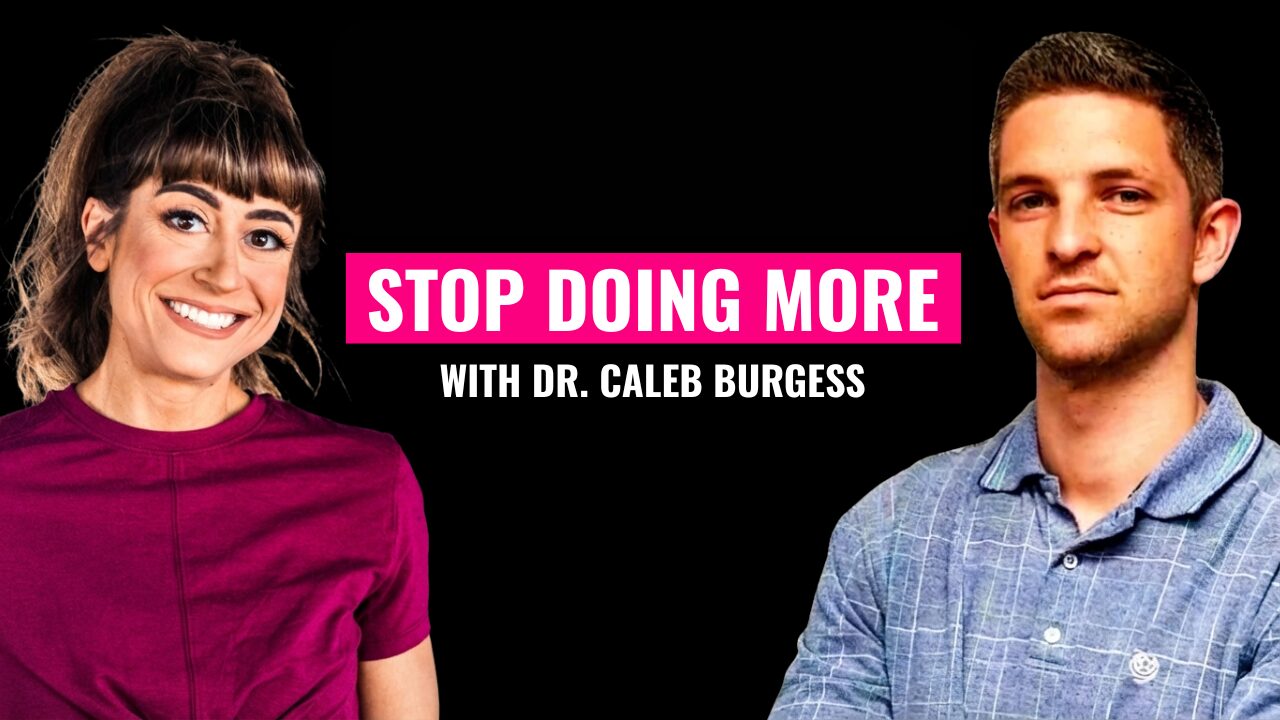
At some point, almost everyone hits this moment with their body. You get hurt or burnout or things just stop working the way they used to. And suddenly you're stuck between two bad options. Do less and feel like you're losing yourself or push harder and keep breaking yourself. Most people bounce back and forth between the two for years, and it's not because they're weak. It's because they don't actually understand the difference between pain, discomfort, and danger, or how much fear, fear of reinjury, fear of losing progress, fear of losing identity, quietly controls how they train and recover. On this episode of the Redefining Strength podcast, I'm joined by Dr. Caleb Burgess, a doctor of physical therapy, movement expert, and one of the most trusted voices online when it comes to mobility, injury, rehab, and building a body that actually works in real life. What I love about this conversation is that Dr. Burgess doesn't sugarcoat the realities of injury or recovery.
(01:01):
He gives you the truth, the why behind it, and the exact mindset shifts that get you back to doing the things you love. So let's dive into how to rebuild confidence, mobility, and strength at any age.
(01:14):
I actually am kind of a nerd and I love all of your different quotes. And so I was looking through some of them and what really resonated with me and I think will lead to a very interesting discussion about strength is I saw that you said understanding how your body moves gives you freedom, not limitations, love that. Injury is part of the journey, which I found to be very true for myself. And what matters is how you respond and come back stronger. So off of that, really curious, how do you define strength and how has the definition even changed over the years?
Dr. Caleb Burgess (01:46):
I define strength now and probably for several years now as people being able to do the thing that they want to do in their life, whether it's somebody who has pretty what we would consider lower level goals for someone who has higher level goals. If you can accomplish those things relatively easily or without as much difficulty as maybe you would have without getting stronger, that's what I would define as strength. So pretty simple.
Cori (02:15):
And I was going to say, it's not just what we can do in the gym. It's yes, being a physical therapist, you're focusing a lot on that rehab stuff, or you're working to improve performance, but it's also the mental strength. And I know you touch on that a lot. How do you think they sort of go hand in hand? Because I think there is a mental struggle, especially when we do get injured.
Dr. Caleb Burgess (02:37):
Oh yeah. And I think I made a post on this recently, but anytime it's pushing yourself in the gym or even if you're not in the gym, just exercising, working out, doing hard things, you get used to that discomfort that comes with that and how difficult that can be. So basically setting yourself up so that you're always having some sort of adversity that you have to overcome. If you're not mentally strong, it's hard to do the physical. So then if you can do the physical more often, then it kind of carries over to the mental side of things too. And it's not like a one-to-one correlation, but it definitely ... I see that all the time with people that I work with and also in my own life. And also just background in sports. You go through these really hard, nerve-wracking situations and you get through it, sometimes you fail, but then you go, "How am I going to come back from this?
(03:30):
" And then that happens in life with sometimes things that are a lot more important and you've had these experiences to draw on that allow you to get through those things easier.
Cori (03:41):
It's an interesting cycle where the mental strength allows you to do physically strong things, but showing yourself the physically strong things you can do builds the mental strength. How do you keep that loop perpetuating in a good way versus letting fear, especially if you have just suffered an injury, holds you back from embracing a physical challenge, which can lead to mental strength or the fear letting you mentally not then push into the mental strength. I feel like fear interrupts that cycle. How do you overcome that with a recent injury?
Dr. Caleb Burgess (04:15):
Yeah, I think I always talk to my clients about the pendulum swings and I have people that I know that are a lot more anxious and they're a lot more fearful about, "Oh, what if I re-injure myself? What if pushing myself past this point where I'm comfortable is going to set me back more?" Or, "What if I fail?" And I think that's one thing that they have to work on when they're pendulum swinging too far in one direction. And then there's other people who are ... The pendulum swings, and this might be going a little bit outside the topic of the question, but the pendulum swing's kind of the other direction where they just tend to push too hard with anything. And so I guess when it comes back to the fear question of that is they're almost ... They don't like seeing themselves in that lower state, so they will just keep almost being stubborn about what they are able to do at that point.
(05:10):
So then they'll push way too hard and just be like, "Oh, I'm just going to ... " Again, they're almost trying to draw too much on that mental toughness, but because they're fearful of being in the state that they're at, they don't want to be there anymore, so they try to rush the process and then that can set them back too. I kind of stretched that question a little bit, but that's kind of something that I see from both aspects of people that I work with, especially with people that are used to operating at a really high level.
Cori (05:39):
I honestly don't think you stretch it too far at all. I think you hit on some key things of fear can show itself in so many different ways. We can have the fear of pushing a little bit more once we've been injured where we stay in that comfort zone of the rehab stuff, but in order to build back, you have to build back. But then as someone who had the fear of stepping back, we can have that fear of, if I don't keep pushing, A, who am I? Which sounds very deep and it kind of is very deep, but who am I because I've identified as this athlete, as this person who pushes hard, but also, will I lose all the progress I've made? So there is this weird balancing act where you have to do the rehab and then keep it in as prehab, but you also have to overcome the fear of pushing a little bit into the discomfort or risking getting injured again.
(06:29):
And how do you navigate that balance?
Dr. Caleb Burgess (06:32):
Yeah. I think you just touched on some points that I didn't think of in the moment, but that is exactly right. So the fear of identity loss, especially when you're a high level athlete, I went through this when I injured my elbow, I had a really bad fracture when I was 15 and my whole life, it's funny saying this as a 36 year old talking about when I was 15, it really wasn't that important, but in my life, my life revolved around basketball and trying to become better and trying to get colleges to look at me and all of a sudden it's all gone. It's my right arm, it's my shooting hand and I'm just started playing on the varsity team and to kind of have your whole identity wrapped up in that and then all of a sudden it's just all cut off. Am I going to be the same again and all that kind of stuff.
(07:22):
That is definitely a fear of not knowing. And also, like you said, not knowing if you can get back to that, but also the fear of all this work that I put in, all this time that I've put in, whether it's with just exercise or a sport or whatever, you're like, is that all going ... It's all lost and I don't want to lose my gains, so I'm going to try to rush this because I want to get back to doing that. Especially people who are really ... I would say, you could say this in sports, but I think especially in the exercise world when people are really focused on whether it's weight loss or building strength or physique or whatever, that's I think even more of a fear because they may have changed their whole identity from something to something else. I finally at this point that I'm really happy with my body or happy with how I look and then they have an injury and they're like, "No, no, no, no.
(08:13):
I put all this time, this can't be happening." And I've worked with a lot of people who it's really a challenge for them to scale back because they're so focused on maintaining their fitness goals. They don't realize that in order to get back to those fitness goals, it's possible. And I will tell them until I'm blue in the face, you can get there, but we can't skip these steps to get there. And unfortunately, your fitness is going to have to take a hit. This is what it is. You have to accept that. If you don't accept that, you're not going to get there as quickly as you want to get there because you're just going to keep re-aggravating things you're going to keep re-injuring yourself. And then when they finally come to the conclusion that, "Okay, he's right. I need to actually do this, " then they accept where they're at and they're okay with it.
(08:55):
And I tell them it's okay to be upset from time to time, but don't dwell in that. And then of course, several months down the road, they're in a much better place and we're back to where they were or sometimes even beyond, which is really cool to see that too.
Cori (09:08):
I love that you highlight beyond because regressing to progress isn't making things easier. It isn't us failing. It isn't us being strong enough. It's us recognizing that there's a crack in our foundation and if we repair it, everything else can end up being even more fabulous. And taking that step back to basics is hard. How do you help people integrate in those basics and then make sure that they're doing those fundamentals well to move forward?
Dr. Caleb Burgess (09:35):
Yeah. I think a lot of it is a heavy dose of education on why those are appropriate. And especially, again, going back to people that are high achievers or high level athletes, that's more difficult because if I have somebody who's just sedentary and doesn't really exercise that much, anything I saw them, they're like, "Okay, this sounds good, that sounds reasonable why I would want to do that. " But if somebody's really high level and I'm showing them these exercises that in their frame of mind is like, "Why would I do this? This is so under what I know that I can achieve." This is something that I feel like you would give an 80 year old grandmother or something and they don't recognize why these are important at this step of the process. So heavy on the education is so key so that people need to understand the why.
(10:32):
I think many times as a physical therapist, we do a poor job, especially if we're really busy of just telling people what they're supposed to do and then they start doing it rather than, "Okay, here's exactly why we're doing this. " And also empathizing with probably what they're thinking or sometimes you work with enough people that are similar, you can kind of see what they're probably thinking when you give them something that's so low level and you're like, "Okay, I know this seems ridiculous, but here's the reason why we're doing this. " And then you kind of give them this step-by-step blueprint of, "We're doing this so that we can move on to this. And we can do this, we can move on to this. " And then once they kind of see that big picture, they go, "Okay, that makes sense." And then the next step is, again, if there's a mind muscle connection issue or something, sometimes you have to really key into, how do I get them to do this thing to achieve the intent that we want to do?
(11:24):
Because it's not just doing this movement. It's also thinking about which muscles are contraction, thinking about if we're trying to get certain areas to move or mobilize more than other areas, we need to help them tap into that and understand why and what they should be feeling and what they shouldn't be feeling. And again, there's a lot that goes into this where sometimes people can get over analytical where we are being too much of, I guess, movement perfectionists where you need to just let somebody kind of figure it out. But with time and experience, I think physical therapists and even personal trainers, I think you learn when to shut up and when you need to say more and what kind of cues to use and it depends on the person and how they interact. That's super important.
Cori (12:12):
We really do prioritize what we value. And so I think that why is so key because if you understand how this can even help you build back stronger, you recognize the value in stepping back. And often doing the rehab work doesn't really feel easier because it is addressing weak links. And then when you see those weak links get stronger and then everything else improves, it's just so amazing. But I also like that in educating on why you're not painting this amazing picture of everything's perfect and this is so beneficial and trying to oversell them on all the positives, you're also owning the negative. And I think that's something we don't do enough is own that there is struggle, own that this kind of stink stepping back, own why we rebel against it, because the more we do that, the more we embrace the benefits of it, almost understanding the negative.
(13:05):
And then we find that happy compromise that allows us to truly do the things we need to do. But then on the flip side too, as a coach ourselves, it's understanding that if you give too much stuff, then the value almost just kind of disappears because there's too many things to think about and it's kind of overwhelming. So it's like that fine line of giving the value, overselling the negative just a little bit while painting the picture of where this positively leads.
Dr. Caleb Burgess (13:32):
Yeah. I often will, with my clients when I send them out, when we have a consultation and I do the assessment and I'm putting together a program for them and I send it out to them, I will tell them right off the bat, "Hey, this is very repetitive. It's going to seem really boring." And just I think leading with that, because if you don't, they might not want to bring it up themselves. So if you just tell them right off the bat like, "Hey, trust me, I know this isn't super fun." Or maybe at the beginning you really enjoy this stuff, but in two or three weeks, you're probably going to be like, "Ugh, this is just doing the same thing over and over again every single day." And again, that's not every plan, but especially when somebody's had an injury or they have some sort, especially mobility issues that you need high volume, high frequency daily, that's super important to address that before so that they know that, okay, he's aware of this.
(14:29):
So that's really important, I think, to address.
Cori (14:32):
And it makes them realize like, "Okay, it is going to be repetitive. Okay, we get good at what we do consistently and the value is in those boring basics to reach the amazing goals I want. " The goals are sexy, the results are sexy. Sometimes the work we have to put in is not so sexy. And going into those boring basics in the moves that we often do, you talked a little bit about the mind-body connection, and I think this is a key point that I want to dive into a little bit because it's not just about doing the right moves, it's doing the right moves consistently, but also feeling the correct muscles working. If someone's sort of struggling to see results build and they're doing all the right moves, how do you help them recognize there's maybe a disconnect between the movement pattern and the recruitment pattern?
Dr. Caleb Burgess (15:17):
Yeah. I mean, it's tough when it comes to a lot of the bigger compound movements, if we're going kind of more on the training world, I think sometimes people view it as, "Oh, I should be feeling this in this one area or something." And I have to kind of explain to them that there are so many different muscles being used that we can focus on certain muscles and try to feel an area more, but again, sometimes people get too caught up in that. This is kind of, I guess, being devil's advocate to your question. Some people get too caught up in that where I go, "Listen, I've been doing squats or whatever for 25 years." I typically don't really feel one ... I just feel like everything when I'm going heavy, I've been feeling everything. Now you shouldn't be feeling pain or tightness or something and primarily your low back.You might feel it working, but you're probably feeling a lot of muscles working.
(16:16):
But when it comes to more isolation movements or movements that are like accessory exercises that are really trying to ... The whole point of it is to target a certain area. I think that's where it becomes a lot more important to focus on specific ... Again, you could have nuance in that with the compound movements if you're really trying to target a certain area, but I think it's more important, I think, with some of those accessory movements where the whole point of it is to get that area to work more and people will compensate in different ways to use other muscle groups that even though they should be working, maybe they're not the primary focus of the exercise. I don't know if that answered your question, but that was a ...
Cori (16:56):
It does. It's focusing on the goal of the move and being intentional with what you're trying to get out of it to get the whole value. And you've mentioned a couple times, it's not about this perfection sometimes with things, because I do think that's been a trend we've seen too where there has to be perfect movement, no imbalances, and what is perfect really? We're not perfectly symmetrical creatures, so we're not going to be perfectly balanced. So how do you help someone navigate, especially ... I know I've fallen prey to this because I'm a very type A personality perfectionist mentality, but how do you navigate knowing a movement pattern is good enough and you're doing enough right things, I guess I would say, and knowing that something needs to be worked on or improved and those compensations and balances issues could lead to future injury.
Dr. Caleb Burgess (17:45):
I think it somewhat depends on the person who's performing the movement. So if somebody's a lot more of a beginner, I will be a lot less focused on them being as perfect with the movement pattern because they are still trying to learn it. So if it looks good enough at the beginning, I'm not going to overcorrect, but I might ask them their feedback on how they feel. So if someone looks like ... If somebody was ... The audience of people watching this beginner performing a movement and it didn't look great, but it did look good enough, I'm sure everybody can pick out things that they were doing quote wrong or could have been doing better, but if that person's just learning it and I ask them their feedback and they're like, "That felt great. I feel so strong and I feel great doing it, " we can maybe fine tune things later down the road, but maybe not at the beginning, but if I ask them their feedback and they had the exact same form and they're like, "You know what?
(18:42):
That really was bothering my knee or my back, whatever," then I'd go, "Okay, now let's look at your movement again with that context and go, okay, why is that? What could we do differently here to make you feel more comfortable with that? " And again, people have different body shapes and sizes and different lengths of their femurs or whatever, have a different range of motion requirements or limitations or advantages. So that all depends on that too. But going back to the last part of your question, how do you know if this is actually turning into a ... Actually, let me say that for a second. If somebody's more advanced or they're lifting a lot heavier loads, I know they're pushing themselves close to their max, that's where technique gets a lot more ... We have to kind of fine tune little tiny things where maybe the average person that would look like a perfect movement pattern, but for this person who's performing at the highest level and I know they're stressing their body from the max, we're trying to make sure that we're keeping into consideration their injury history and aches and pains they currently have, but also trying to just think about how do we optimize this for performance, but also to minimize any potential to cause an injury or flare up any issues they're currently dealing with.
(20:09):
And then the thing that you said about like, how do you know if this is turning into more of an issue? I think that's another one of those things where asking feedback from what they feel is so key because again, I had plenty of people where I actually thought, and they were maybe intermediate to advanced trainees, and I thought their form looked almost perfect, but they're telling me that they're having irritation or the next day they're a lot more stiff or whatever, and I need to kind of figure out how much that is just overall load management versus how much of that was. We can maybe adjust a few little things here to allow them to perform it better. And if that continues and that builds, so if somebody has a little bit of an ache and pain where they can continue to make progress, but it's manageable and they don't feel like it's extreme, like it's like, okay, things kind of ... Irritate me a little bit with this exercise, but it's not getting any worse, but I'm constantly adding more weight or getting more range of motion or whatever, or just I can see I'm putting on muscle, whatever their goals are, then I would say, "That's not that big of a deal.You're going to have aches and pains." As you know, people who train long enough, you're going to have aches and pains that you kind of have to manage, but if those aches and pains start to limit you from making progress, because you're like, "I can't improve because at this certain point I start to have more pain, I'm about to have more discomfort and I'm limited because of that.
(21:35):
" Or it's obvious that your symptoms are actually getting worse over time and then you're ignoring that. That's where it becomes more of a problem and you should probably address it rather than continuing to train with it. So again, there's a heavy dose of nuance there because some people will say, "You should never train with any pain," which I think is kind of ridiculous if you train long enough and you're being honest with yourself, but how much of that depends on the context of is it getting worse, is it limiting your performance, all that stuff? I
Cori (22:06):
Think your perspective is so interesting with that, and maybe it's because I personally agree, but I think so often we don't recognize that discomfort is part of the process of growth too, and that even rehabbing an injury, it's not going to always feel good. There is going to be some pain. So recognizing that pain isn't always a signal we need to stop, but also assessing where it's becoming a negative versus a positive versus just us working through. And there's one question that is so powerful and you hit on this, "What do I feel working?" That internal reflection is something that I don't think we emphasize enough and we just focus on, "Oh, does it look good in the mirror? Oh, okay. It loooks good in the mirror, the form. Perfect. I'm going to move on. " But it is about what we feel working because there's so much nuance to movements in general and how we're compensating.
(22:59):
And sometimes the most elite athletes, especially the most mobile ones, can overuse muscles and the form can look really good. So that internal reflection is so key, but how do you get somebody who maybe needs to proactively do some practices for prehab a little bit more to embrace doing them and get started making them more non-negotiable in their day because they might feel the ache and pain slightly adding up, but they want to keep pushing and it's not the point where they have to stop. How do you help them start doing little mobility practices daily to prevent things from becoming an issue?
Dr. Caleb Burgess (23:34):
I think it starts with, again, in my world, doing an assessment where I can prove to them why they need it, but then that only goes so far. They actually have to make them start doing that. And then once they start doing that and they can see the obvious how they feel during their workouts or just overall as a whole over several weeks and they realize like, "Oh, when I'm training differently or when I'm adding these new things in, it's helping me this much more." Then a lot of them come to that conclusion on their own that like, "Oh, I should probably keep doing this stuff." Or they'll ask me, say I'm working with them one-on-one and their time with me, they start to feel like they're okay maybe not continuing with me and they want to try things on their own. They'll ask, "Do I need to keep doing this stuff because I feel like I know the answer, but I don't know.
(24:24):
I just want to double check." And typically I will tell them the certain things that, "Hey, this one you could do. It's kind of optional. These are some things that are non-negotiable." And then again, going back to explaining why over and over again, but a lot of it's just going to be through their experience with how it feels when they're actually training and just realizing how much better that they feel with that stuff. The other thing that's important too is, I guess this goes back to one of the questions you asked at the beginning, people who have their identity wrapped up in how they've been training for years, all that kind of stuff, I kind of joke with a lot of my clients that are probably in their 30s to 40s and upward, especially if they've been active their whole life, that everybody gets to this point, it's just people get there sometimes earlier, sometimes later, where they realize like, "Oh, I don't need to beat my body down into the ground and feel horrible just to achieve these physique goals or these performance goals or whatever." I need to actually focus more on how am I feeling, how is my training making me feel on a day-to-day basis and how do I feel and how do I function?
(25:37):
Because you can get away with it a lot of times when you're younger and just kind of, again, beating your body into a pulp and then not only do you recover better, but you're just younger so your tissues are a little more adaptable and all that stuff. And as you get older, you get to the point where you're like, "Okay, I can still train hard. I just have to really think this through more and understand what's best for me and the way I used to be training is just I'm just going to not feel good. I'm not going to recover well." And realizing a lot of times that less is more. Being more specific and intentional about what you're doing, but also a lot of times people will tell me how they used to train and then once we kind of scale things back and optimize it for them, they go, "Oh my gosh, I can't believe I can train so little." They're not really training that little compared to the average person, but for them, and I can still achieve these results and also I feel great now.
(26:31):
I laugh because we all come to that conclusion at some point, especially if we've been training our whole life. If you haven't been training your whole life, it could be like your first time and you're just getting used to training, but if you've been training a certain way, that's a huge kind of mental shift that you have to make. That is a big light bulb moment for a lot of people.
Cori (26:49):
And the more you've done, the faster things build up. And so the more you have to take that step back to optimize. And it's actually funny how much we resist optimization to some extent and the less is more when we really need it because, and I think it relates back to control, right? We feel like by doing more, we're more in control of the results we get when that's really what holds us back. But how do you get people to do some of the practices and what are even some of your go- to recovery tools to help people move and feel their best? Because I think so often we just think about it as over-training, but a lot of it is also under-recovering.
Dr. Caleb Burgess (27:27):
Yeah. I mean, a lot of that goes into questioning them and their whole lifestyle. So not just in their workouts, but kind of talking with them and walking through their day, what's their job like? What's their home life like? What's their stress like? Which is kind of a hard question to ask because most people aren't going to open up that much about that kind of stuff when you're not like a mental health therapist. They don't want to go into that stuff, but the more comfortable they get with you, the more they'll open up about that sort of stuff that might be stressing them out all the time and really negatively contributing to their recovery. So it comes down to asking all of that stuff and then getting this big picture of, "Okay, what do we need to really focus our time on? " And I've had people who everything's locked in, but they're sleeping four hours a night and they've been functioning like that for years and we have to just kind of ... I have to tell them, "Hey, I know you're really into all the training stuff, all the recovery stuff that we're doing as far as movement wise, but how can we optimize your sleep?
(28:33):
Can we get like an hour or two more?" Even that is not, it's still suboptimal, but for them it's going to feel like a night and day difference.
(28:41):
But then just again, it depends on when it comes to the movement side of things, a lot of it just has to be with, okay, if you're analyzing their routine or what movements they're doing and you're seeing that they might have deficits in mobility where they're performing a movement to a certain range of motion because they've been taught that they need to be doing that, but they're just pounding into ... An example would be like if you're squatting and you don't have the hip mobility for it, and not only do you need to work on that hip mobility, but like sometimes people are just, you have deeper hip sockets or you have more shallow hip sockets. And sometimes these people, even if we optimize their mobility to 100%, they probably shouldn't be squatting to a certain depth because it's just irritating the heck out of their hips and they need to know like, "Hey, I know you've read in magazines for years you need to squat below parallel or whatever, but are you competing in a power lifting competition?" No, we can still squat to this depth and squat heavy and you can still make a really good progress, but it just might not be right for you to go to this depth whereas your neighbor could go all the way down to the ground with no issues because of just how they are built.
(29:51):
Those are just a couple examples, but I don't know if that answered the question either, but that's the way that I look at it.
Cori (29:58):
It does. And it Stepping back to assess your life and what you need. And I think so often when we do think injuries, we do go to, okay, what rehab exercises or what ... I won't even say supplements because they're not supplements, but the cold plunge, the heat, all these other tools and tactics. And so much is even in our nutrition, even in our sleep, because those impact recovery, so how fast we're going to heal. And then recognizing that our body isn't built the same way. And so if we're perpetuating movement patterns that don't fit because we're trying to force variations of exercises that we think are best, we ultimately sabotage ourselves. Instead of seeing the amazing variations that are out there from box squats to single A squats. So just all these different movements. And I think this is the hard part is how can people start to assess what they might need with those things and then even what areas they can improve.
(30:52):
And from that, are there different tools like foam rolling, stretching, activation moves, cold therapies that you do have people do more universally?
Dr. Caleb Burgess (31:01):
I think it's kind of hard unless you actually, if you walked through a handout or something or a video of all the different moves you should probably do. But I think you could do some foundational movement patterns like a squat, like a lunge. There's certain ways you can assess your trunk movement, trunk rotation, and just kind of feeling where you might be limited with these things and how do you start adding those things in. But again, you can go a million different ways with that. But I think making sure that ... To go back, I think from your last question, I think too many people get caught up in trying to find the best quote thing that they should be doing because if they do these things, this is going to make their progress or the results so much better. When yes, we can point to a lot of things that might be good for like 80 to 90% of people, but a lot of it comes down to what do you actually need for your goals and your life?
(32:07):
And people get too caught up in trying to find the best thing when for one person it might be a great thing. One person might be super detrimental to what they actually need. So things that I typically do as far as like that is again, I'm trying to provide a very individualized, customized approach for what someone needs. So I can kind of cut through all the noise of the things that they've seen are the best that again, like for example, if you're doing a certain mobility move, but this person has world-class mobility already, they're like, "I need to keep doing this thing." And you're like, "Not really because you're already there. You need to work more on this stability move because you move so easily, your connected tissue is a lot more lax than the average person. Here's the things you should be working on.
(32:51):
" Whereas other people maybe they need a lot more mobility and they're super stiff and they need more freedom of movement. And they're like, "Oh, I'm going to keep working on all this stability control stuff because they're good at it. " And you're like, "Well, you need more of this mobility stuff because of these reasons." So it really just depends on the person as far as what I give them. I don't really have a go- to for most people. It's more just like, "What do you need and what do we provide for you?
Cori (33:19):
" But that individualized assessment, even us doing it personally of like, "What are my daily postures and positions? What is my mobility? How or what do I want to get out of my workouts?" All those things will dictate what we work on. And then it's identifying the weak links in there and not just saying what we're comfortable with, but recognizing that we've got to get something we can do consistently too in order to maintain what we already have.
Dr. Caleb Burgess (33:43):
Yeah. Going back to the mental side of things, I think too many people, I see this all the time, too many people, they're comfortable and happy with how they can perform certain aspects of exercise or movement because they are already good at it and they don't want to, because it's probably not fun and it's probably uncomfortable and also they don't feel proficient at it. They don't want to do the things that they're actually weaker at, not necessarily weaker in the term of being weak, but just they're not as good at it. So I've seen plenty of people who are like dancers or whatever where they're extremely flexible and they just wanted to stretch all day of like, "Do you do any sort of strength training?" And they're like, "Well..." And the thing is, they're strong, but they don't do resistance training. And I'm like, "What if we just get you on a simple resistance training program?" And they're like, in a few months they're like, "Oh my goodness, I can't believe how much better I'm performing and functioning.
(34:45):
I'm not so broken down all the time." And then I've seen other people who, let's just say the average person who just likes to lift and they don't realize how deficient they are in their cardio and they're always winded. They're like walking up the stairs and they look like a great God or goddess, but they get winded just walking up the stairs and you're like, "Okay, I know you're not very good at cardio and you're focused on how your aesthetics and how you look like, wouldn't you like people to go up the stairs without being out of breath?" And so people kind of avoid the things that they're not as good at because it's uncomfortable and it's not fun. And then I think sometimes looking in the mirror and really evaluating and slowing down and going, "Okay, what things do I not really work on that I probably would suck at and should I probably put that into my training?" And much of the time the answer is yes.
(35:38):
So that's just, it is what it is.
Cori (35:41):
Results really are often the thing we're avoiding the most and it's hard to recognize that just like I feel like it's at times hard to recognize when we're avoiding things because we've deemed ourselves too old to do them or not an athlete. We have these mindsets, they're not things for us, but they're often exercises too that help us move better in everyday life. How do you help someone see that there is the case of use it or lose it too with that?
Dr. Caleb Burgess (36:11):
Okay. I'll just use my own example here. So I told you earlier that I was very competitive in basketball and I knew in the back of my mind I have not been training for power or applyometrics in years now. Part of it just being I was just burnt out on basketball. I didn't really feel like playing, I just wanted to exercise for general health and I have two young kids and I just haven't really been prioritizing that. But then what happens is my son wants to start running around and he's starting to get a lot quicker and run and I'm running around and my ankle starts hurting randomly just from running. I can run, but I just don't feel like I did eight, 10 years ago. And so I'm like, I need to start adding in power training now. And so I've been doing a lot more plymetric stuff now.
(37:00):
Not nothing crazy, but that's something where in my own life, and most people should know this as you get older, there's some statistic where think ... I could be, I know I'm probably off here, we could ask AI or something, but I think it's like 80% or 90% of people over the age of 35 will never sprint again in their life. It's like some crazy thing like that. And then you see a lot of these people, they go to play weekend softball and they're in good shape, but they'll tear an achilles or something because they just don't do that stuff and they don't realize that they're actually losing the explosive properties of their tendons, but also just of their body to actually perform these movements. And you definitely lose that. I mean, definitely strength, definitely muscle mass, but power is like a huge one. But I think a lot of times it's just explaining that to people, what kind of the statistics are on that, but also asking them if they feel comfortable doing X, Y, or Z thing in their life.
(38:04):
And if they're like, "Ooh, I think I'm too old for that, " or whatever, like you said, then you can start to kind of prove to them why they need to work on that by sometimes putting ... Sometimes, again, not to make them feel bad, but putting them through tests that are going to minimize their chance of injury, but also will illuminate to them that, "Hey, this is really important and here's some reasons why you should work on this.
Cori (38:30):
" It goes back to what you mentioned earlier of showing the value, but then recognizing too that this fear of getting injured from these things as we get older and that avoidance only hinders us from truly living life in the way that we want. So it's an interesting mental battle, I would say, even more than a physical one.
Dr. Caleb Burgess (38:51):
Yeah. And I think going back to what you just said, I think too many people don't realize ... So when you're like a really good trainer or you're a really good physical therapist or movement professional, you know how to find someone's baseline and where their entry point is to working on a skill. And I think too many people, like you said earlier about the, I'm too old to do that thing, is they assume like, "Oh, if I'm going to be working on ... " Again, let's go back to the power analogy. I can't be jumping around on that huge box. They just immediately think of the craziest videos they've seen or whatever. And if I do that, I'm going to get injured. And I'm like, "Well, yes, you probably will get injured if you do those things." But they don't realize we can scale things back so far to where they're actually working on that quality, but at a level that is appropriate for them to build them up and not actually put them at a high chance of injury.
(39:46):
And so when you actually present that in front of them of, "Oh, you know what? I know you can't do that, but you could probably do this, right?" "Oh yeah, I can do that. "And then they realize like, " Oh, this actually is something that I can achieve. I'm not too old. "Nobody's too old to start working on something. It's just they need to have the guidance usually of knowing where is my starting point and people, majority of people that are not well versed in this stuff think that their starting point that they need to start that sounds scary is way too high than what it should be for them. They're comparing themselves to other people who are already training that thing all the time, not realizing anybody can start here, you just need to find your baseline.
Cori (40:31):
It truly is recognizing where we are at right now and how we can meet ourselves there. And I think that can be an incredibly hard struggle, especially if where you are right now is not where you used to be. We all have the glory days, myself included. And I think sometimes we look back and say," I used to be here. So when we start back to exercise after time off or an injury, we try and jump back to where we used to be, not recognizing that even scaling back just a little bit from that still might not meet us where we're at. So how do we almost overcome that disconnect between the two to truly meet ourselves where we're at right now to move forward without just putting ourselves back in a vicious cycle of getting injured and ending up so sore we can't train and all those not so fun things.
Dr. Caleb Burgess (41:18):
I think that goes back to the mental aspect of it is I think most people don't take the time to actually reflect. This is just all areas of life. Everybody's just so busy. They just immediately go to their default of whatever they think is what they should be doing or like you said, where was I at 20 years ago? This is what I remember, but most people are smart enough to, if they actually think and go, "Okay, last time I did this was 20 years ago, I've put it on this much weight or I've had these injuries or whatever." And then really taking a look and going, "Okay, that is unrealistic and I need to meet myself where I'm at now." I think if people actually take the time to self-reflect, most people are smart enough to realize I shouldn't go back to these things.
(42:04):
But when you are either not taking the time to self-reflect, or again, there's that fear of, this is who I want to be, but I'm not that person and I'm stubborn about that. Like you said, if you have an identity of what you want to be or what you know you used to be, then it's almost like you're trying to block out what you know is true and you immediately want, you're just so upset with the fact that you can't do what you used to do when in reality, if you self-reflect and you are being realistic, you go, "Okay, this makes perfect sense why I can't do these things." So I think it's either you're subconsciously blocking it out or you're just not taking the time to do it, I think is what can be a problem for most people. And if you actually take the time to be realistic about it, you'll figure out that, okay, I need to start further back to get back to where I was or beyond.
Cori (42:56):
There is so much power and reflection and I think it isn't utilized enough. And even the reflection of I'm struggling to step back because this is tied to my identity is a really key reflection, but it's very difficult. I'll admit it's very challenging and I think it's such an underrated tool truly. Now, off of that, because you've given us so much great information, I do want to jump into the not so rapid fire, rapid fire questions. Are you ready?
Dr. Caleb Burgess (43:24):
Yes. I
Cori (43:25):
Say that because sometimes I go on tangent with them, but so number one, my day isn't complete without ...
Dr. Caleb Burgess (43:31):
Movement, I guess. So if I'm not moving in some way, doesn't have to be a workout. I don't feel like I've ... I don't know. I just don't feel like the day is complete. I don't feel like I'm accomplishing what I need to with my day. I'm getting movement in some way, whether it's a walk outside or working out or whatever, or if I'm wrestling with my kids, then I feel like, okay, something about that just is good for your mental health. So sorry, that was not too fast of an answer, but ...
Cori (44:03):
Perfect answer. I was going to say, you don't have any choice but to like movement with two young kids, so good answer. And then what's the biggest mobility, strength, rehab myth you wish people would stop believing?
Dr. Caleb Burgess (44:17):
I think with rehab, people are constantly looking for this one thing that's going to solve their problem. Now, we're not talking about injury from like a ACL tear or something like that, where people kind of know that it's this long process where then you can do a lot of things. I'm saying people that have this chronic back pain or neck pain or whatever, and they think like, "Oh, once I find this one treatment or if I do this one exercise, it's out there somewhere. I know it is and they're trying to find that one thing." I think that is frustrating for me because I know how complex and multifaceted it can be. So that would be for ... I guess I can break these down. That would be rehab. I think the strength myth is like people ... Treating people think that how someone looks or how they look determines how strong you are when I've seen people that if they're just wearing normal clothes, you would think they're like super skinny or whatever and they can pull a crazy amount of weight.
(45:17):
And so strength doesn't automatically mean you have to be this huge bodybuilder or something or have this amazing physique to be strong. Now, often it does come together, but I think too many people believe that that is a one-to-one correlation when it's not. And then I think with mobility, again, that kind of goes back to the rehab side of things where I think people are just looking for these, what are the best mobility moves? Again, and there's something to be said with, there are a lot of movements that I would say majority of people could probably utilize and work well. But again, it really has to do with what is appropriate for you and your situation, what you need to work on, where should you prioritizing more of your time versus your neighbor or your training partner who has a completely different life or training history or injuries than you do.
Cori (46:11):
I think that's so important to recognize that there's a difference between ideals and ideal for you, and we have to find the moves that we really need.
Dr. Caleb Burgess (46:20):
Exactly.
Cori (46:22):
And then next question, what's the hardest lesson you've learned?
Dr. Caleb Burgess (46:28):
Sorry, not so rapid. I think the hardest lesson I learned, there's many, but I guess one that pops into my head right now is early in my career as a trainer and then as a physical therapist is that I have way less control over people's success than I wanted than I first thought that I did years ago. So yes, I can really help people achieve their goals, but it has a lot more to do with trying to help them be self-sufficient, help them be them buy-in so that they can do it. And I only have so much control over that and realizing, especially as a physical therapist, because originally years ago I kind of was like, "Oh, I'm going to go and I'm going to fix people. I'm going to help them feel better." And yes, I can do that in the short term, but if I'm trying to get long-term success, it really comes to them and their buy-in, which again, I can play a big part in, but I have way less control over that than I wanted to believe years ago.
(47:36):
And so now it's not a problem for me at all to admit that, but I think that was a big lesson to learn that really helped me become a lot better at helping other people, is kind of letting go of the control that I used to think I had. It's that quote where it's like, "You can lead a horse to water, but they have to drink it. They're not going to make them drink the water."
Cori (47:58):
But you're empowering people. And I think that's then even recognizing that when we've had an injury, we need to seek out answers and really reflect on what's working and what isn't working for us because only through that can we then value the different changes we have to make to become stronger, fitter, healthier, happier. So I think it's that recognition that we are ultimately in control of our own behaviors, actions, mindsets, and that we can seek out great information to help us along the way.
Dr. Caleb Burgess (48:27):
Exactly.
Cori (48:29):
And then when you need to reset or recharge, what's your go- to ritual?
Dr. Caleb Burgess (48:35):
It sounds weird for a reset recharge, but just working out working out or if I can't do that, it's probably getting outside with my family and trying to completely unplug from all the things that I have to do in my day, all the stressors and just trying to be fully in the moment because then by the time I'm done being outside, getting sun, laughing with my family, having a good time, going out to a fun dinner or whatever, then when I get back to all the things that I have to get done in life, it's a lot more manageable.
Cori (49:13):
It's the presence time, the being in the moment time. I like that. Yes. And then what's one piece of advice you'd go back and tell your younger self?
Dr. Caleb Burgess (49:22):
This goes back to the other question, just kind of letting go of control more and just realizing there's only certain things you can control and just kind of like sometimes life happens, sometimes shit happens, and it's just you got to just deal with it and use it as a learning lesson rather than something that you're just going to dwell on as a failure or something that you feel sorry for yourself about. And we're talking like this is probably almost 20 years ago self where I'd be really hard on myself, whether it was sports, whether it was academics, whatever, if I did something or I messed up or I would just dwell on it for weeks and months and it would just eat at me. Whereas now I'm at a point in my life where I can be upset in the moment, but I'm immediately trying to reframe it into, "Okay, this is a learning lesson."
Cori (50:14):
That's a hard reframe to do, but it really is so important. Where can people go to learn more about all the rehab tips, the mindset tips you have, because you share such a diversity that really does help someone become their strongest, fittest, healthiest, happiest self.
Dr. Caleb Burgess (50:30):
I think the main ones would be, I have an Instagram, so you can type in Dr. Caleb Burgess, dr.kaleb.burges. And then probably the second one, I'm on a few channels, but a lot of it's very similar content, but I guess YouTube, I don't put out any long form yet, I should, but I have a lot of shorts on there. So if someone wants to follow me on YouTube or they're not fond of Instagram, that's where you can find me.
Cori (51:01):
And any projects lighting you up right now?
Dr. Caleb Burgess (51:04):
I have an app with several different programs for people, whether it's a la carte mobility issues, strength issues, or there are full length programs for different areas of the body. And then there's some kind of overall full body mobility and strength stuff in my app, but no new projects yet. I have to think about what I want to do next.
Cori (51:27):
Yet, I like the yet. And now-
Dr. Caleb Burgess (51:29):
There always will be.
Cori (51:31):
Yeah. Always, right? That's the fun of life. There's always new things we're putting out.
Dr. Caleb Burgess (51:34):
Yeah.
Cori (51:35):
And now we have to leave everybody with one big takeaway from today's conversation. What do you want people to really remember from this and walk away having that aha moment from?
Dr. Caleb Burgess (51:49):
I think two things. One is if you are struggling in your life making exercise, health and fitness a priority, just realize you might be holding yourself back by thinking that there's some sort of standard perfect thing that you have to follow or a perfect program and what you're thinking is probably what you need to be doing is not realistic for your life and trying to make sure that it fits into your life, whether it's 15 minutes, whether it's 10 minutes, whether it's two times a week, it doesn't have to be every single day. I think just being realistic about where you're at in your life and what you can fit in and then starting somewhere. And once you get started, you will start to carve away more time to get more because you're going to crave more of it. And then again, the second thing is kind of related to that is just don't be so caught up in what you read or about what you should be doing.
(52:47):
Try to make it relevant for what your goals are in your life. And again, if you need help with that, so many people can figure it out on their own, but if you need help with that, seek out a coach or someone that you trust that you can reach out to and nowadays you can find trainers, physical therapists on social media and you can send them a message and they might not see it, but if they do, you can just ask them a question about, "Hey, I don't know where I should focus on with my training, here are my goals." And again, if it's too complex, they might need you to give you a little more general of an answer, but if you can make it where it's not too complex where they need to actually spend like an hour talking to you, then they could probably give you a decent answer on where you should be prioritizing your time with a little back and forth.
(53:31):
So those are the things that, those are takeaways.
Cori (53:34):
I think that's a definite mic drop moment because you got to start somewhere, start messy, start imperfectly, but start and then you can build from there. Thank you so much for joining me today. This was phenomenal.
Dr. Caleb Burgess (53:48):
Thanks for having me.
*Note: This transcript is autogenerated there may be some unintended errors.

0 Comments