Cori (00:00):
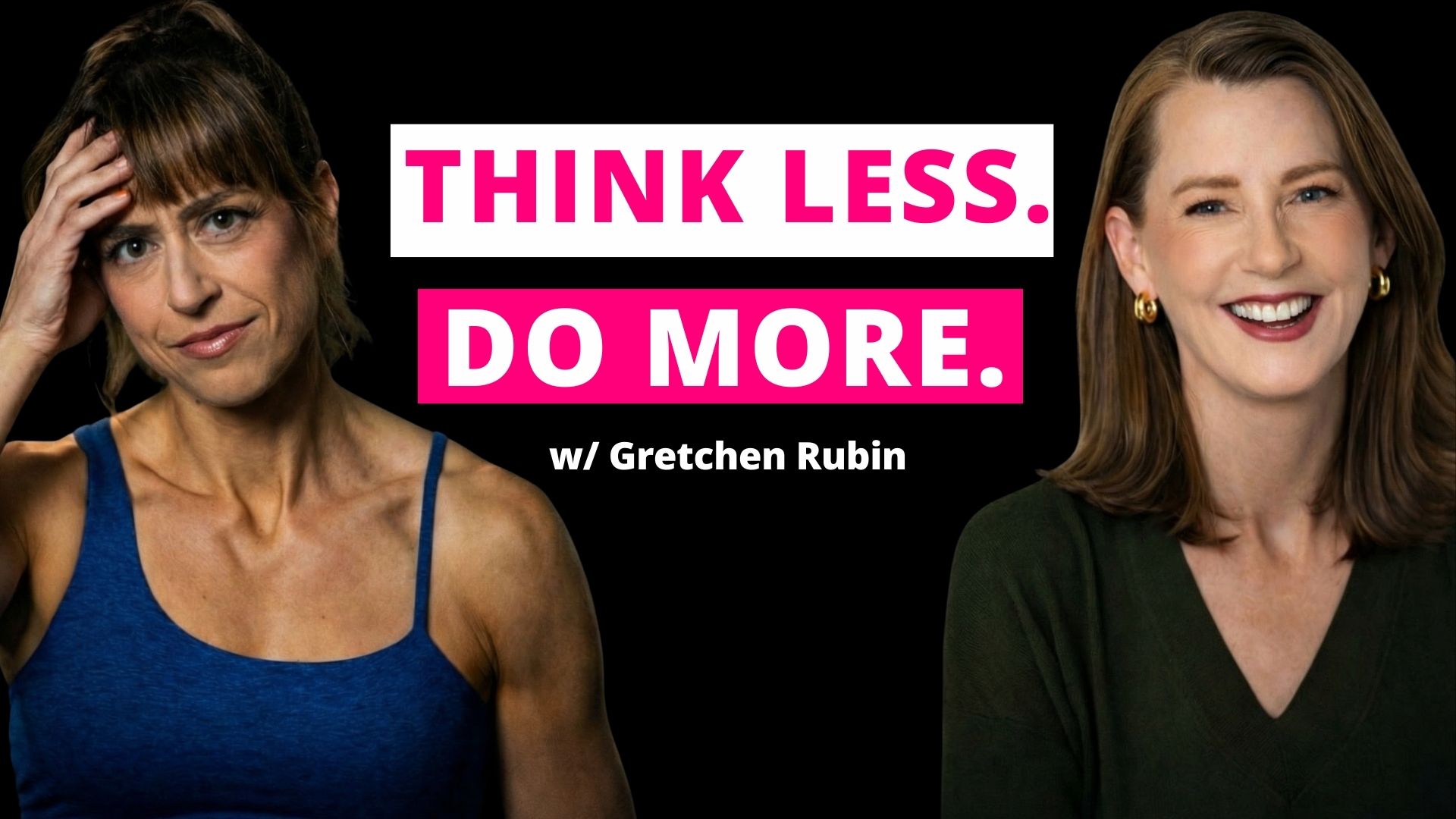
If you keep starting over with your workouts, your nutrition or your routines and you're starting to think the problem is your motivation or discipline, this episode is going to completely change how you look at habits because the truth is willpower isn't the problem. Most people are trying to use a system that doesn't match how they're wired. And when that happens, even the best plan usually falls apart. Today, we're going to break down why some people need accountability, some people need freedom, some people need clarity, and how understanding [00:00:30] yourself is the key to finally building habits that actually stick. Today on the Redefining Strength Podcast, I'm joined by Gretchen Rubin, one of today's most influential thinkers on happiness, habits, and human nature. She's the New York Times bestselling author of The Happiness Project Better Than Before, and The Four Tendencies, which has helped millions of people finally understand why they do what they do, and just as importantly, why they don't.
(00:55):
Gretchen's work has been featured everywhere from Oprah to Good Morning America, and [00:01:00] she's the host of not one, but two amazing podcasts. What I love most about Gretchen is that she makes personal growth practical. In our conversation, we talk about how knowing yourself better can make change easier, not harder, why strengths and weaknesses are often two sides of the same coin, and how a simple one-minute rule can instantly make your life feel lighter and calmer. So let's get to it and discover how understanding yourself just might be the key to building real lasting [00:01:30] strength. Well, one of the first things I wanted to start with was I actually saw, and I think it was in a recent email that you sent, it was Know Yourself Better. And it was one of the most important lessons you've learned. And you said, "There's no one size fits all approach to happiness.
(01:44):
We must know ourselves and what's right for us because we can build a happy life only on the foundation of our own values, interests, strengths, and temperament." And I love that perspective that there's no one size fits all. And I want to talk [00:02:00] specifically about this starting with strength because for me, exercise, fitness, mindset, all these different explorations into these different areas has been about building strength. What does that word mean to you in the context of our entire life?
Gretchen (02:19):
Well, for me, strength is, do you have the energy, the ability, the strength, the fortitude to achieve your aims for yourself? And so I think we [00:02:30] might say, "Well, we all want strength, but we would use it in different ways." And so it's how do you get where you want to go? And there are certain universals like get enough sleep, but what is the right period? What's your chronotype? What's your bedtime? That might be very different from somebody else's bedtime. I used to think everybody should just get up early and start the day fresh. And now [00:03:00] I realize, no, that's only good if you're a morning person, but that some people are true night people. So they also want to be well rested because that's the basis of our strength, but they would do it in the way that's right for them.
Cori (03:12):
I can't help but slightly laugh at that because I wake up and I'm like, brain vomit right at Ryan right first thing in the morning. And he's kind of like, "Can I just wake up first, have a little bit of coffee?" And so there really is no one way to approach things. And I think that's where there's magic in really [00:03:30] learning more about ourselves. And you're all about building self-awareness. How can we get started even doing that? Because that's a very big concept.
Gretchen (03:41):
You think, why is it so hard to know myself and just hang out with myself all day long? And yet we are so ... Our vision is so clouded. It's like it's by the way we wish we were, by the way other people expect us to be, the assumptions we make about ourselves. [00:04:00] It's very, very hard to look clearly in the mirror. And so I love finding yourself better questions where you are able to see yourself ... I'm a big fan of like, "Are you this? Are you this? " Because even though those are so crude, often they do throw light on something like a new distinction that I just came up with recently, let me share this with you is, are you a juggler or an aerialist in the way you like to use your time? So jugglers are people who like to juggle a lot of things and they like to go from [00:04:30] thing to thing and they like a packed calendar and they like keeping it all going and keeping it all in the air.
(04:34):
And that gives them energy and creativity and they love feeling that. And then there are aerialists and aerialists, they like to pause between and it's all very deliberate and they like to be very focused as they go one thing, pause, one thing. I'm completely an aerialist. Like Thoreau said, I love a broad margin to my life and that's how I feel. But I know jugglers who, for them that would be kind of [00:05:00] boring and they would probably just kind of like stall out because they need the excitement and the energy and the adrenaline. So again, there's no right way or wrong way, but when you know what's true for you, you could try to set up your schedule or your surroundings in a way that's going to bring out the best of you rather than working against what's sort of your natural inclination.
Cori (05:25):
I think that's very interesting. And I'm like, I'm a juggler. And actually probably Ryan's an aerialist, so [00:05:30] very interesting. But with these different, and I'll call them labels just for a more basic term, with these labels, I feel like it's both eyeopening because it allows you to embrace who you are and see sort of the downsides and the upsides of the things. But it can also, I think, sometimes limit people where they write themselves off or say, "This is just the way I am. And so now I have to accept this and other people have to. " How do you handle that?
Gretchen (05:56):
Well, you put your finger on just a very, very important tension, right? [00:06:00] Because some people say, "Well, if you define me, you can find me. " Or that people will sort of glom onto a label and then they either use it as a justification or they become cramped by it. And so it's a tool, but every medicine can become poison and it is a tool that you want to use to help you and maybe have a shorthand with other people. Because if you could say to somebody, "Hey, I get that you're an aerialist, but I'm a juggler and our weekends are just feeling like [00:06:30] really low energy to me. " That can be a way to just sort of in an impersonal way, just kind of communicate a difference. And I think in that way it can be very healthy, but I also think you're right, it can become suffocating.
(06:45):
And also if it becomes an identity, because that was one of the things when I was writing better than before about habits, one of the strategy, and it's about the 21 strategies we can use to make or break our habits. And one of the strategies that was hardest for me to understand was the strategy of identity. [00:07:00] And this is that often our habits flow from an identity that's really important to us, maybe for good or for ill, but somehow maybe it's a bad identity, like I'm a procrastinator or maybe it's a good identity, like I'm an athlete, but whatever, it sort of shapes our behavior and our expectations for ourselves. And I talked to many people who had an identity, something like, "I'm a partier." Or like somebody said, "I'm a Southerner." And I was like, "Well, what does a Southerner mean for you? " And he said, "A Southerner is hospitality.
(07:29):
A southerner [00:07:30] keeps up your plate. A southerner passes around and fills your glass." And it was all about sweet tea and his mother's pie, and yet he was trying to eat really healthfully. And he realized that, okay, he had this idea of himself as the true, hospitable, joyful, life embracing Southerner, but he had to find a new way to be a Southerner that would allow him to eat more healthfully, but it took him a long time to understand how those values and identities were in conflict. And so I do [00:08:00] think that you're right that we want to use these very judiciously and as they are helpful and illuminating, but not allow them to swamp us or give us a justification like, "Well, I don't need to work on this thing or that thing because that's just the way that I am." Of course, I can't do anything before 11:00 because I'm a night person.
(08:22):
It's like, well, maybe you're a night person, but you also do have to do some things before 11:00 AM.
Cori (08:27):
It's recognizing the downsides to the upsides [00:08:30] of the definition that we're giving ourselves, but also the downsides, downsides to the upsides and the upsides to the downsides.
Gretchen (08:38):
No, it's so true. Strengths are weaknesses and weaknesses are strength. It's like, I'm highly disciplined and I'm also rigid. It's like those two things go together. You don't get to pick and choose.
Cori (08:48):
But owning that, you can then work to strengthen the strengths, but also address the weaknesses and sort of even benefit through ... With him with being like, "I'm a Southerner, so all these good things come out of food." [00:09:00] Okay, but where are those downsides to that that might be holding you back to then make tweaks to those habits?
Gretchen (09:06):
Right, exactly. And that's how you start saying, "Well, how can I work with my strength and mitigate the weaknesses or the things that aren't working for me by framing it in a new way?" So questioning the assumptions of what are all the things that go together? Because you could say, "Well, I'm a Southerner and I love to plan parties, but it's going to be a different kind of party, or [00:09:30] I'm just going to embrace a new definition of what that means." And I think that's really
Cori (09:35):
Key, but also bringing up identity is probably why so many of us struggle with making changes because we feel these habits are tied to who and what we are, and we don't see the opportunity and the options and the variations of the way that we can implement habits. How would you help somebody start to shift from seeing something as sort of a non-negotiable part of their identity, who they are [00:10:00] so that they can make changes to live a life that truly does make them happy and get some where they want to go?
Gretchen (10:05):
Well, again, this is very subtle because I think sometimes we're not even consciously aware of these identities or there's so much part of us that we don't even pull them out. So part of it is really to try to understand what is working for me and what is not working for me and why am I doing the things that are not working for me? There's this amazing letter. So there was this [00:10:30] writer, James Agee, who was in really poor health. He was in his forties and he wrote a letter to somebody saying like, "Oh, my doctors are saying that I have to quit drinking and quit smoking or I'm going to die early, but that's going to mean me turning into myself into a kind of person that I've never liked and never wanted to be. " And he didn't. And he died in his 40s in a taxi on the way to see his heart doctor because he couldn't let go of himself as the person, "I smoke, I drink, I'm a writer, this is who [00:11:00] I am." Instead of saying like, "Okay, maybe I need to let go of that identity." Or to see the positive parts of our identity, which is, "I love to do this thing, but maybe there's parts of it that I could peel away because they aren't working for me.
(11:21):
" I give 100% at work and you could be like, "Okay, you give 100% at work, you're always there [00:11:30] for your client or you're always there for your students, but now it's starting to swamp you and overwhelm you. " So you need to think about what that means. What does it mean to give 100% to work? Because maybe you need to change the definition. It doesn't mean that you're working seven days a week, every working hour. Maybe you need to find a different way to identify that for yourself.
Cori (11:53):
It does really all come back to building that self-awareness, which is so hard because in probably [00:12:00] his assessment that, "Oh, I don't want to be this other person. I want to drink and I want to smoke and I'm a writer." And probably it wasn't really the drinking and the smoking that he liked. It was how he felt when he did them or the way he was social at parties with that. So how can we build the self-awareness to recognize what we actually value in things?
Gretchen (12:18):
Okay. So here are a couple questions to get at that because it's very hard to ask ourselves that directly, but there's sort of indirect questions. So one question that I love is whom do you envy? Envy [00:12:30] is a very unpleasant emotion and sometimes people will even mislead themselves and not admit that they envy somebody. Sometimes it presents as resentment like, "Oh my gosh, this coworker, it's just so annoying the way she just is constantly going on and on about these trips she takes every weekend." What is really happening? I really envy that my coworker is traveling so much. And so that envy, once you admit that you're having envy, you could say, "Well, this person is finding ways to travel. Maybe I could find more ways to travel because [00:13:00] this is something that I envy." And because it shows us that someone has something that we wish we had for ourselves.
(13:07):
So that's very instructive. Another thing is, what do you lie about? Because often when we lie about something, it's because our actions do not reflect our values. And so I remember talking to somebody and he lived in San Francisco or someplace and he was talking about biking to work and I'm like, "Oh, how often do you bike to work?" And he said, "Oh, three or four times a week." And then he came back to me [00:13:30] an hour later. He's like, "Okay, no, I bike to work three or four times a month." But why did he lie to me the first time? He lied to me because he was lying to himself because he wished that the answer were different. And so that is instructive because it's like, okay, I'm doing something that is really not in harmony with the way I wish I led my life.
(13:50):
And another friend said like, "Oh, I knew that I was letting my little kid watch too much TV when I lied to my pediatrician about how much screen time my kid had." [00:14:00] It's showing us something where there's ... Because if you were like, "I never take my bike to work. I never take my ... " You wouldn't lie about that because you have no pretense, you have no value, you're not trying to do it. And another thing to do, because sometimes people have trouble embracing the things where they're falling short, but sometimes people often have trouble embracing the things that they truly love. This is strange. You're like, "How is it that people don't know what they enjoy?" [00:14:30] But this is very common. Many adults will say, "I truly do not know how to have fun anymore. I'm so used to doing things that are fun for the whole family or accommodating a lot of people that I've really lost touch with just what I would do.
(14:42):
" And so one thing that can be really interesting is to ask yourself, what did you do for fun when you were 10 years old? Because what you did for fun when you were 10 years old is probably something that you would enjoy now in an adult form. So for instance, I would copy quotations from my favorite books into these scrapbooks [00:15:00] and then I would illustrate them with a picture that I cut out from a magazine. Well, I spend a huge part of my work life copying down quotations and then sharing them like I did a moment of happiness page a day calendar that's like a lot of my favorite quotations about happiness. And so I'm still doing that thing, copy my favorite quotations, do something creative with them. This is something that I do as an adult that is very, very much reflective of exactly the same kind of thing that I did when I was 10 years old.
(15:28):
And so like, okay, how about you? What did you do for [00:15:30] fun when you were 10 years old?
Cori (15:32):
Oh, goodness. I don't think I want to do that now because, although I do actually see the heart of it still, but I was like climbing trees on jump ropes that would break and sledding down slides. So slightly mysterious active things, but I liked the exploration. And so now I just do it in a slightly safer way so the jump ropes don't break and I do it more in the gym and different things like that, but also just like exploring new things to learn. So definitely
Gretchen (15:58):
Still doing it. That's aversion. That's a [00:16:00] version. I mean, I know somebody who did magic tricks when he was 10 years old, so he got back into it as an adult. Or if you like to bake all the time, it's like maybe ... Or so many people were engaged in music as children. They took lessons, they were in a band, they sang with their friends, they listened to new music all the time, they went to concerts. And often for some reason in adulthood, this is a pleasure that for many people really drops away except for maybe listening to Spotify while you're commuting or something. And so I think that's another thing where [00:16:30] if this is something where it's sort of kind of gotten shoved out of your daily life, if it was something that you really loved when you were younger, it's something that you can look to plug back in because you probably will enjoy it just the way ... If you like climbing trees when you were little, you'll probably like a version of that as an adult just as you have
Cori (16:48):
Found. Although my sister does more of the rock climbing, I'm not afraid of heights, but not as into them anymore. It's more for me, I think the exploration of seeing what limits I can test and everything. [00:17:00] But I think it's so interesting those different questions because one is getting back in touch and it's probably in a weird way facing fears of doing something that someone else might label silly or unrealistic for the time, or we think about obligations to taking care of everybody else. So there's like a little fear in facing what we truly want. But then also the other two are, so to speak, quote unquote negative, facing what you envy, facing the lies you're telling yourselves about your identity. So there's some facing of the [00:17:30] negative. How do you get people to dig into the hard? Because I do think we even start to then lie to ourselves about what we're even lying to ourselves about.
Gretchen (17:39):
We're
Cori (17:39):
Seeking happiness. So it's like this weird thing.
Gretchen (17:44):
Well, it's funny that you say that because one of the questions people often say to me is like, "Well, what should I do if I want to be happier?" And I have a very unsatisfying answer, which is like, "Well, it depends because I don't know what's holding you back." Like you say, maybe you don't even know what's really weighing you down because a lot of times [00:18:00] people don't want to admit it because there is something that is like, sometimes it's so big or it's so intimidating or it just feels like something somebody doesn't want to think about. So I actually created a quiz. If you go to Gretchenrubin.com/quiz, you can take this quiz and through the ingenuity of quiz design, and just like, I think it's like 11 questions or something, it will tell you not one, not what a person should do, but what you specifically should do is like top [00:18:30] of your list to move the needle on your happiness.
(18:32):
And it's kind of uncanny. So for instance, my sister who is the co-host of the Happier Podcast with me and I'm super close to my sister, she took it and to her surprise and to my surprise, but then when we thought about it, I'm like, "Okay, this is not a surprise at all. " She got one that was related to financial planning. And at this time, my sister did not have a will. And she was like a full grown adult with a child and a husband and they just didn't have [00:19:00] a will, which is bananas. And there were other things that they just hadn't done about just sort of like the basics of setting themselves. They were being very financially responsible, but there was just these certain foundational things that they hadn't done. And the fact is it was really weighing on my sister's mind, but she kept kind of shoving it to the side because she didn't want to deal with it.
(19:20):
So it's exactly what you're saying. There's something that we don't want to face, even though it is the thing that would give us the biggest lift. [00:19:30] And so that quiz is meant to sort of ask you a bunch of questions that you don't realize where they're leading so you don't know enough to answer differently. And then it will say like, "Hey, it sounds like this is the area of your life where you really maybe would get the biggest bang for your buck in terms of your limited time, energy, or money that you could dedicate to some kind of effort. Why don't you start here?"
Cori (19:57):
I think that's so important to have that outside perspective [00:20:00] or outside guide because I even noticed it with clients where a lot of times when you ask questions about like, "What do you want? " They'll say, "I don't know. " And I've said that too, right? I don't know. Sure. But I've also realized that saying I don't know is often I don't fully want to go there. If someone's sort of afraid to dive in more, how do you help them? And it sounds like the quiz would, but they still then have to answer the questions honestly.
Gretchen (20:24):
They do. Yeah. Well, that's the thing about any self-awareness quiz is it's only valuable [00:20:30] if you answer honestly. Well, it's interesting. So I just mentioned the happier podcast and one of the things that we did recently was we talked about the one big thing, because often on our podcast, we talk about hacks and little try this at home suggestions, just ordinary things that the regular person can do without spending a lot of time, energy, or money. But for this episode, we stopped it and we were like, "This is different.This is a completely different thing and this is hard." And you may be a person who has one big [00:21:00] thing and you don't want to think about it and it might be really painful or really, really hard or super intimidating, but you know that you are dealing with an addiction or you need to tell your parent that they need to move to assisted living and help them move.
(21:20):
You may need to quit your job and look for a new job. You may need to say goodbye to a beloved pet who has no quality of life, but is such a beloved part of [00:21:30] your household that it's hard to say goodbye. There are things that you may need to finish your PhD. You may need to get your GED. And if you are saying, "I'm waiting for a sign," we're like, "We are that sign." We are telling you now, if you feel sick to your stomach hearing this, there's probably something that you need to do because you're right, sometimes the things that we need to do, we just don't want to do them because they are hard. [00:22:00] And even though we know that on the other side we'll be happier, it can be really hard. But one thing to remember that's really useful is it's often not as bad as you think.
(22:11):
It's like the stewing is worse than the doing. And a lot of times if you just start making your list and start going through it, first of all, the anxiety of delay starts to lift because you're like, "Okay, I know it's going to be a really long process, but I've embarked on it. I'm like, I'm closer to my result than I was [00:22:30] before." And action is the antidote to anxiety often. And there's just the relief in knowing like, "Okay, it's time."
Cori (22:41):
The stewing is worse than the doing, and I like that way of putting it, but how do you sometimes build the momentum if you are ... Let's just say you're staring at something that basically feels like a bolder in the path and you have this whole other rock pile that you can draw from. And I actually often think of habits as rocks. You have the big, bolder habits that you can't fully feel like you move. And if you keep pushing at it, sometimes you just run out of energy [00:23:00] and then you have all these other smaller habits that you could sort of get across before then to maybe even build the momentum. How do you go about maybe addressing other things that would give you the momentum to tackle something bigger that you're not yet willing to face?
Gretchen (23:14):
Okay. So can we talk about the Poor Tendencies framework here?
Cori (23:16):
Yes, please.
Gretchen (23:17):
Okay. So if you have a habit that you are really struggling to form, understanding your tendency, which is this personality framework that I created, will give you many, many, many clues [00:23:30] about how to set yourself up for success. And it will also give you a lot of clues in other people if you're trying to help them achieve their aims for themselves, or just frankly, if you're trying to get them to do what you want, which is a thing that a lot of adults, we spend a lot of time trying to get other people to do what we want. And this is really helpful. So this is the Four Tendencies framework. It's a personality framework that I created that divide ... Or I didn't even really create it. I feel like I discovered it because I feel like it exists in the world, like the periodic table of the elements.
(23:58):
And it divides people into upholders, [00:24:00] questioners, obligers, and rebels. And again, I have a quiz for this. It's on my site, like three and a half million people have taken this quiz and it will give you an answer and a little report, but most people know what they are just from the brief description that I will give right now because these are really obvious to spot once you know what you're looking for. We could do Game of Thrones characters. I mean, they're everywhere. So what it looks at is a very narrow but significant aspect of your nature, which is how do you respond to expectations? [00:24:30] And we all face two kinds of expectations, outer expectations like a work deadline and inner expectations like my own desire to keep a new year's resolution. So depending on whether you meet or resist outer and inner expectations, that's what makes you an upholder, a question, or oblige, or a rebel.
(24:46):
So upholders are people who readily meet outer and inner expectations. They meet the work deadline, they keep the new year's resolution without much fuss. They want to know what other people expect from them and meet those expectations, but their expectations for themselves [00:25:00] are just as important or more important. So their motto is discipline is my freedom. They're self-starters. They don't need a lot of supervision. They're very focused on execution. That's upholder. Then there are questioners. Questioners question all expectations. They'll do something if they think it makes sense. So they're making everything an inner expectation. If it makes sense to them, they'll do it no problem. If it doesn't make sense to them, they'll push back. They resist anything arbitrary, unjustified, [00:25:30] irrational. They tend to love to customize. They tend to love to track. They tend to love to do research. They're often told they ask too many questions.
(25:38):
They can suffer from analysis paralysis when their desire for perfect information makes it hard for them to move forward. So their motto is, "I'll comply if you convince me why." Then there is obliger. This is the biggest tendency for both men and women. You either are an obliger or you have many obligers in your life. Obligers are the people who say, "I always keep my promises [00:26:00] to other people, but I have trouble keeping my promises to myself." They readily meet outer expectations, but they struggle to meet inner expectations. And the clear solution for that dilemma is give yourself outer accountability even to meet an inner expectation. If you want to read more, join a book group where they expect you to read the book. If you want to exercise more, work out with a trainer, work out with a friend who's annoyed if you don't show up, work out with a coach, work out, raise money for a charity, think of your duty to be a role model.
(26:29):
There's a million ways [00:26:30] to create outer accountability, and that is what obligers need. They're the rock of the world. They're great team members, great leaders, great friends, great family members, because they always go the extra mile, but they need someone to be holding them accountable. So their motto is, "You can count on me and I'm counting on you to count on me. " And then finally rebels, and this is the smallest group, conspicuous but small. These are people who resist outer and inner expectations alike. They want to do what they want to do in their own way, in their own time. [00:27:00] They can do anything they want to do. They can do anything they choose to do, but if you ask or tell them to do something, they're very likely to resist. And typically they don't tell themselves what to do. They don't sign up for a 10:00 AM spin class on Saturday because they think, "I don't know what I'm going to want to do on Saturday." And just the idea that someone's expecting me to show up is going to annoy me.
(27:20):
So their motto is, "You can't make me and neither can I. " And if you're thinking, "Oh, I question the validity of this framework," you're probably a questioner. How [00:27:30] about you? What is your tendency?
Cori (27:32):
I'm an upholder. And it's actually funny because part of why I was so interested in this too is I had actually taken your quiz and then it came up in our forum where a client was a rebel and she's like, "I'm really struggling because I'm being told to track. I know I should track. I'm telling myself to track and now I don't want to track. So what do I do? " And so I think it's so interesting to understand where we're putting pressure or how we respond to expectations [00:28:00] because it really does allow us to see how we can go about creating better habits.
Gretchen (28:06):
No, absolutely. And the thing is, a lot of times people who want to teach others how to have good habits are upholders. Upholders a very small tendency. So they actually are not ... So a lot of ... I see people giving advice and I'm like, "That works great for you because you're an upholder. You don't understand other people aren't like us upholders because I'm an upholder too. I'm an upholder too." Or they're like, "I have a trainer. My strength trainer is a questioner." And whenever [00:28:30] he's talking about, because I always talk to him about what do you do when people don't want to come or they're inconsistent or whatever. And he's always like, "Well, I give them more research and I show them the studies about how valuable it is. " And I'm like, "Mike, that's just not going to work for a lot of people because you're a questioner." And questioners, they're very driven by the reasons, but other people, that is not what gets them to show up.
(28:50):
So I said to him, "Tell me what you think of this idea." I said, "I bet a lot of the people who come to you are obligers because that's the biggest group and they are the people who tend to do things [00:29:00] like workout with trainers because they even unconsciously know that they benefit from accountability." So his policy is if you cancel within 24 hours, you pay the full price of the training session because he can't fill the time, which is fair. And I said, "Mike, I think that you should have the rule that people could opt into." So this is not your rule. They choose to opt into your rule that if they cancel, you will charge them triple. And [00:29:30] I think that a certain number of people would opt into that because they want the accountability and maybe even just paying for your time is not enough always, but triple is a lot of money.
(29:41):
And I think that some people would opt into that because they know it would make them exercise more consistently, which is what they want for themselves. So you're not exploiting them, you are helping them by giving them a framework that's going to allow them to achieve their aims for themselves. And if they're like, "Okay, my gosh, I broke my leg [00:30:00] Two hours ago, you could say, "Hey, you know what? I'm going to let you off the hook this time." You don't have to be unreasonable about it, but they want to be held accountable.
(30:09):
So in a rebel, it's going to have a completely different attitude from an upholder. So it's really helpful to see why exactly the things that would work for you probably would not work for the rubber.
Cori (30:21):
It's been so eye-opening as a coach because you do then learn how to tailor different habits. And I think that's something we don't discuss enough [00:30:30] is that habits like when you say you're going to exercise or you're going to go to sleep earlier, any habit you want to ingrain in your life, we think about it when we even mention habit. When I say go to bed earlier, everybody has their vision of what that really means to them, but it doesn't mean that thing.That is not the definition of how you have to do that habit. And the more we see that, the more we can break down things in ways that actually allow us to make change. How do you go about helping someone find the habits that might resonate [00:31:00] with them based on their tendency?
Gretchen (31:04):
Well, that's a really great question. And I'll start with Rebel because they're the most different. So with a rebel, rebels are very motivated by identity. So we were just talking about identity, but that is because for a rebel, for them to say, "I'm an athlete, I'm an artist, I'm an environmentalist, I'm an animal lover, I'm a loving, reliable parent, I'm a responsive boss." These identities are really important. And so if you're a rebel and you're trying to get yourself to do something, [00:31:30] you might really remind yourself of that identity. I am an athlete. I am somebody who loves and respects your body. So that's something, or somebody around you can say like, "Well, I know as an athlete, it's really important to you to have consistent strength." Or, "I know because performance is so important to you. " And you just remind them of something that's important.
(31:48):
And it's like, well, what does an athlete do? An athlete has to train and everybody knows that. And so then it comes much more easily to a rebel. But it will also say that rebels resist being controlled. They want freedom, [00:32:00] they want choices, and they love a challenge. So sometimes if you were dealing with a rebel, you might say something like ... There's no way you could run a marathon in 2026. I'll show you. Or somebody your age, it just may be ... Look, I may just be saying something that's just not realistic for you. You tell me as somebody who's in their fifties, maybe you just [00:32:30] don't feel like you can do this. Another thing, and sometimes people don't like this because it seems manipulative, but it's communicating with rebels in a way that they understand. But another thing is if you are a rebel is to think about how you can tie something into the idea of freedom and choice.
(32:50):
So for instance, I was talking to a rebel who would exercise every day in his lunch hour. And I thought, well, that's interesting because he does it so consistently and often rebels don't like to do things consistently like that. And I was like, okay, well, [00:33:00] how are you thinking about it in your mind? And he's like, oh, whether I'm working from home or I'm working in the office, management just wants me behind my screens, tapping away under artificial lights. But in the lunch hour, I'm like, I break away. I'm supposed to be working, but I'm out there. I've got the sun in my face. I got the wind in my hair. I'm biking. So for him it was like, oh, you're trying to control me, but here I am doing my own thing. And so for him, it was freedom. And then I would also say with rebels, they often [00:33:30] don't like to do things in the same way.
(33:31):
They like spontaneity and choice. And so rebels have said to me things like, instead of joining one very specific ... I do strengths training where I do more or less exactly the same thing every time. And that really suits me, but they might join a huge gym where today it's cardio and today it's yoga and tomorrow it's some kind of bonkers new form of exercise that I've never even heard of or I'll get a pass that lets me go to exercise classes all around the city instead of locking me into one gym and I'll keep my stuff [00:34:00] in the car. So if all of a sudden I decide I want to go on my way home from work, I can just go because they like to have that spontaneity. They like to do what they feel like when they feel like it, but they always have to have it be tied to like, "Well, this is what I want.
(34:15):
This is what I choose." The more somebody tries to get them to lock in, the more they will tend to resist. So it always has to be like, "This is what you want, this is what you choose, this is who you are.
Cori (34:29):
" I think that's [00:34:30] so important to remember not only if you are coaching somebody, but even if that is your tendency to be like, "Oh, I do that. So how can I make this fit what really addresses me? " And I even like to think of these things as non-negotiables, right? We all have short non-negotiables in our life and the more we try and eliminate them, like if it's dessert that we enjoy or we stop doing the habit that we really like because we think it's not healthy or good or whatever else or not prioritizing other people, when we push back on [00:35:00] those non-negotiables in our life, we almost sabotage ourselves. So the more we can understand how we respond to things, the more we can tailor all the changes to what we need.
Gretchen (35:10):
No, exactly. And I think one of the problems comes is that people are constantly saying, "I'm right, you're wrong," or, "You're right, I'm wrong." And so instead of saying like, "Well, your way works for you, but maybe something else would work for me, " we often will try to jam ourselves into somebody else's model or we will think to somebody, [00:35:30] "Well, if my way isn't working for you, you're just not doing it enough. Or maybe you need to do it twice as hard." Instead of saying like, "Oh, well, I don't meditate." Because I write about happiness, everybody assumes I'm like this dedicated meditator and I've tried it several times. It's just not a tool that works for me. I'm not saying it's not a valuable tool. Clearly it is a valuable tool. It's not a tool that works for me. And so I think sometimes it is just saying, "We're all different and if this approach isn't working for you ... " And that's why I like the poor tendencies [00:36:00] is because often there are big patterns and you can say to an obliger, "Okay, people keep telling you to work on your motivation and that's not working." And people keep telling you to work on your self-esteem and that's not working.
(36:11):
And people keep telling you to put yourself first and that's not working. People keep telling you to take time for self-care and that doesn't work. And people keep telling you to draw boundaries and that doesn't work. And people keep flooding you with information about why these things are really important and you 100% agree that they are important and that is not working.
(36:27):
And then I could just say like, what you experience, [00:36:30] many people experiences, you in fact are in the biggest category person. What you need is outer accountability. That is it. Get yourself out of accountability and everything else to follow. All these other things are just confusing and questioners are saying that. Rebels are saying that. Upholders are saying that because it's coming out of their experience and what works for them. So they are very earnestly trying to help you by giving you the advice that would work for them, but it's not working for you because you're different and that's fine. And there's no one that's better or worse. You don't need to ... [00:37:00] Sometimes people think outer accountability is like the tricycle wheels that you should let go of, that somehow it's weak to need out of accountability. It is not weak to need out of accountability.
(37:10):
A huge number of people need outer accountability. Just get it and then you can do what you want. And so I think it is really helpful to see these patterns and why we might be feeling frustrated so we don't have to say ... Because I often, I'm sure you hear this too, people will say, "I'm lazy, I'm giving up. Everybody [00:37:30] else is a grownup and I'm not. I don't understand what's wrong with me because nobody else has any trouble. They can just sit down and do this thing, which I find really, really difficult. What's my problem?" And it's like, there's nothing wrong with you. You don't need to change. You just need a different approach.
Cori (37:45):
It's letting go of the ideals and it's letting go of basing everything based on a destination and instead really reflecting on where we are and who we are right now. But I think that's such a hard thing to [00:38:00] really do. And I know we've talked about different questions, but how do you take that step back if you are in that place of nothing's ever working and nothing will ever work for me to reflect on what you might need right now to get started? I know you talked about even sharing hacks to get people taking action.
Gretchen (38:17):
Yeah. Well, I think you really do need to start with the tendencies because that's going to determine it. If you're an obliger, nothing else is going to work. People are like, "But this should work and this should work. And what about this? " And I'm like, "It just doesn't [00:38:30] work." I'm not saying it's not a good idea. I'm just saying if you're an obliger, you have to have outer accountability. And if you're a rebel, you just need to choose that this is what you want. And the fact that somebody's telling you that you should do it or that it's a good idea for you to do it, or even that you said you would do it is not going to work. You need to choose to do it for your own reasons. That's up to you. Nobody can make that decision for you. And questioners, when questioners are paralyzed, when they are saying, "I don't understand it.
(38:56):
It's really important for me to exercise. I totally get it. I've [00:39:00] seen all this research and yet I'm not able to form that habit." Always it's a question of clarity. And so what it is, is that questioners only really move forward when they're absolutely certain in their mind that what they're doing is the right, most efficient way for them. And look, there's so many different ways of approaching exercise and so many different theories. And usually when questioners are paralyzed, it's because deep down they're like, "Should I be doing cardio or maybe I should do high intensity weight training? Should I be doing intervals? Maybe I should be doing something [00:39:30] outside." Is it enough to do video or do I need to go to a course? They have all these questions in their mind and because they have these questions and they haven't really made up their mind, they're in analysis paralysis, even if they don't realize it.
(39:41):
They may say, "I'm deeply committed to exercise." But when you're like, "But what exactly does that look like? " Then they're like, "Well, I don't know. " Get the clarity. And once they're like, "I have done my research and I have decided that I am going to follow a course of twice a week, high intensity weight training, three days of yoga, [00:40:00] and that's my plan," then they will do it, but what is holding them back is the lack of clarity. And then upholders is just like, put it on the calendar. If it's important, you put it on the calendar. If it's on the calendar, it gets done. And upholders are usually really good about saying, "You know what? I might say that I'm going to do that, but I really don't think that I will." And they don't do it. So upholders, strangely, even though they seem like the most rigid and uptight, which they are, they are also [00:40:30] really good at saying, "This is too much.
(40:33):
I can't do this. I need to adjust." So again, back to your point about strength, every strength has its weaknesses. All these have their strengths and their weaknesses, but you just have to figure out how to do it. But if you're thinking, "Why can't I move forward?" Really in my observation, it's because you haven't set yourself up in the right way, rebels with choice and freedom, questioners with clarity and reasons, obligers without our accountability [00:41:00] and upholders with just putting it on the calendar.
Cori (41:03):
So it's doing that reflection, getting your tendency, and then understanding what small actions might actually work for you and how you need to phrase them to speak to yourself.
Gretchen (41:13):
Yeah. How to set it up in terms of, is there out of accountability? But you're exactly right. Even how you phrase it, because especially for rebels, that can be hugely significant. So you could say something like, "This [00:41:30] is my year of the healthier body and I embrace all things that allow me to be healthier, stronger, and live longer." That's your aim. Whereas an upholder might be something like, "I want to run a 5K," or whatever it might be, but the phrasing of it can be ... You want to pick the words that resonate for you.
Cori (41:50):
And in taking action, so I'm going to say right now, the first action needs to be to take that quiz to understand your tendency. What other small actions can people take today to start [00:42:00] building that self-awareness, to start moving towards their strength, to start building a happier life for themselves?
Gretchen (42:07):
Well, I think one thing is any kind of habit that you're trying to form, you really want to articulate it in a concrete, specific, measurable way. Because a lot of times people, I think they think that they're being concrete, but they're really actually being vague. So let's say you're saying, "I want to get in shape." That is way too vague. You need to say, what is something that when you get in bed at night, [00:42:30] you can say, "Yes, I did it or no, I did not do it. Did I walk for 20 minutes in the morning? Did I do 30 minutes of yoga? Out of my seven days, am I trending towards getting my three orange theory classes in? " It has to be something where at the end of the day, you can say yes or no, I did it. And a lot of people don't break the chain trackers for this reason because it's very helpful to be able to do that.
(42:57):
It has to be something where you're like, "I know that I did it. " [00:43:00] Eat healthfully. What do you mean by eat healthfully? I'm going to pack a lunch from home. My sister has a rule that she won't eat any food at work that she didn't bring herself. So she doesn't eat anything. And she works in Hollywood, so she's surrounded by craft services and she couldn't eat healthfully. So she's like, "I only eat food that I bring from home, or I will never eat something out of a vending machine, or I will eat a treat if it's homemade, but I won't eat a store bought treat." Or like me, I gave up sugar. I basically gave up carbs.That's [00:43:30] a specific thing. Did I eat something that had a lot of carbs in it? No, I did not. So making it specific and measurable because get more fun out of life.
(43:41):
What exactly would it look like to get more fun out of life? Calm down, find more peace. That's not a resolution. That's not even really an aim. You need to have it articulated in a way where you know exactly what [00:44:00] you're expecting of yourself and you know whether in a day you did it or didn't do it. And also tracking it. Research shows that just measuring something has kind of an uncanny power that even if people are not consciously trying to change, if you measure behavior, you tend to do a better job of it. If you measure your spending, you tend to do a better job of managing your spending. If you count how many times you yell at your kids, you tend to yell at your kids less. If you keep track of how much you exercise, you probably are going to be start doing more exercise.
(44:30):
[00:44:30] So specific, concrete, manageable, and then tracking are good things to think about as you're getting going.
Cori (44:38):
That tracking really is that accountability and that outside accountability. And so you do want to make changes based on that. And it gives you that clarity. And I think that's so key. It's clarity not only on what you want, but your current environment, who you are, how you respond to things. That reflection and all that gives you that confidence to really move forward. Because I do think [00:45:00] the more unknown there is, the more we fear it. It goes back to stewing in it more than the fear there and the unknown versus doing it where we're actually like, "Okay, this isn't that bad when we take the action."
Gretchen (45:15):
Right. Exactly. Exactly. Yes.
Cori (45:18):
Well, there have been so many good tips, but I want to jump into the not so rapid fire, rapid fire. And I only say this because sometimes I do ask a couple extra questions on this. But the first thing I want you [00:45:30] to do is finish the sentence. My day isn't complete without ... Coffee. That has been a popular response. And I have to say, I understand it. You got to start the day that way. What's the biggest myth about happiness or habits you wish people would stop believing?
Gretchen (45:48):
That there's a one size fits all solution. As we've been talking about this whole time, we really have to figure out the way that's right for us.
Cori (45:54):
Yes. Really assess you. What's the hardest lesson you've learned?
Gretchen (46:00):
[00:46:00] To embrace the fun of failure. That if I'm not failing, I'm not trying hard enough and that failing is just a necessary part of success. And so to just take pride in my failures.
Cori (46:13):
I think everybody needs to take that clip and just play it on repeat because I think the fear of failing, failures, feeling like a failure, having something not work out, feeling bad at something, that holds us back from making so many changes. But really if we didn't embrace failure, most of us would never have learned to walk. [00:46:30] We wouldn't be anywhere near where we are right now.
Gretchen (46:33):
Yep. Yep.
Cori (46:36):
When you need to reset or recharge, what's your go- to ritual?
Gretchen (46:40):
I go to the Metropolitan Museum every day. I live within Walking Distance of the Met, so I go every day that it's open and it always just lifts me up, clears my mind, gives me so much energy. So that's something that I value.
Cori (46:55):
The walk outside too, right? To de- stress.
Gretchen (46:57):
Yes. Yes. Yeah. To and from. [00:47:00] So it's a win-win-win in so many ways.
Cori (47:04):
And then what's something that instantly boosts your mood or brings you joy besides that?
Gretchen (47:09):
Well, watching reruns of The Office or I love children's literature and young adult literature. And so I'll often read ... If I need a boost, if I need a boost, I need to give myself a lift. I will reread one of my favorite books from children's literature, young adult literature. That always lifts my spirits.
Cori (47:26):
Anytime I'm feeling a little stressed, I put the office on in the background when I'm working. [00:47:30] One of my favorite things.
Gretchen (47:31):
So great.
Cori (47:32):
So good. And although I don't read the children's books, I watch the animated Disney movies at times. Yes. It really helps. Yes. And then what's one piece of advice you'd go back and tell your younger self?
Gretchen (47:47):
Be Gretchen. This is one of my 12 personal commandments and it's just ... When I was younger, I just really didn't think about like, well, who am I? What's right for me? What do I like? What do I want? What am I good at? I never thought about it. It's kind of a [00:48:00] bonker's degree. So I would go back and I would just say, be Gretchen. I
Cori (48:06):
Love that. So let's share what's lighting you up right now. Any projects, anything you want to tell everybody about that's super exciting or ... Well, I'm excited by whatever it is though.
Gretchen (48:17):
Oh, great. Well, I have two projects that I've done fairly recently. One is, so I mentioned that I have a podcast, Happier with Gretchen Rubin, which I've had for 10 years, which is super fun. But I have a new podcast called Since You Asked, it's [00:48:30] a twist on the advice format, which I do with Lori Gottlieb, who maybe listeners know she wrote a blockbuster bestseller called Maybe You Should Talk to Someone. And she writes the Ask a Therapist column in the New York Times. So yeah, it's fun. It's advice, which is just a format that is so fun to talk about. The questions are always more interesting than the answers, so that's really fun. And then earlier this year, I had a little book come out called Secrets of Adulthood, and it's a book of one-liners [00:49:00] mostly of the secrets of adulthood that I have learned the hard way with time and experience through life.
(49:06):
And I had sort of started this collection to give to my daughters, but then I thought, wow, I need to remember these just as much for myself, if not more. And so it's a book called Secrets of Adulthood, which is really fun. But the funny thing is when I was on my book tour for Secrets of Adulthood, somehow it came up a few times that I had this shadow [00:49:30] version of the book that had my darker secrets of adulthood that I was like, "Oh, nobody wants to hear my darker secrets of adulthood." So I'll leave those out. And then everybody's like, "Wow, I really want to hear your darker secrets of adulthood." And I have a Substack newsletter called Secrets of Adulthood. And so people who want to read the darker secrets of adulthood can get that through my substack. Everybody needs to check
Cori (49:52):
That out.
Gretchen (49:53):
Yeah, so fun.
Cori (49:55):
And where can everybody find you on social media, your website?
Gretchen (49:59):
It's all Gretchen [00:50:00] Rubin. I'm on social media at Gretchenrubin and then my website, Gretchenrubin.com. That's where you can get the quizzes that I mentioned and other quizzes too. I have one about what's your neglected sense. I have a gift giving quiz. I love creative quizzes, but the main one is the Four Tendencies Quiz and the What's Your Happiest Habit quiz. And then you can read about my books. There's all kinds of resources related to the four tendencies. We didn't talk about outer order, inner calm, which I know is close to your heart. You can read about all things about outer order and inner [00:50:30] calm, the podcast, everything is through my website. So that's a great hub for anything that you would want to read more about.
Cori (50:39):
We're just going to have to talk again because there's just so much stuff to go over.
Gretchen (50:44):
We're interested in all the same
Cori (50:45):
Things. We could talk all day. But I need to respect your time. Now also, I think that sometimes when we get so much information, it's hard to be like, okay, what do I do right now or today? So if listeners were to take away one [00:51:00] thing to take action on today, what would you tell them to do?
Gretchen (51:04):
Well, this is a thing that so many people have said have helped them become happier. And it's a very little thing. So I suggest it because even the busiest person can do it, which is to follow the one minute rule. Anything you can do in less than a minute, do without delay. If you can hang up a coat, if you can print out a document and file it, if you can scan a document and put it in the recycling, if you can put a dish in the dishwasher, just do it. And this gets rid of that scum of clutter [00:51:30] that often accumulates on the surface of life, which isn't significant really, but it makes us feel very weighed down. And you don't have to take any time out of your day, you don't have to set aside any time, but if you just start following the one minute rule as you just go about your business, you will find that the just kind of level of nagging tasks and minor clutter drops in a way that so many people have said to me like, "Oh my gosh, this changed my life." A friend of mine said, "I finally cleaned out my fridge [00:52:00] and now I know I can switch careers." And I thought, "I know how that feels." And sometimes I'm like, "I cleaned out the dog up the dog toys and finally I feel like I have a new life." So the one minute rule is helpful.
Cori (52:13):
It's true. It quiets the noise and the more you do, the more you do. One minute becomes two becomes three becomes four.
Gretchen (52:19):
Yep. And even if not, if you do one minute, if you just do those, you'll be surprised at how much can get done. Yeah.
Cori (52:29):
One minute [00:52:30] at time making those changes. Well, thank you so much, Gretchen. This was amazing.
Gretchen (52:34):
Oh, well, thank you so much. I so enjoyed the conversation.
*Note: This transcript is autogenerated there may be some unintended errors.


0 Comments