Dr. Aviva Romm (00:00):
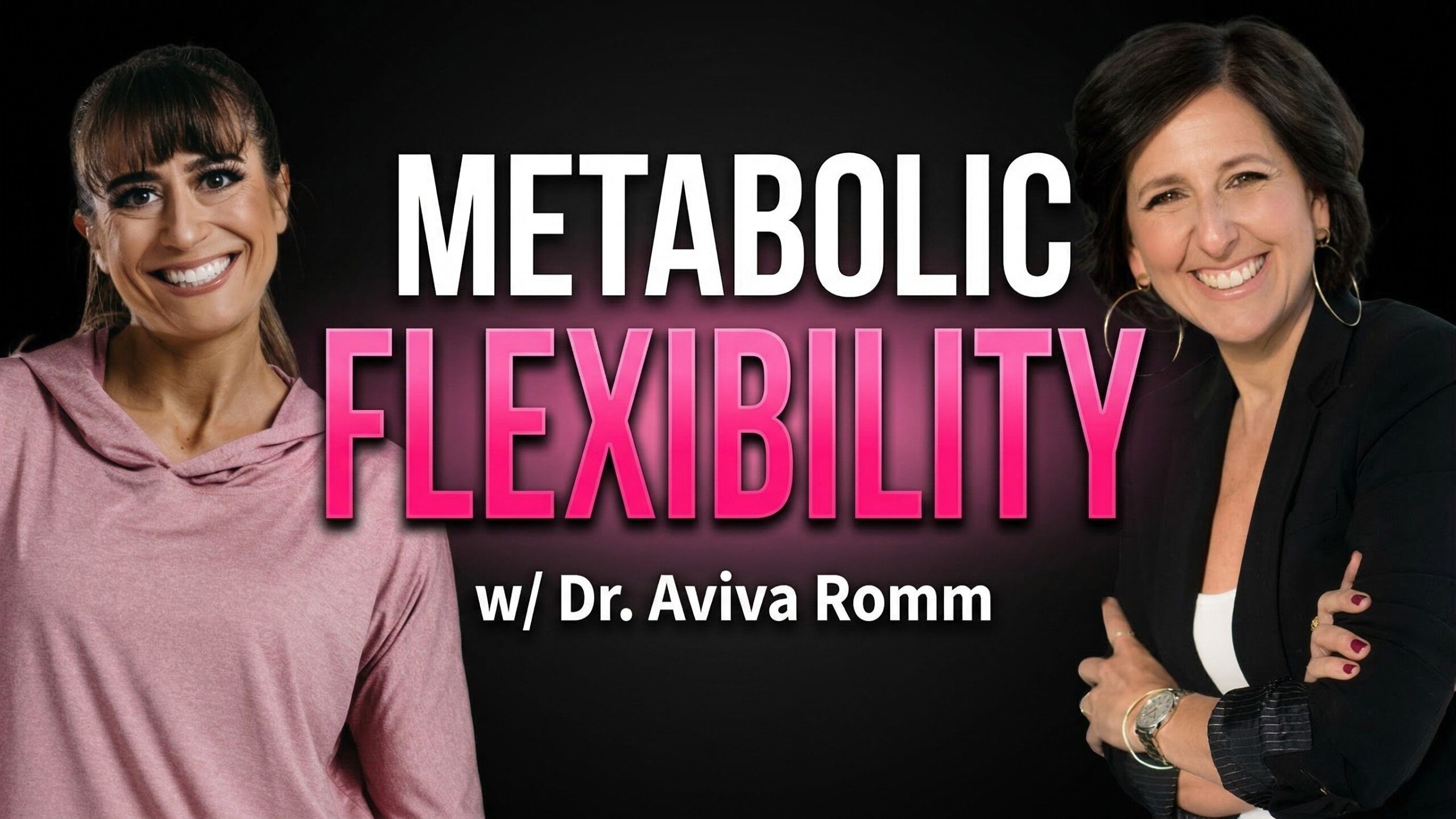
As I get older, one of the things that I think is the hallmark of aging, if you will, well, is having flexibility, right? Metabolic flexibility, muscle flexibility, cognitive flexibility. Part of that is having flexibility in how we live our lives too.
Cori Lefkowith (00:21):
Today on the Redefining Strength podcast, I'm joined by Dr. Aviva Rom, a physician, midwife, author, and one of the most trusted voices in women's health. In this conversation, we dive into what real strength looks like beyond control, why biohacking isn't the answer for women and how learning to pause, listen, and set boundaries can be one of the most powerful things we ever do. So let's dive right in. All right. So I was super excited to chat with you because I feel like your definition of strength is one we need to lean into more and one that women are embracing enough. And so off of that, because I think it's like true resilience comes from regulation, not from control. So I would love to hear what does strong mean to you now and how has that definition evolved over the years?
Dr. Aviva Romm (01:12):
I think strong now at this moment in my life means to me the capacity and literal ability to do any of the things that I want or need to do. And so that could be lifting what I want to lift, literally in terms of weights, but even getting a heavy carry on like all the pottery I just brought back from Mexico City into the overhead of a luggage bin or traveling like an airport, because man, I can put on 7,000 steps in an airport these ... You know what I mean? Getting from one end to the other. So it's the ability to do the physical things that could be imagining in 15 years that I'm lifting a seven-year-old grandchild for some reason. It also means the mental and cognitive capacity to do the things that I want to do. So whether that is writing the book that I'm currently writing, but that also means a certain amount of grit and emotional capacity too.
(02:19):
So strength to me is all encompassing. Strength to me is also the ability to have, let's call it maybe soft power. So we think of strength as this very outward facing, forward facing, like I can lift that, I can do that, I can accomplish that. But there's a soft power that is a strength also. And that's the strength in being able to set boundaries without fear that I'm going to miss out on something if I know that the strength I need right now is in saying no or powering down or taking a rest or not accepting an opportunity. Strength is the ability to say I'm sorry or to offer forgiveness because I have emotional capacity and resilience. So these are all different ways that strength are showing up for me right now in my personal life.
Cori Lefkowith (03:18):
I think that's amazing. And I think you touched on so many things we don't often consider a strength and we even run from, but the more we embrace, the more we really empower ourselves actually.
Dr. Aviva Romm (03:29):
Absolutely. I mean, I think that it's kind of been an interesting time in the wellness space in that this idea of biohacking, which I call bro hacking, that actually came out of Silicon Valley as a way to kind of almost like super optimize and override our body's messaging has been taken up by women. And I'm all about women who power lift and build and create this incredible physical physique or women who are just pushing and pushing and accomplishing and creating. But I think that we lose something, particularly as women, when we are hacking our bodies instead of listening to our bodies. And there's a really deep strength in listening to what our true needs are. And that could be a need to create, compete, accomplish, do, but it could also be a need to replenish and go within and dial back and dial down. And we don't always give ourselves that.
Cori Lefkowith (04:38):
In seeking to optimize, we almost treat ourselves so much like a data point instead of realizing that we're unique. And I think that it goes back to sort of self-trust. We put our trust in all these outside things, but not in ourselves and our actual lived experience. How can we go back to listening to ourselves better and recognizing that strength?
Dr. Aviva Romm (05:00):
I love this question. I love what you were saying about treating ourselves like data points. I was just talking with a very successful, very accomplished marketer who has her own company and she has a podcast and she was interviewing me and she's in her mid-forties and she was telling me that she plays Mahjong, which is like such an old school grandma game. She plays it once a week for two hours with her girlfriends and she wears an aura ring. And she said, it is like her favorite time of the week. It's two hours of laughing, connecting meaningfully, playing a game that her grandmother played so is so close to her heart, good snacks, time off of work and no devices. And she said, "It's so nourishing for her." But then at the end of it, she looks at her aura ring and her aura ring shows that her stress was elevated.
(05:51):
And she's like, "Oh my God, I'm like, my stress is elevated. What does this mean?" I'm like, stress can be a positive thing too, right? When we're having fun, when we're excited, that's ramping up some of the same physiologic responses that stress does. Stress isn't the problem. It's like overstress, chronic stress, intense, repeated stress and just giving yourself permission to trust your lived experience. You're having this amazing time and then you're questioning yourself because your aura ring says you're stressed. We are treating ourselves like data points. So I think just learning to listen to our lived experience more, paying attention to our bodies as the most accurate barometers. If you're not sleeping well, you know you're not sleeping well. If you've had a good night's sleep and you wake up rested, but your aura ring says you were tossing and turning, we know that that data is not helping people sleep better.
(06:47):
We know that there's data that shows that devices like that that are measuring our sleep are actually having a negative impact on our sleep. So how did we get so far from just listening in? And I'm not saying we don't use devices, we don't check our blood pressure, we don't do those things, but let's spend more time just listening to the messages our bodies are giving us because the more we listen, the more we become aware of their subtle cues too. And we're so used to pushing past those subtle cues. We don't take the rest when we're tired. We don't have the yoga day when we've been pushing our runs and then we end up with the sprain or the strain when having just taken that rest or having taken that yoga day or the day off might have actually been what we really needed.
Cori Lefkowith (07:30):
We are a society that wants more, more effort. We equate with better results, faster, more data, we equate with being able to make more changes, but there is just a reality to life. When you're living, things aren't optimal all the time and that challenge isn't necessarily bad. And we have to sort of own that what might be optimal isn't actually optimal if we can't do it every single day. So how do we, or how do you help people step back and have that awareness of what they really need and start listening to themselves again? Because I think the slowing down is something that, I mean, I even know personally, I struggle with that, but the more I've done that reflection, the more I see the superpower of it.
Dr. Aviva Romm (08:11):
Yeah. I think that we have to listen to the symptoms that we're getting, first of all, or things that we call symptoms when they're really quiet little whispers, ideally. And the only way to do that is to literally take some time every day for a hard stop, even if it's just five minutes while you're sipping a morning tea, coffee, or matcha. How am I doing? How am I feeling? What do I need today? What do I need right now? And getting honest with ourselves about that. And a journal is a great way to start to track your trends and pay attention. You don't have to do any fancy journaling, but while you're sipping that tea or sipping that coffee or sipping that matcha, whatever you do as your little moment in the morning, make that a moment for reflection and intentionality and trust that if your body is giving you signals, those are really important to listen to.
(09:08):
If you're just pushing and pushing and pushing and you're finding yourself getting injured, or as women, we know that our bio rhythms, our exercise capacities, our muscles, our flexibility and our balance change across our menstrual cycles. So if you're two days before your period and you're like, "I just really feel like I need a on the mat yoga day or I need a day off," it's okay to listen to that even if you're training for something. And here's the thing, there's been some really good research in the psychosocial world and in the athletic world looking at pauses, right? We know that there have been studies looking at some of the world's top violin players. What do some of them have in common? They actually take breaks during their practice. They don't necessarily practice eight hours straight through. They'll actually take a break for an hour, twice a day and do something different.
(10:12):
We know that athletes who take time to replenish and repair, particularly after a competition or after a marathon they've been training for, if they take that intentional repair over time, they're less likely to develop post-performance viral problems, which are really common amongst athletes. So how do we build in rest and repair as part of whatever it is that we're doing as a training program? And how do we listen to our variations as women across our cycles and just as humans, our variations day to day? And I mean, we all know it like every athlete knows, or even just, I'm not an athlete, but just I'll have a day where I can lift way heavier than I can list on another day where I'm just like, "What is going on? " And then I start judging myself, "What's wrong with me? Why aren't I pushing harder?" Instead of going, "Okay, for whatever reason, I'm having a little more muscle fatigue today.
(11:11):
I need to actually listen to that and not judge it and push against it. " Not saying there aren't times we don't challenge and push ourselves, but part of it is like weaving in that natural, we need days for flexibility, we need days for balance and we need days for challenge.
Cori Lefkowith (11:30):
It really does come back to that constant reflection where you recognize there are ideals. There might even be ideals to sync your progressions with your cycle so that you can push harder at optimal times. However, if life doesn't allow that, it's also recognizing it's okay to push at a time that maybe isn't as optimal because that's what your life allows as long as your body feels good. So it's this balance of knowing what might be optimal, but also recognizing what is doable to be consistent. And then I can tell you, and as I've mentioned, I struggle to reflect at times or pause. And when you said pause and the power of it, it was like, yes, but that is the hardest thing to do because we are so conditioned to do more. So how do you mentally accept that there is so much power in that pause when at the time it doesn't give you that satisfaction?
Dr. Aviva Romm (12:23):
It's funny, when I was in medical school, one of my professors said he had this phenomenon where some people are super sensitive to when they're sick and then they're like, "Oh, I can't go to work today. I have a cold." There are people who are the opposite and I'm one of these people, and I didn't realize it until my professor said it, that I could be coming down with something and convince myself I'm not. I'll convince myself I'm just wimping out. So I might have a day where I planned to do something physical, like a big hike or planned to work on my book for eight hours and I wake up and I'm just not at my peak that day or maybe even actually getting sick and I'll talk myself out of it. I'll be like, "Wait, are you just wimping out? Are you just making excuses?" And then I'll realize, "Oh no, my friend has the flu.
(13:29):
I was at her house five days ago and now I'm coming down with something." So knowing that we as people have that phenomenon, some of us are going to be more likely to hyper react to symptoms, but some of us are going to be more likely to talk ourselves out of paying attention to how we're feeling. And I think that high performers are often going to be in that second group. And so just being honest with ourselves, and again, it's that moment to hit pause and say, "What is honestly going on for me right now? And why am I also putting so much weight on this today?" The other thing is knowing that even across, not just across our cycles, but across our days, we can have different bio rhythms. So we can set rules for ourselves like, "I have to work out for X, Y, Z time every morning." But then maybe you have a morning where, and again, I'm not saying don't stick with your goals or don't push and challenge yourself, but maybe you have a morning where you didn't get great sleep last night or you're a mom and your kid woke up four times and you're like, "Ugh, well, I just can't do it this morning." Don't set rules like, "Oh, you could actually do it later in the day or you can do it before bed." And I've had that where I've had a morning where something came up or life happened and then I'm like, "Oh, I didn't push hard enough to work out this morning or do whatever it was.
(14:55):
" And then I'll remember, "Oh, but I can do this at five o'clock today before I make dinner, before whatever, whatever." And sometimes I'll even have a better workout because my body's warmed up and I'm like, "Oh, that was great. I have a whole different perspective on my experience doing it in this different window." So I think it's like having goals, having discipline, having grit, having consistency. As I get older, one of the things that I think is the hallmark of aging, if you will, well, is having flexibility, right? Metabolic flexibility, muscle flexibility, cognitive flexibility. Part of that is having flexibility in how we live our lives too.
Cori Lefkowith (15:43):
Yeah. I would even say off of that, it's like adaptability. It's recognizing that constant tug of war between, am I giving myself grace because I need it or am I giving myself grace because I've hit it hard that I'm uncomfortable with? Where is that pattern? And that's even where that self-reflection and using our own lived experience almost and seeing it as an experiment where we have all this data from it to know which we tend to do. Because as you mentioned, high performers tend to not give themselves grace to take time off when they should. Yes. But then there are some people maybe who tend to give themselves a little too much grace and not pushing when they need to push is why they haven't seen results. But that's all previous self-reflection to recognize where we need to adapt. And I do love that you said a habit doesn't have to be done in one form.
(16:27):
We can shift our routine.
Dr. Aviva Romm (16:30):
Yes. And adaptability to me is such a great word. There's been a lot of research over the past 60 years now on the stress response and stress physiology. And we used to have this concept in science that applied to life and physiology, which was homeostasis, right? And homeostasis is an important concept. It's like your cells need homeostasis of pH or certain temperatures to stay alive and thrive. But there's also this concept called allostasis. And allostasis means the ability to adapt and change to our environment and to the stressors that we're exposed to. And when we can't adapt anymore because the stressors are so great, that's called allostatic load. That's when things start to break down because there's too much stress. But the ability to adapt is like flexibility. I think flexibility is almost sort of the physical manifestation of adaptability. And it's such a powerful word because we're going to have to adapt across our life cycles too.
(17:44):
When you're pregnant, when you're postpartum, when you're in perimenopause, menopause, when you're 85, how do we think of flexibility and adaptability across our life cycles, our menstrual cycles, our 24 hour bio rhythms, all the things across seasons, like seasonality.
Cori Lefkowith (18:02):
Yeah. And I mean, the balance, so to speak, at all those times is different. So this idea of maintaining one balance is sort of not really realistic. And I think it's actually what holds us back from truly seeing results because we're looking to optimize this balance, but balance based on what? Based on your holiday habits, your summer habits, your habits when you're 20, the habits you have when you have a family, the habits you have when you have your kids out of the house. Even you hear it with hormonal balance. What is this balance we're seeking and are we actually holding ourselves back seeking it?
Dr. Aviva Romm (18:37):
I think we use the word balance as sort of a catchall for an inner sense or an inner state of calm or peace or a sense of being kind of like, not in control, but a steadiness that we desire. And we apply that. When we talk about hormone balance, if you and a girlfriend or a girlfriend and I are getting together and we're talking about, "Ugh, my hormones feel so out of balance," we know what we mean by that, right? But literally your hormones are in a state of constant second to second flux, day-to-day flux, cycle to cycle flux, flux across your life cycle. And if we can understand that and be adaptable to that, it would be such a win for women. I honestly feel like problems like PMS, I mean, yes, we can have neurotransmitter issues, we can have hormone issues, but I just think about too, if every woman knew that she had the flexibility to take one to three days off of work, whenever she wanted in that week before or the first day of her period, how much of our PMS would actually go down?
(19:56):
Because what we really want to be doing that during that time is getting a little more internal, right? And then we're up against culture that's telling us, well, you have to keep going at the same kind of man's world steady state when you're actually much more fluid than that.
Cori Lefkowith (20:15):
But I think it's recognizing that things are constantly slightly in flux over trying to strive for balance that allows us to meet ourselves where we are right now and control what we can't control versus we do try and force this rigid thing. And I think that leads to even demonization of things that are natural, like things in our body you hear constantly, I mean, it becomes mainstream. So people will say like, "Oh, cortisol, it's evil," or, "This one thing is evil." And so all of a sudden we're trying to control things that are slightly natural processes and that creates oddly more stress, which sort of leads to the problem that we're trying to deal with in the first place. So it's like, how do people start to navigate what's actually important and understand that there is this constant flux going on?
Dr. Aviva Romm (20:55):
Yeah. I think it's funny, I've been in this health space for over 40 years now, and it's funny to watch the sort of things that we think are new, but that come and go and cycle through. And this demonization of cortisol is really fascinating to me. It's pretty much the only hormone that if you stop producing, you would die. You can take estrogen, you can take thyroid hormone, excuse me, and if you go off of them, you'll feel the impact if you needed them, but you're not going to die. You put someone on cortisol for long enough and you take them off it, they can literally die. It's such an important hormone to keep inflammation in check. It's such an important hormone for being adaptable and responsive to our environment. And we want to have our cortisol be really responsive. The problem is we're living in a world that is just like, it keeps us in a steady state of chronic stress.
(21:57):
And then on top of that steady state of chronic stress throws these big stressors on top of it. So we're overstressed and then on top of it, we get these big upheavals and it keeps our cortisol just out of control, jacked up, or eventually we start to get depleted and we start to see health problems. But it's such a misinterpretation of what cortisol really does.
Cori Lefkowith (22:21):
And going off of that, not only seeing the chronic levels of stress we might be suffering, but even better addressing our body needs as they change to be more flexible metabolically, muscle wise, with our lifestyle more adaptable. Thinking about all those things, are there practices that you personally have that you work with people to have to help them really address their lifestyle and make those changes that are sustainable for them to be flexible, to age well, to be adaptable? Because I think so often, and I see it more and more, we start to write ourselves off and just say, "Oh, this is the way it is now when that's not really the
Dr. Aviva Romm (22:57):
Case." Yeah. I mean, I think that it's going to sound so trivial in a way in a world of biohacking and endless devices that we can measure everything at home with now, but it really does get back to very simple things. One, keeping our blood sugar steady. Steady blood sugar is going to fuel you throughout the day. It's going to keep your brain healthy and energized, and it's going to keep your body out of a stress response. We live in a culture, particularly as women, that drives us to skip meals, live on coffee and that muffin or that energy bar or that sugar-filled smoothie that we think is healthy, but actually has 35 grams of sugar hiding in it. And just paying attention to eating, you don't have to go crazy on high protein, but making sure that you're getting a good kind of macronutrient balance each time you eat.
(24:04):
So some good quality protein, a good quality fat, and potentially a healthful whole grain or plant-based starch carb, that can really make a difference. Being non-negotiable about your sleep time, including time off of devices before bed, I think is really critical. Allowing ourselves the permission to turn off every notification on everything. I am a busy practitioner with a business that I am the CEO of and an entrepreneur. I have four kids, two grandkids, and lots of reasons for people to want to contact me all the time. I literally have zero notifications on anything and keep my cell phone access to the people who, if they needed to reach me, they could. It's really possible to do that. And it's so important because these notifications are designed to constantly keep us in this state of activation and alertness. Knowing that you do not have to be available to everyone or anyone all the time, time in nature, really important.
(25:22):
Connecting with other people, people who bring you joy or who make you laugh or who make you feel like you can be your full self and some movement that brings you joy and challenges you and pushes you and keeps you active and some movement that brings you flexibility. So balancing those things and staying hydrated. I mean, really it is not more complicated than that. If we do those things, we will have all the elements that we need for optimal health. And of course, assuming that you're not eating an ultra processed diet and you're not smoking cigarettes and all the other things, those are just key core things that we can do every day.
Cori Lefkowith (26:06):
You're never above those basics really. You're
Dr. Aviva Romm (26:09):
Not.
Cori Lefkowith (26:09):
I feel like you brought up now, and you actually mentioned it earlier, boundaries, but I think boundaries are one of the hardest things for so many of us to set. We want to be that supporter. We want to show up for everybody else, and in that we don't use the airplane, we don't put our oxygen mask on first, even though we know we should. How do you help people set those boundaries? Because I think that is really the most challenging thing sometimes.
Dr. Aviva Romm (26:39):
Yeah. So I heard a great kind of rule of thumb for setting boundaries around bigger things. So if somebody asks you to say, speak at a conference in six months, ask yourself if you could do it tomorrow or in the next couple of days. And if the answer is no, you don't have time, chances are you will not have time in six months. We have this belief that your plate is going to suddenly miraculously get cleared off at a certain point and your inbox is going to be empty and suddenly the skies are going to part and you're going to have all this time. But research upon research shows that nature aboard a vacuum and your inbox is not going to be empty and your plate is not going to be cleared. So you know that experience where somebody asks you to do something and you're like, "Oh, that sounds so exciting." And then six months later you're like, "Oh my God, why did I say yes to this?
(27:35):
" Or when you do the happy dance because something gets canceled and you're like, "Oh, now I have time to myself, pay attention to that. " And then pay attention literally to how you feel and what your motivations are when somebody asks you to do something rather than just automatically saying, "Yeah, sure, I'll do it. " Take a beat and really go within. And if you can't give an answer right then because you're not sure or your automatic impulse is to say yes, but you know that you tend to over promise and then feel stressed about it later, or you're already tapped and you're already feeling stressed. And you know that expression, right? If you want something done, ask a busy person. I mean, the people who tend to take on a lot and do a lot are women who tend to be high performers, and that's where the burnout is often highest.
(28:29):
That's where we have high performing anxiety, high performing depression. So we're not often honest with ourselves about it, but if you have a hard time saying no because you're a generous person or you're maybe a little bit of a perfectionist or people pleaser, just say, "I need to think about that. Can I get back to you tomorrow?" Especially if you're face to face with someone, because sometimes it's easier to say no by email. And you don't have to give an explanation, but say, "I would so love to help you with this, but I've really thought about it and right now I just am unable to with other things that are on my plate." You can also say no with options. "I can't do that right now, but I have someone in mind. Let me ask them and get back to you. "But really listening to, if you're chronically overwhelmed and chronically stressed and chronically burning the candle at both ends, what is your intention and motivation in saying yes?
(29:23):
And even if you don't know, if something inside your solar plexus is contracting and one thing is coming out of your mouth, but you're feeling something different in your body, trust what you're feeling in your body. And even if you've said yes and you later have to backpedal, you can just do that with a brief apology. I'm so sorry, but I realize I actually have to decline on this.
(29:46):
Setting boundaries around where you feel emotionally safe is also important.
Cori Lefkowith (29:53):
I think you gave some great examples of even using that pause and implementing the pause to give yourself time to really consider what you want, But I also think there's a struggle with this of that doubt and that little bit of lack of self-trust when it comes to replying yes or no to experiences. And maybe it's even my own personal workings right now, but I was thinking about examples of where I would want to say no to something, but it wasn't truly out of a lack of boundary. It was out of a discomfort from doing that new thing. So there adds a little level. But I'm saying then how do you balance both?
Dr. Aviva Romm (30:32):
Yes. There's a book by Shonda Rhimes who created the show Grey's Anatomy and a few other shows. And her book is something like The Year of Saying Yes. And she came from this place where she had a lot of fear around trying new things. And so for her, it was the opposite. It's a great point that you bring up, but sometimes it's pushing past the boundary that you've allowed yourself to be held back by and allowing yourself to say yes. Or sometimes the boundary is shifting your boundaries. It's like you might be a mom with little kids and you think you have to say no to taking care of yourself or going to that dance class or studying that new thing. And the boundary is, I'm going to put a boundary around how much I give externally so that I can actually do some things to take care of myself.
(31:26):
And that's a very powerful boundary.
Cori Lefkowith (31:28):
It does come back to that flexibility, that adaptability, almost not seeing the world as binary as we make it, boundary or no boundary. No, it's understanding where the boundaries need to be and where you need to push them. But how do we let go of that binary perspective? Because I think it ties back to how we've used symptoms, so to speak, how we've used so much in our life.
Dr. Aviva Romm (31:47):
Yeah. I think that underlying a lot of this is as women particularly, how many of us really allow ourselves to ask ourselves, what do I honestly really, really want and what do I honestly, really, really need? And I think in getting honest with ourselves about that, and it may be that you need to work with a coach to have somebody ask you those questions and get really clear about that for yourself. But I think in starting to understand what our deeper needs are and our deeper desires are, we start to get away from the word should. And I think a lot of those binaries come in the word should. And I say to my patients all the time, "Are you shoulding on yourself?" I should do this. I should do that. And more like, "I want to do this and I want to do that.
(32:47):
" Think about it in terms of even exercise, how often we think we should do something and then we resist and rebel and we don't do it. I should go to that class today. I should go to that yoga class. I should take that run and that's very different than I want to. And so finding the why, finding the deeper desire, the deeper why for yourself behind it can actually be more of a motivator than the should. And that takes us out of the binary.
Cori Lefkowith (33:19):
I think we often feel like change is so hard and it slightly sounds like part of the reason it's so difficult is because of the shoulds over the I want to. So if you're looking at making a change and you're finding yourself resisting it, almost reframing it as all the things you get to do or you want to do with that change.
Dr. Aviva Romm (33:39):
I think change is hard too because as you said something earlier about the very start of our chatting together, you said something about people needing to push themselves because if they don't push themselves hard enough, they don't see results. But I think change can be hard for a few reasons. One, it does take time and persistence to see results. And sometimes we give up on making the change because we don't see the results quickly enough and we're in a very instant gratification culture. And for most of us, change doesn't happen overnight. It can take weeks or months to see meaningful change, for example, in muscle tone or what have you. The other thing, and I really learned this phenomenon when I was working on my book, Adrenal Thyroid Revolution, and this concept of we think about willpower as something fully within our control, but back to cortisol, we know that when we're stressed, cortisol can hijack our frontal cortex.
(34:47):
It can literally rewire the frontal cortex. And the frontal cortex is where we have executive function and choice, a. K.a. Willpower.
(34:58):
When we are people who are high performing human beings, who are showing up for everyone else, you're showing up for your parents, you're showing up for your partner, you're showing up for your children, you're showing up for your job, who's the only person that you can really break a date with or break a commitment with that you're not going to feel guilty about too much? That's yourself. And so when we get into willpower fatigue, where we tend to break our commitment is to the things that are hard that we're doing for ourselves. And it's almost like we need to give ourselves permission to be in the breakdown, to not do the thing as a way to relax. And so sometimes we blame ourselves for not pushing harder when what it really is, is that we've been pushing so hard that where we don't show up is for that exercise or for making that meal and we offer the quick fast food instead, or for taking that time to take that walk or that hike, that's where we kind of punk out on ourselves.
(36:10):
And so I think if you're not finding yourself sort of having the grit or the stamina or the willpower to push, sometimes we need to say, "Okay, well, what is it that's making me feel so overwhelmed that I'm not showing up for myself on this thing that I really do actually want to do? " And of course, then it comes back to the want to. I want to, I get to, and I really want to show up for myself. So what do I need to dial back on that I can dial back on that's keeping me in this state of constant stimulation and stress and overwhelm? The other thing is I think we forget sometimes that it's, I've had this experience and I'm not even a huge social media, like I don't doom scroll or anything like that, but I've had this experience where I'll go look at an Instagram post that I've posted and then I'll go to like other people's posts because that's what we're supposed to do when we have social media, right?
(37:15):
And I will look up and I'm like, "Oh my God, it's 45 minutes later. Where did that time go? " And how many of us are saying, "I don't have time to cook that meal or take that hike or do that exercise or join that dance class or join that language class when we're spending two hours a day accidentally scrolling and two hours a day watching yet one more Netflix episode." So looking at where our time is going and bleeding out is also really important. But then sometimes we are watching that one extra Netflix episode because we are so overwhelmed, we just want to dial out and disconnect phrase or it's complicated.
Cori Lefkowith (37:56):
It is complicated, but it's taking that step back to really reflect because you hit on something I think so important to recognize is that everything is thing, right? All stress goes into one bucket, I like to say, and you do have life stressors that might elevate or increase. And then you might start saying, "Oh, it's my workouts or my discipline with them," or it's, "Oh, it's my discipline with myin." But it's really that other areas of your life has shifted and then you're on a thing that feels hard in the moment instead of recognizing, okay, well, if this feels hard because these other areas have shifted or you can't shift different things going on, so you have to have it. So it's like, how can you focus on 1% improvements that you can take every single day to truly move you forward and set those minimums almost?
Dr. Aviva Romm (38:38):
Absolutely. I love that thinking of all the stress going into one bucket. I think anxiety is an interesting thing too. It's like you can have sensations of anxiety in your body and the anxiety has to go somewhere. So you're like in your mind, "Oh, I'm anxious about this. I'm anxious about that. I'm anxious about that. " But really it's just a sensation in your body and resistance is that sensation too. It's like that resistance is a sensation that sometimes if we just go, "Okay, this is just a sensation. It doesn't mean I don't actually want to make that meal or go see that friend or go for that run." Just recognize it for what it is in the moment and let it pass. And then you're like, "Okay, I let that pass. That was an emotion, that was a sensation. Now let me do the thing."
Cori Lefkowith (39:33):
So much of this, I keep coming back to the power of the pause. If you can pause and recognize it's a sensation versus something you have to act on, ultimately you're going to move forward.
Dr. Aviva Romm (39:42):
Yeah. The other thing to the opposite of the pause is not giving yourself too long to talk yourself out of something. So I happened that pushed me to be far closer to a book deadline than I ever wanted to be with still a lot to write. And I started doing this discipline with a girlfriend. She was working on a book too, although not on a deadline, she's just enjoyably writing a novel. But we started this practice where we would get up and then by 6:30 in the morning, be on a yoga mat or doing some kind of physical movement. And sometimes I'd wake up at like 6:15 and be like, "Oh, I didn't really want to do that today." But then it was like, "Nope, you made a commitment and do it. " So it was like the commitment was tying, not talking to my husband in the morning, to getting to the yoga mat, to getting right to my desk with a cup of tea or coffee after and working on the book and making it kind of almost like a chosen spiritual practice, if you will.
(40:58):
I made it my sauna. I made it my, this is a non-negotiable Monday through Friday. And look, if I had a day where I didn't do it, I didn't do it, but it wasn't like, "Oh, now it's all gone." I just picked it right back up the next day. But having that, this is the time, these are the actions that are stacked together because the resistance was working on the book and the stress of the deadline. So I tied something that would make me feel good with it. And then I had a girlfriend doing it too. So we were kind of in accountability, like loosely in accountability, "How'd it go for you this week?" And when it went really well for her that week, that kept me spurned on and vice versa. We both knew that even though sitting and writing a book for six, eight hours is isolating and intense and its own kind of hard, we weren't alone in doing it, but it was very much like, "Don't stop and think about it.
(41:53):
Just do it. Even whatever thoughts that come up, let the thoughts happen, but still do it. " And that has been really amazing also.
Cori Lefkowith (42:00):
I think you hit on something that can be such a valuable tool, that connection to something we want to do, but even focusing on the should was something we want to, right? So it doesn't feel like we're pushing or restricting- Yeah, 100%. Versus like if you said, "I have to write," all of a sudden you're pushing yourself to do something you kind of don't want to do, so you get that pain pushback. The other eased you into it almost.
Dr. Aviva Romm (42:22):
Well, and it was like, I remember having these different inflection points over the past few months because I'm still on this deadline, but saying to myself, "Okay, if you were 10 years ago, 20 years ago, 30 years ago, and you got this book contract and this book advance, you would be like, Wow, I got that. You wanted this your whole life and now you have it. So where's the actual embracing of that and the gratitude and the celebration of like how many people spend their whole lives wanting to publish a book that they'd never get published? You've got this incredible gift.
(43:01):
I love that Eminem song, Lose Yourself. And it's like if you had only one chance, would you take it? And that's what it felt like. Not that it's only one chance, but it was like, okay, I'm going to lose myself in this and allow myself to embrace the gift of this. I've got this body that I can move. I've got this book that I get to write and give to other people at the end of the day, and I get paid to do something I love too. So all the resistance I realized, again, what are the stories I'm telling myself? Where is this resistance coming from? And I mean, resistance is part of physics, right? We know that there's inertia as a physical phenomenon, things that are at rest, it's harder to get them moving and things that are moving, it's harder to get them to stop.
(43:50):
So when you're in that moment of not doing the thing and you feel resistance, know that sometimes that resistance is just kind of a physical phenomenon that happens. And then once you start doing the thing, you're like, oh, I actually really love this and I feel really good about doing it, even if it is hard. And that's another thing too is I didn't realize this until maybe, I don't know, in my 40s, but I grew up in an environment where I was in a very intensely inner city school. I was a really, really smart kid academically. I did really well and school was always really easy for me. And then middle school was really easy for me. And then I went to this very competitive, intense New York City public high school. And some things were still easy for me, like biology and literature and English and writing come really naturally for me, but not so much.
(44:54):
Trigonometry was a real struggle for me. And I remember feeling like, "Oh, I'm a failure. I'm not good enough. There's something wrong with me. " And at some point, later on in my life, I realized that hard doesn't mean I can't. It doesn't mean that there's something wrong with me. It doesn't mean that I'm inadequate. It just means that I'm learning something new and often learning and doing something new is actually hard and that hard isn't bad. We equate hard with bad, but it's not. It's just hard. And that doesn't mean you can't do it or learn to do it or that it doesn't become easier. So that was another just little life lesson for me that I think is so important to share.
Cori Lefkowith (45:41):
Hard is what builds the strength and gets the good things like your book, which will be coming out, because you're doing the hard right now.
Dr. Aviva Romm (45:47):
Yes. I was
Cori Lefkowith (45:47):
Going to say off of that, I want to ask you some rapid fire or not so rapid fire, rapid fire questions. So the first one is daily habits. My day isn't complete without ...
Dr. Aviva Romm (45:59):
Ooh, that's a really good one. My day isn't complete, I think without just a few minutes of quiet to myself.
Cori Lefkowith (46:08):
I love it. That pause again. And then what's one health or wellness myth you wish most people would stop believing?
Dr. Aviva Romm (46:17):
I think that we have to use devices to know what's going on in our health and our bodies. No, that's going to be so heretical to say, but-
Cori Lefkowith (46:28):
I love it. I love that. But again, it goes back to there's not just one way of doing things. And the more we share all the perspectives, the more we can really find what meets us where we are to move forward.
Dr. Aviva Romm (46:37):
Totally.
Cori Lefkowith (46:38):
And then what's the hardest lesson you've learned so far?
Dr. Aviva Romm (46:43):
Probably how to patiently accept help. I'm a do- it-myself kind of person, but I'm at an inflection point, for example, in my business where I can't do it all myself. And so learning how to cultivate the help I need and be patient with someone as they're learning to meet what I need, kind of like surrender control and build a little trust, while at the same time being honest with myself, if it's not working and really learning to trust my authority and my inner knowing. But I think that balance of learning to trust, learning to accept help while still maintaining my inner authority.
Cori Lefkowith (47:30):
I think that's great. And I think it's definitely something a lot of us struggle with because we don't see it as being strong if we're not the lone wolf, but asking for help is so key. And then when you need to reset or recharge, what's your go- to ritual?
Dr. Aviva Romm (47:43):
I mean, just honestly going for a hike, anything in nature, working in my garden, that is one of them. And then when it's really cold, deep winter, because I live in the frozen north, sometimes making a cup of tea and reading a novel or reading a good book.
Cori Lefkowith (47:58):
And then one final question, what's one piece of advice you'd go back and tell your younger self?
Dr. Aviva Romm (48:03):
Oh, that's a question I asked at the end of my podcast too. That I would tell myself perfect is the enemy of the good. Just to reframe my standards that perfection is not real and to work from a place of passion and confidence, not external driving perfection, not like performing to prove something to someone else, but trusting the work that comes from within myself as it is perfect and in its own way.
Cori Lefkowith (48:39):
I love that. And what projects, I know you talked about your book are lighting you up right now, and where can people connect to learn more about you?
Dr. Aviva Romm (48:46):
Ooh, I think the projects that light me up most are any projects where I am working with teaching, supporting, and mentoring other women. So that is essentially the panoply of my online programs. And you can connect with me at my social media, which is Dr. Veva. Dr. Veva Ram, that's on Instagram and through my website where I have tons of free information, podcast articles, that's a great way. But on Instagram is wonderful because that's really neat in their answering comments.
Cori Lefkowith (49:24):
And then one final thing, if listeners were to take away one message from this podcast, what would you want it to be?
Dr. Aviva Romm (49:32):
Be good to yourself.
Cori Lefkowith (49:34):
I love it. That's perfect. Thank you so much. I
*Note: This transcript is autogenerated there may be some unintended errors.

0 Comments