Cori (00:00):
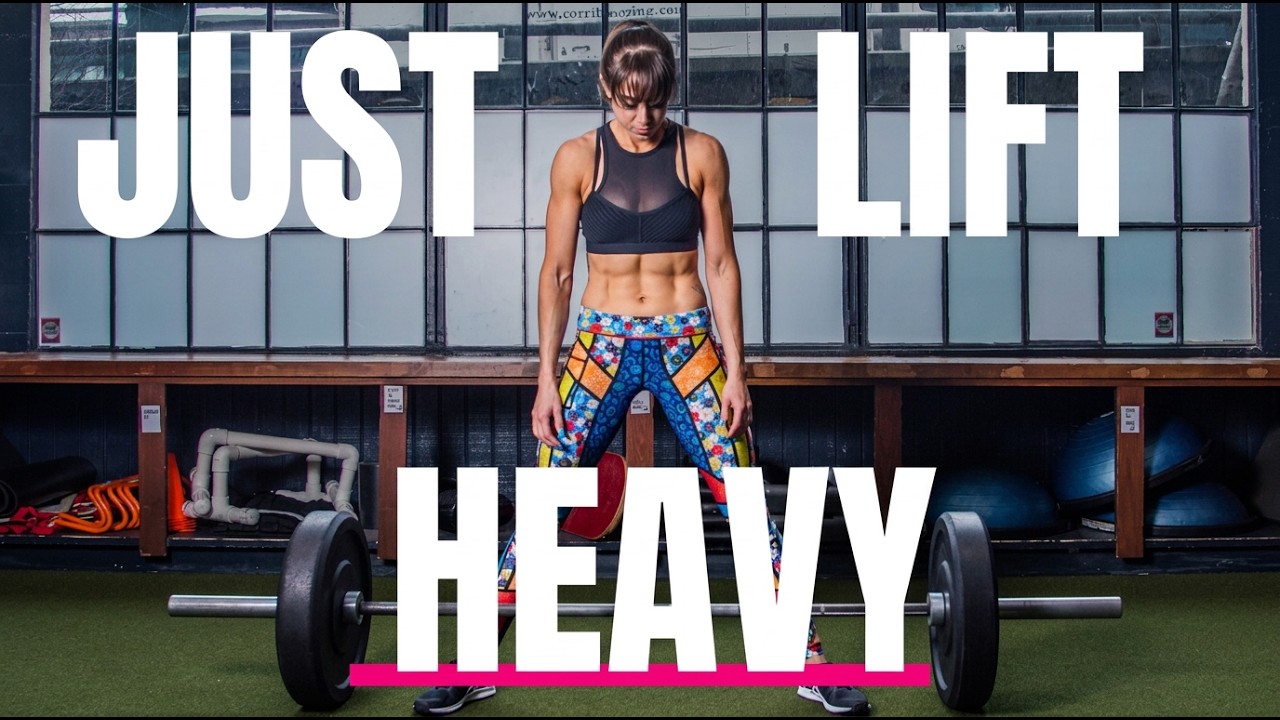
Just lift heavy is probably the reason you're not seeing the body recap, the muscle gains and fat loss that you want. And I know that might sound like an unpopular opinion, and I actually love lifting heavy. I'm a meathead at heart, competed in powerlifting. I think there's so much more nuance to it. And so when I had someone actually comment just lift heavy, I started to realize how our push towards that heavy lifting might actually be sabotaging people from using all the diversity of forms of progression out there that will lead to the best muscle gains and them feeling like their fittest, most strongest, fabulous selves. So I want to push back on this lift heavy mantra and show you why demonizing other rep ranges, other types of moves, getting out of this mindset that one size fits all and we have to do things in one way is so important to seeing the actual results that you want.
(00:48):
Now, before I dive into all of these different things, if you've enjoyed the podcast, please go make sure to subscribe, follow, and also leave a review. Really appreciate it. It helps me spread the love and get these tips out there to more people so that they can feel their most fabulous and really see the progress they deserve from all the hard work they're putting in to improve their health, their fitness, their wellness. So just lift heavy. When we think about this and the mantra that's come up is working in that maximal strength, lower rep range using very heavy lifts and compound movements. So we think deadlifts, squats, bench press, we think barbell rows, these types of movements. And I think they are super key. I include them all the time in progressions. I do not think there's any replacement for them. And I think this push towards really lifting heavy in that lower rep range has come about because there was a fear of it.
(01:34):
For a long time, and I can tell you this working in gyms, women were not stepping into the weight room to do these movements. There was a fear also as we get older of doing these movements for causing injury. So there's a lot of reasons we've shied away from this type of lifting, which is why the big push back now towards it, especially because people were doing higher rep ranges with lighter weights. And I think there's also a lot of nuance to it where we've sort of said lift heavy and then we think lower rep ranges, these heavy compound moves. But really even in those higher rep ranges, we're always lifting heavy. The weight should always feel challenging. So I think it's really key to point out because I've had people like, hear this lift heavy, here are the low rep ranges, hear the compound moves, and then fear using the higher rep ranges, not just doing those lifts.
(02:14):
And that's what holds them back from actually using all the different drivers of muscle growth. It also is what leads to us often then demonizing the moves because we get injured doing something we haven't yet earned. Every exercise has to be earned. And I can tell you there's a very weird thing, especially if you are a previous athlete or experienced lifting and then coming back to it or haven't done a heavy lift, even if you've done other workouts recently where we can lift a weight, but we maybe shouldn't yet be lifting that weight. Our connective tissues haven't built back up to that. Our muscles and my body connection isn't fully there to recruit the correct muscles in the correct order. So while we can technically lift it, while we're strong enough, we maybe shouldn't yet be doing that. That's where things like cluster set technique where we actually break down the reps to allow ourselves to have more quality of work with heavier weights can be really key where you do two reps, 15 to 30 seconds rest, two more reps to build up to the maybe six you're shooting for or even five you're shooting for.
(03:03):
So you can break it down, but you want to be very conscious that just because you can lift a weight doesn't mean your body is truly able to handle the load. So if you haven't been doing that maximal strength work, don't just jump right into it. If you are going to include it, think about using cluster sets, consider how you're really building up that weight. So even if it doesn't feel super heavy and fatiguing just yet, and it feels like you could do more, that's okay for a few weeks of your progression. But as much as I like this push towards lift heavy, because it's inspiring people to lift and lower rep ranges, work on that maximal strength, use the heavy compound lifts, not fear those loads, especially as we get older because they're so important to maintaining and building our lean muscle mass and building that maximal strength, which then lets us lift heavier for all the other rep ranges, we can't just say lift heavy and leave it there and fear the other things because really there are different drivers of muscles growth.
(03:50):
There are three main drivers, metabolic stress, mechanical tension, and muscle tissue damage. And they're actually starting to find that maybe muscle tissue damage doesn't do as much as we once thought, which is why with maximal strength where you might not see as much muscle growth or muscle hypertrophy as you do in other rep ranges. But that being said, these different drivers. And part of what impacts what driver of muscle growth you're really using is not only the reps and sets that you're doing, but the rest you're including the type of tools you're using, the range of motion of the movement where you're creating the most tension in the movement, the tempo of the movement, so many other factors. So when we say just lift heavy, we're ignoring the nuance and importance of all these other things. And then again, just lift heavy also means just challenge yourself with the weight that you're using for other rep ranges because there are different forms of strength too.
(04:36):
We have to remember that maximal strength is one form, but working in that six to 12 rep, eight to 12 rep range is more muscle hypertrophy. This is where we can actually maximize growth because of some of the other things we can utilize. And then if we want strength endurance, like you're an endurance athlete, you want some strength endurance work. That's where higher rep ranges might be where you spend some of your time. And then combining all three, that's where it's fabulous. And we also have to notice that the different rep ranges have different impact based on the different moves we do. I can tell you, one of the most popular old school techniques was breathing squats. That was 20 reps of squats at the max week you could do, and that was it as one of the exercises. And the thing is that's very intensive and it created a lot of stimulus for muscle growth.
(05:16):
So just demonizing that, but also 20 reps of like bicep curls can be very different because you might not be able to do that three to five rep max for bicep curls and you wouldn't want to necessarily. But that isolation work, instead of just demonizing isolation moves and only focusing on compound, even though yes, they can be very beneficial when we're short on time. And I'll tell you to focus there if you're really strapped for time. The isolation moves can help you hone in and work a muscle more to fatigue, which can recruit more muscle fibers, which can help you see more growth and really stimulate that strength as well and create that strength endurance, right? Because you're also only going to be able to lift as much as your weakest link. So you might need more isolation work for weakest lengths. Or if you're finding a big muscle group is not getting fatigued in compound moves, you can work it more to fatigue to help with that growth of that stubborn muscle by using those isolation moves, which again might require those higher rep ranges.
(06:01):
So it's really important that we also understand the nuance and that we're not just wanting to adjust one variable. And that lift heavy, again, I know I keep saying this, but I want to keep highlighting this point as I even go into three training techniques that you can implement. Lift heavy is really just about challenging yourself for whatever you're doing, but understanding that there's maximal strength, there's that hypertrophy rep range, there's that strength endurance rep range. And the more we utilize all of them, the stronger, fitter, healthier, happier we're going to be. But it's also recognizing that strength is activation. And I bring this up because I don't know about you, but pushups and pull-ups are pretty tough and they are not a lift-heavy movement, although you're moving your body weight. So you could argue it is kind of a really tough strength-weight ratio thing, but they're body weight moves.
(06:39):
And part of why they're so hard, because I'll even have people comment like, "I'm really strong, why can't I do one," is the mind-body connection. That is a different strength. And that works on our coordination, that's what helps with the balance. It's what prevents falls and fractures so we can react in everyday life, that mind body connection. It's also what then helps us with our maximal lifts to lift heavier because we're able to recruit the correct muscles in the correct orders. It's what can help us run faster and further because we're able to utilize muscles more efficiently. We're able to recruit the muscles so we don't fatigue muscles that shouldn't be working. So that mind body connection work through body weight movements, which aren't using other loads other than our body weight, although you could do weighted pull-ups and those different things if you're ready for them, but they don't necessarily have to be weighed down to be valuable because working on the mind-body connection is another form of strength and it's a form of strength that really pays off so that we're able to recruit muscles correctly to be stronger in other ways.
(07:26):
It's something that pays off for coordination and reaction times and our ability to move well in everyday life without having to be conscious of exactly how we're moving in every moment and avoiding injury. So if you're not working on the mind-body connection, it also might be why you've demonized those heavy lifts in the past because you have gotten injured because you haven't been using the right muscles. Now, three training techniques I really love that actually implement a lot of different things that aren't that just lift heavy, only compound, move, heavy, heavy, heavy lifts in the three to five or one to five rep range. I see more people doing three to five reps recently than just one to five, but the three techniques are six, 12, 25, compound burners, and actually interval work. And I want to start with interval work because so often when we think intervals, we think about sprints, we think about HIP, we think about the cardio conditioning stuff that we do.
(08:10):
But interval work is a great way because you might be thinking, "Well, I've even heard this lift heavy mantra, so I feel doomed because I don't have heavier weights than X at home or I don't have any equipment at home." You can still build muscle. Again, all the other things I said that help with the drivers of muscle growth can be implemented through changing range of motion and tempo. But interval work is a great way to create that training density to stimulate more muscle fibers to help with that growth and really work on muscle to fatigue. And you can do this in a variety of ways, whether it's doing a minute on an exercise that's a compound movement, or it's even combining moves back to back where you do say a lunge and then you do a lean back so that you're working your quads in that lunge, but then you're fully fatiguing them with a more isolated move after.
(08:48):
And that back to back work can help you recruit more muscle fibers to see that stimulus for muscle growth and actually optimize you in hormone levels because of the way you're working things to see better results. That's also sort of the same principle that comes along with compound burners where you're working the same muscle back to back, but you're doing it with two different rep ranges with two different types of movements. So with compound burner sets, you're going to pick an area you want to focus on. Say it's your back you really want to focus on. So the first move is going to be done more in that hypertrophy rep range of six to 12. You can't even go towards maximal strength if you want, but then you're going to do say a barbell row for that. And then if you really want to focus on your back for the second move done right after with no rest, again, why I mentioned rest is also part of what we're using and implementing to see results and create training density in some points and more volume for an area.
(09:34):
You're going to right after work that back to fatigue by including something like a backfly where you're really isolating a little bit more. Your biceps can't necessarily come in and help as much with the movement where they can with the row, with the elbow flexion. And so you're going to really isolate your back with 15 to 25 reps, but you're going lighter with weight, but you're using a weight that potentially you even have to pause at 15 reps to eke out 20 or 25. I love using rest pause technique in that way. But you're doing those moves back to back because you're getting that compound movement, you're lifting heavier, but you're also working a muscle fully fatigue, especially a muscle that might be limited by the strength of your arms, by your biceps. Of course, you want to make sure you're rolling with your back, but that's a whole other story.
(10:12):
But you're using those two moves back to back to really stimulate that muscle to grow in two different ways, and that's the value in it. Now, I've mentioned rest a few times, and I want to circle back to lifting heavy at the beginning. If you're also lifting heavy and not resting enough between rounds, you're not actually lifting at a true 100% intensity. So if you are doing maximal strength work in the one to five rep range, make sure you are resting that three to five minutes. Just want to hit on that point, super bonus tip. Now, six 12 25, this is one of my favorite designs as well, because it slightly hits on every rep range, although it's a little bit technically above the five reps of maximal strength. But six reps, you do a heavy compound lift, 12 reps, you're really working in that hypertrophy rep range.
(10:49):
You're going to do an accessory lift that's still usually a compound movement, but a little bit more honing in on an area you worked in the first movement, and then you're going to do 25 reps really isolating it. Again, when I do that 25 reps, I like to pick something that I fatigue at 15 to 20 reps and have to sort of pause for a second to eke out the 25 because that helps me ensure that I'm actually fully working it to fatigue. You're going to feel the pump and burn with that last move, which is where you even set metabolic stress really coming into play. But you want to think if you're honing in, let's say on your glutes, you're maybe doing a sumo deadlift for the six reps, you're then doing even a hip thruster for the 12 reps, and then maybe you're doing a reverse hyper or hyperextension or even like a frog glute bridge or something like that to really isolate the glutes for the last 25 reps.
(11:31):
But you're sort of going more isolated over the rep range and you're always using moves that you can really max out at that six to 12 and 25 wraps. If you could do a couple more, and if you're working on really increasing your strength, don't fear with some of these things if you can't hit six. So do five, pause, and then use one.That's where you can use that rest pause technique. Or if you're really trying to work on the maximal strength, you can use the cluster set to get to the six and then do 12. But you want to make sure that you're not just stopping.That's where part of the problem comes in. And again, I think the big push to lift heavy came about was that we were seeing people lift lighter. They weren't really doing enough to drive muscle growth. They were fearing heavy weights, especially as they got older when they shouldn't be demonizing it because you need to use it or lose it.
(12:10):
But because it can lead to injury if we're not conscious of form, cluster sets can be very valuable for you to help build up. And just remember, because you can technically lift the weight, if you haven't been doing a lot of training in this way, you need to give your body time to adjust and adapt because connective tissues are slower. So use cluster sets, go maybe a little bit lighter. This is where even using the interval work or the compound burners where you have the diversity of rep ranges can even help before then maybe you add in a single heavy lift to start. I love starting a compound burner workout where I do more accessory work with those two things or the 612.25, even with a heavy lift where I work on a scale, maybe if it's not a heavy lift, it's pull-ups, but I work on my dead lifts and really work lower in reps to focus on that form and going heavier.
(12:49):
And then I go into one of those other techniques. So there's a lot of different ways to combine things. But just note when someone says, "Just lift heavy," it's not one thing, it's not done one way. And the more we limit ourselves to just, "I have to do single lifts and that's it, " the more we're really cutting off our gains. We're sabotaging ourself. We're not going to see the recap we want. And especially the more advanced lifter we are, we can't just keep progressing in one way. We're going to hit ceilings, and so we need to use all these different ways to drive muscle growth, the ways we manipulate workout designs, the ways we include different moves, the types of tools we use. These are all different forms of progression, even changes in your posture. Leaning forward in a hip abduction versus leaning back is going to hit different aspects of your glute medias.
(13:31):
It's great opportunity, but we need to see the nuance on all these different things to see opportunity. You don't have to do all these things at once. I know it can feel overwhelming. Just pick one thing, but know there are other options out there because you're not just training for two weeks, you're training for the rest of your life, and so you're going to need other forms of progression. But if you've really hit that plateau, consider 612.25 to help with your strength gains, consider compound burners. If you're training at home, strength intervals and that interval work or just using your rep ranges where you might stop a few short, but this pushes you to even use rest pause technique to keep going past failure, they're great strategies. Hope this helps so that you really understand the nuance and just lift heavy and don't sabotage or leave gains on the table.






0 Comments