Cori (00:00):
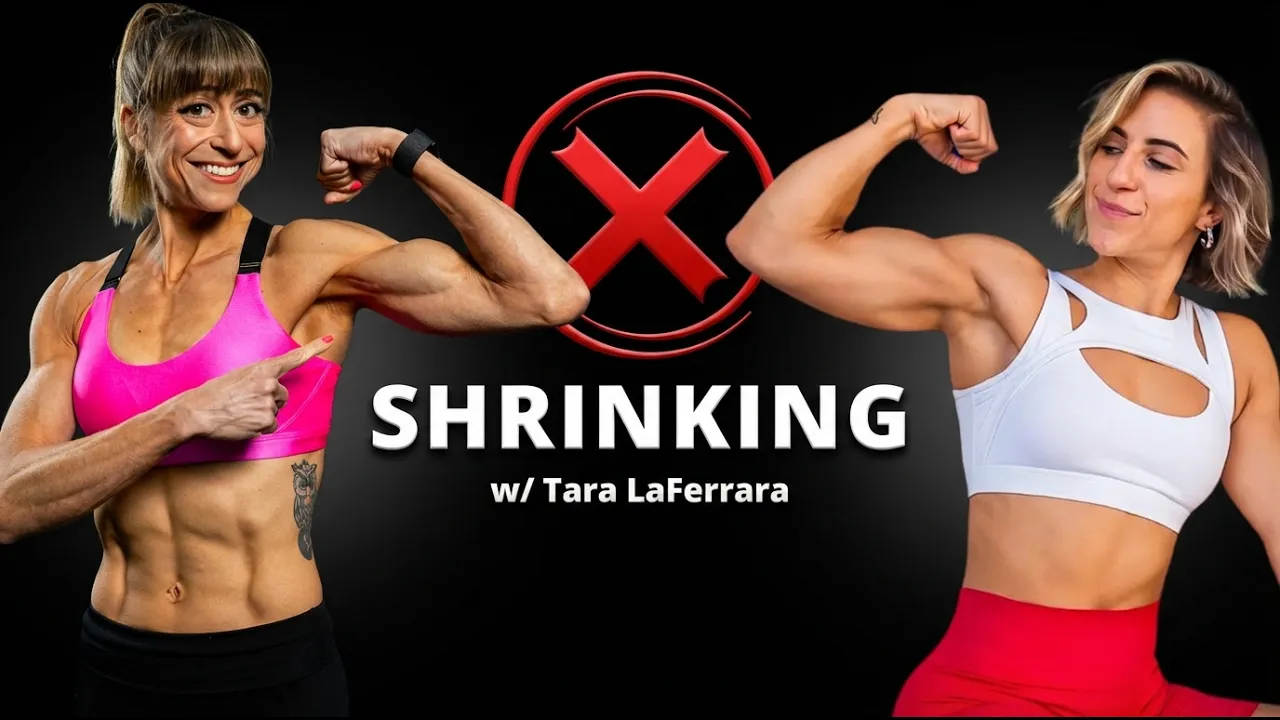
We spend so much of our lives being told that success is measured by a number on the scale. We're taught to shrink, to get smaller, and to take as little space as possible. But what happens when you decide to stop shrinking and start building? On this episode of the Redefining Strength podcast, I'm joined by Tara LaFerrera to talk about the radical mindset shift from chasing small to finally taking up the space you deserve, both in and out of the gym. All right. Real quick, if you're enjoying this, hit subscribe and leave a review. They seriously make my day and I read every single one. Plus, they help me bring you bigger and better guests. All right, so strong. This word can mean so many different things. How do you define the word strong and how has the definition changed over the years?
Tara (00:50):
Yes, I love this question. And for me personally, it has changed so much, but with my clients, it means that they are taking up space in and out of the gym. It is feeling confident in who you are and your body. It is being able to do things that you couldn't do before. It is showing up for yourself and having great relationships. It's being strong, like lifting weights and doing cool shit, but also it means that you can live longer, happier, and more healthy in your body.
Cori (01:23):
I love that you mentioned taking up space specifically, because I think so often we do get started with diet and exercise, and this isn't wrong, but for weight loss. And somewhere along that journey, I think a lot of us have evolved into wanting more out of our fitness and diet routine. How did you sort of take that shift or make that shift, or how do you help clients make that shift from just focusing on shrinking, so to speak, to building strength?
Tara (01:50):
Yeah, gosh. It was a long journey, that's for sure, to get here. I used to be the hit girly. It didn't count if I wasn't sweating, if I wasn't exhausted ever after every single workout. I used to work out seven days a week.That was the thing that we just did for so long. And it was really society told us that smaller was better. And when I actually finally started to lift heavier weights and challenged myself in the gym, I was like, "Oh, I see what this is all about. " And so for me personally, it was seeing myself do something I never thought I could. So deadlifting over 300 pounds or doing many pull-ups in a row for me to be like, "Oh wow, I'm actually super badass." And you get a ton of confidence from that. And so then for me, it was like I just had to slowly start to peel away some of the HIT training and see that this was something that would show up in every other aspect of my life, but then zoom out and see that being strong is so much better than being small.
(02:55):
And how I work with clients on this is that it does take time. It's a huge mindset shift. And someone that's coming from, if you're not sweating, it doesn't count. In upper body day, I sometimes don't sweat at all. That doesn't mean it doesn't count. It just means that you're doing something different, but the stimulus is still there. And so we typically, and I know that you like to do macros and love the numbers, but we actually really focus on how we feel, how our energy shows up, how we feel enclosed, how we're looking at ourselves in the mirror, how we're talking to ourselves. And unfortunately, unfortunately, that does take a long time to see that shift over time. But if you can start to notice those patterns that happen, you'll see that strength is so much more important than just the size of your clothes or the number on the scale.
Cori (03:48):
I think it even goes back to what gets measured gets managed. And we can start to recognize those patterns when we are tracking different lifestyle factors. So it's not necessarily either or. One, collecting data can lead to us noticing patterns, but then by reflecting on what that data is actually telling us, instead of seeing data as restrictive or judgmental, we can really make that shift. And I love that you mentioned being a hit girly because I did far too much spin starting out before I really got into the strength. But through really embracing lifting and pushing myself in the gym, I realized how much our workouts, our diet are that microcosm, that training ground to build strength in everyday life. What types of shifts have you seen pay off for you in terms of the strength you've built in the lifestyle changes you've made in the gym or even with your diet that have factored into other areas of your life?
Tara (04:37):
First and foremost is the energy level. I would say that I no longer have any afternoon crashes. I sleep a lot better. I don't know if you talk about this on your podcast, but the sex is a lot better. I feel more comfortable and confident in my skin. I was joking to my husband the other day, I was like, "Sometimes I feel more confident naked than in clothes," which is such a cool reality because I feel like I hid away from my body for so long. And I used to hide from mirrors and now I take a selfie in the mirror every time I do a strength workout. And so those shifts took so much time to get there. But then with that better relationship that I had with my body, I have a better relationship with my husband. I'm able to show up for my team and my business.
(05:21):
And then on the food side of things, when you have these results in the gym, you want to fuel yourself for your workouts, but you also then take the data and know how you feel when you're not eating the things that help your workouts and energy levels and sleep. For me personally, if I have a lot of pizza, I'm not going to feel good the next day. I'm not going to not eat pizza, but I just know that. And without the data and understanding of that, I probably wouldn't have gotten here, but took years to get here, that's for sure.
Cori (05:57):
It takes a lot longer than we like to own a lot of times.
(06:00):
But I also love that you've taken pride in all these changes that you've seen because I think so often we don't celebrate the wins enough. We don't give ourself enough recognition. We feel it's vain or silly or we're bragging, but I really like to encourage people to brag and even force myself sometimes to brag because I think that's what really helps us take ownership and pride in the changes we've made to keep making them. How do you think we go about making that mindset shift to not feel guilty for really being proud of ourself for all that we're accomplishing?
Tara (06:31):
That's such a great question and comes up with my clients all the time. They almost feel weird about sharing their wins, and I think as a woman, we want to share and lift up other people, other women, and it's easier for us to do that, but harder for us to do ourselves. And I think that that is just because of how we're raised. This is growing up. It's like you want to take care of other people before you take care of yourself just from this nurture kind of perspective. And so it feels awkward to feel selfish or like you're putting yourself first. But at the end of the day, as cliche as it really is, you really can't pour from this empty cup. And so yeah, you have to be your best, your biggest cheerleader because if you're always relying on other people, there will always be that time that you might not feel motivated or you're going to feel down on yourself.
(07:24):
So hell yeah, share all your wins as much as possible and prove to yourself that you can. And sometimes it takes a little push for me to get my clients to actually do it themselves, but once they do, they see that it actually also allows the other women to show up for themselves too. And it's like, oh yeah, we don't have to just shout out other people. It's like, we can also do this for ourselves. So I don't know if that answers your question, but the guilt factor is like another just comes with time, especially if they're a mom, like they have a family, all these other things kind of come with being a woman. It's at the end of the day, you have to take care of yourself first. And if you can show up for yourself there and prove to yourself that you can, imagine the role model you are to your kids, to your husband, to the people around you.
Cori (08:19):
It's really practicing almost what you preach. And if you want your children to value themselves, you've got to represent that. Not to mention like there is that whole put your oxygen mask on first in order to help other people. We don't realize how much we're not showing up in the way that we really want or supporting others in the way that we really want if we're not taking care of ourselves. But it definitely is like a whole mindset, the shift. And part of it is like guilt, right? Not only guilt in bragging about things where we feel like weird because we're told not to, but I think sometimes even guilt in putting ourselves first. We're like, okay, well, if we're putting ourselves as the top priority, other things are falling by the wayside. How do we start to navigate the guilt or pull that apart or, I mean, even not make yourselves feel guilty when we don't do all the things we should because life does get in the way?
Tara (09:06):
Yeah. You know what I was thinking as you were talking is sometimes I'll go to a coffee shop or go somewhere and I'll see someone walk in and I'll just be like, wow, this person exudes confidence. They show up for themselves, their outfits put together and I'm like, "I'll have what she's having. I love that. Where does that come from?" And that comes from her doing the things that she said she was going to do, her showing up as her truest self and her personality and really just standing in who she is. And so we could go through the guilt and the shame that women feel all the time, but if we really pull back and zoom out and see from an outsider's perspective, if we don't, if we don't take care of ourselves first, if people do kind of go on the wayside or priorities tend to shift, wouldn't it be better if we felt whole before we gave to these other things and other people first anyway?
(10:07):
Because if you really want to put others before yourself, it's like, "Well, actually, are you just giving 10% here and 10% here and 10% here because you're actually not really giving to yourself first?" So if you can zoom out and see it like that, it's like, sure, other people can be before me, but what am I actually giving them? You know what I mean?
Cori (10:28):
Yeah. And I think actually going back to where you started with that with the comparison, I think that's very interesting because I think we often don't want to compare, right? People will look at someone else coming in with confidence and be like, "Oh, I'm not like that. " And yet we'll tell ourselves, "Don't compare, but comparison is so natural." How did you make a shift to almost use comparison in a positive way?
Tara (10:55):
Yes, that's a great question. I do think that comparison is such a negative thing. I wouldn't necessarily say that even in that situation, it's not really like a compare of a, I want a slice of that. It's like I can have my own cake, but also have some sprinkles on top and I can have some cherries from this, from Corey and from this girl I saw and why can't you have it all? And so I think of less is a comparison because there's always going to be someone faster, stronger, more fit, more hair, like better skin than me. But if I, I was joking to my husband about this the other day, I was like, "If I had it all, then it would almost be unfair to everybody else." We all are our unique person and if we're always trying to grab onto something that we're not, that takes away from who we are.
(11:45):
And then that's where putting others before you, that's where you'll be like, "You'll lose yourself." And a lot of the clients that come to me, they're like, "I don't know who I am anymore." And it's because we're letting every other person, media, society tell you that this is who you are, but that's not who you are. It's already in here. It's just lost in the shuffle.
Cori (12:08):
It's remembering that you're the author of your own story and ultimately you dictate exactly what is written, but it's going back to the fact that you have to decide what you truly want and then be true to it, which I think is the hardest part sometimes taking ownership of what we actually value and then living in line with those values. How do you think we navigate stepping back to do that self-reflection before we move forward? Because I think so often we do just take action based on what we think we should want.
Tara (12:40):
Another really great question too, because sometimes I feel like people search for goals based on what other people are doing. Running is in right now. So other people are running a marathon, so I'm going to run a marathon. If we can really get back into who we are and what we want, that's what we're really going to see. But sometimes it's hard to figure that out when you're in the day-to-day life and you're just unsure. And that's where you can come into like, "Okay, try different things. Does running feel good? Does spinning feel good? Boxing." I just started improv class recently. I'm like, "This is fun and new and different. Do I like this? " If you don't try things and if you don't get curious, then how will you actually know that that is going to be something that you want? Now, if we get back, if we go into what's our why and what's our purpose, it's like for the most part, people come to me, I'm sure with you too, is they want to live a healthy and happy long life.
(13:38):
And so sometimes it takes you seeing that, looking at it, and it's like, okay, if we can peel that back a little bit and find these maybe smaller goals that'll get you there, it'll feel more exciting throughout the journey.
Cori (13:54):
It also helps you really implement the habits because you have those other ways of measuring success. But going back to trying things, that's sometimes easier said than done. We like the idea of experimenting, but when we start to experiment, there's also failure and being a beginner and not being good at things. And that can be kind of a blow to the ego at times. How do you embrace those changes and really take that step back to become the beginner? Or how do you help someone navigate the ups and downs that come with that?
Tara (14:27):
Yes. So when we were growing up, everything was new. It was, we were going to school meeting new friends, you're going to gymnastics class, you move from kindergarten to a regular school, then you're in middle school. Everything is new. Every day, you're seeing a new neighbor, a new friend. You go into high school, maybe you join a club, maybe you join the track team. Then even in college, you're still seeing new things. Everything is changing, changing, changing. Then you get done with college. And typically this is like a standard, this is how we grew up. You go to college after college, you get some sort of job and then you're like, okay, I'm an adult. Sure, there's like a couple other changes. You get married, potentially have kids, maybe get a dog or something like that. But then you're at this point, typically, maybe late 20s, 30s, where everything is just the same.
(15:20):
You're in a routine, you go to your nine to five, whatever that is, and it's just like a day-to-day thing. And what happens is we're out of the change too long. And so when it feels like I'm like, "Oh my God, this feels like such a huge change." Going to the gym feels like a huge thing. Go into this class I was mentioning, huge thing, moving. Whoa, this is crazy. But that's only because you've been away from it for so long. So if we can shorten the gap of time that you're actually challenging yourself, it won't feel as daunting. So if you can think about the last time that you actually did something really uncomfortable and you're like, "Hmm, when was that? " And you have to really think about it. It's been like five years or since COVID, six years, whatever, and you're like, "Well, of course this is going to feel really hard and really challenging because it's been six years you've been in the house." So if we can really shorten that gap and maybe you pick one thing a year, one thing a quarter, it doesn't have to be super overwhelming.
(16:21):
Maybe you're just going to meet a new friend or you're going to work at a different coffee shop or you join a random class somewhere in person. Those are ways that you can get outside of your box so it doesn't feel as overwhelming to do at once. And then you use the word failure. And I always like to use this as more of a positive thing too. And some people may think of this as cringey, but if you are not failing, that means that you're not going to progress. We can't expect to keep showing up and not quote unquote fail and get better because what you're really doing is if you fail and you stop, that's a quit. I think I've actually, we've talked about this potentially before. If we're not consistently showing up even when something doesn't work, that means that it's like game over.
(17:16):
And so if we keep putting ourselves in this place where we're challenging ourselves in ways, we're always going to get better.
Cori (17:25):
I like to think when I fail, I'm like, I failed good. That little pause always stops my brain from spiraling, which is not always easy, but it really is a learning experience. Of course it's not easy. And I also think, as you mentioned, growing up, everything is new. So it's recognizing too that as we're testing new boundaries now, it's not only experiencing something new or making a change that is outside our comfort zone, but it's also potentially fighting against an identity that has built up over time. There's like unlearning of those habits that have to happen. And I know personally this year I pushed myself to be like, "I'm doing something new that I don't want to do every single month because that's the only way I'm going to get more comfortable being uncomfortable because we do default back to even the discomfort we're comfortable with to some
Tara (18:10):
Extent." Yeah, no, that's so great. Also, once a month is awesome. If that feels overwhelming and you're listening to this and you're like, "Oh my gosh, that's too much." Start with once a quarter, every other month or something like that. So get yourself outside of your box, but it doesn't even have to be that big. Sometimes even something so small, which then people are like, "Oh, it's not even worth it. " It's like, yes, it is because you wouldn't get out of your routine without it.
Cori (18:37):
It could be trying a new recipe. It doesn't have to be dramatic. It's just something that you normally would not do, but you're making yourself do for the simple reason that you know that strength is built through what you overcome. Through these different experiences, we get more comfortable being uncomfortable and it doesn't feel as hard than to push in other ways. And that's where change doesn't become such a challenge so we can see the results we want. Now, going back to the identity thing, because I think this is a key component of it. We can talk about habit change all we want, but if we believe that we're a certain way, we're not going to embrace those changes. How do you help people shift from thinking they are a certain way and can't do certain habits to embracing those habits and potentially unlearning some of the stuff that's there?
Tara (19:22):
Yeah. This is key fixed versus growth mindset. If we say that we are a certain thing and that is what we believe is true, that is true. If we know that there are opportunities to grow into a certain different identity or be a certain person and actually believe in that, but also take those actionable habits to get there, that will get you closer to that. Now, the identity piece is hard because if we think about a habit takes, what do they say, 50 to 68 days or something to build. Okay, I've got my habit built. That 60 days or so, two to three months is where people are like, "Ma, I got this. " No, that is just the habit building. After that comes the lifestyle building. So then it's like 12 to eight months where it's like, "Okay, this is part of my lifestyle." But then after that identity takes years and that's where people don't get as far.
(20:20):
And so knowing that habits, 60, lifestyle, year and a half, identity several years down the road, people are like, they see that and they're like, "Oh my gosh, no, I'm good right here." And that's where they can get back to potentially that fixed mindset on that two or three month mark because they haven't seen everything that they want to see. But I always challenge that thinking with like, it took you decades to build this identity that you have right now. Why should you expect that that is going to change in two months time? And that's where those habits that you've created, but also the accountability, the community, who you surround yourself with, how you show up in social aspects, in work, like all of those have to start to expand for you to bring this identity to life because right in that first couple months, it's like this little ball.
(21:12):
And then if we keep our little balloon and you keep blowing it bigger and bigger, you're like, "Okay, now it's really part of my life." But I think for the most part, people just stop a little too soon.
Cori (21:23):
They forget that they're paying rent and rent is due every single day and you have to really vote for who you are with those actions. So with that being said, what actions do you think are really key to start with to start building the identity or at least what habits do you think we need to start to reflect on and implement in some form for ourselves if we want to step into that stronger, more confident self?
Tara (21:47):
I think it starts by first just taking inventory of where you're at. That is your current lifestyle, your environment, again, who those people you surround yourself with, what you're doing on a day-to-day basis. Really, it's just that data collecting, right? I can't say I'm going to be a 5:00 AM wake up girly and wake up at 8:00 AM every day right now. That's just not feasible. So if we can start to take inventory of what we're currently doing and where we want to go, so maybe I'm an 8:00 AM person, but I want to be at 5:00 AM. Okay, let's take 15 minutes at a time for the next couple weeks to get you closer to that. Maybe it's then 7:00 AM first. So maybe it's just something small like that. I always check in with like, how much are you moving throughout the day?
(22:33):
I work with a lot of clients that sit in the back of a computer nine to five. So how can we just get up a little bit more? Maybe that is step count or maybe that's just being really mindful of like taking inventory of how much you're getting up out of your chair and moving around your house. On the nutrition side of things, it's like, again, what are you eating now? Do you feel like that's actually working for you? And where do you feel like you could potentially improve there? Then that gives them that awareness of like, "Okay, here's where I'm at. I think some more veggies would be good. Great, cool. Let's start there for a few weeks." And so as we go down this, these, again, seem so small, but we're just taking that little balloon and just slightly making it bigger, right?
(23:21):
Then we get into the strength piece, which again, take inventory of where you're at right now. If you're not moving very much, it's like, "Okay, let's get in a couple body weight exercises a couple times a week." Great. Maybe you grab some dumbbells and do some stuff at home. Awesome. You've already outgrown them pretty fast. You're stronger than you think. Then you step into a gym, maybe try some machines. So it's slow and it's unsexy. It's like, "Oh God, that's so lame." But then you're going to be doing it forever if you really stick with it.
Cori (23:53):
It is those 1% improvements meeting yourself where you are. And I love that you didn't mention any macro ratio that's magical or any move that's the best move out there because I think that is where, and I didn't think you were going to, but I think that is where we get distracted a lot of times by all the information, all the times we're told this is better than this or this is worse than this. And we even have with all the wearables right now, all this data collection, which pushes us to optimize. And optimizing is great, right? The more we can dial in all the things and learn more about ourselves, the better off we're going to be. But I think it can create that information overload where we're chasing some very, very minutia detail that only creates that overwhelm where we get this like, "I don't even know what to do anymore." How do you help yourself sort of put the blinders onto all these other things and embrace those unsexy basics, which ultimately are the key and while simple aren't always easy to do?
Tara (24:50):
Are you asking me or like someone maybe that's not like a client or something?
Cori (24:54):
I'm asking how you helped yourself do that, how you would help somebody who's like, "Oh my goodness, I just see all these different things. How do I focus in? " Because I think that is the struggle. And I mean, I know I'm even guilty of it. I see something new and I'm like, "Oh, I'm not supposed to eat this with this. " And then I'm like, "Wait, okay, that's a little too overcomplicated. I'm just getting in fruit right now. That's great." How do we step back from worrying about the details that we're told matter, but ultimately don't matter if we're not doing the basics?
Tara (25:21):
Oh, I would start with who told you that. I think so much of what we see on a daily basis is through social media or like do this and don't do that. And this one exercise is going to cure every pain on your body forever. It's just not ... So first and foremost, the social media piece, like give yourself time limits, unfollow people that are in black or white thinking, anyone like that that's going to kind of force you in a restriction first and foremost. And then always come, we're coming back to ourself. "What feels good to you? What actually works for you? And if you don't know what that is, you should start there before we're constantly trying new things and just coming back to those basics of like, okay, what does a balanced meal look like? "Truly, if we can go back to that basic, basic, what does it look like, going through each meal of the day and looking at the meal and being like, " Do I have protein fats and carbs in this?
(26:18):
"Great. Okay. I can check that off the list. But to your question of how to keep your blinders on and keep doing the things you set out to do, every day is going to feel different, right? Some days you're going to be super excited, super motivated. I've been in this for 20 years and some days I don't want to show up, but I know A, how great it makes me feel, B, how much I need this for the rest of my day and C, just how ... God, I mean, there's a million pieces to this, but the confidence piece of it alone I think is so huge that sometimes when you don't want to go is when the best workout comes into play or sometimes when you're so unmotivated, that's where maybe you fail at something and it's like, " Actually, that was awesome. I've never failed a bench press before by myself.
(27:12):
Maybe I actually needed that. That's cool. "So using those little days, that's where you see the real progress. The progress isn't when you hit these massive PRs. It's actually when you fail or when you're not motivated and you do show up. And the more times, the more of those you get in your belts, the more it's just like, " Oh, this is just who I am and what I do. "And again, that identity comes into play.
Cori (27:35):
I would say you almost feel better doing the workout that you didn't want to do than doing the one that you felt super motivated that was really good and smooth. And then on top of that, I think it's recognizing that with all of this, and I'll add a D to yours or maybe E, I can't remember if you did COD, but I'll add another one. When you don't do what you know you should and you feel just blend, you just sort of like, whatever, even though you know better, because I would say I know better, but I still do it, it's giving yourself grace the next day too and recognizing that even in giving yourself grace to recognize your own humanness, that's also where the strength is built because as much as you might try and remind yourself like, " Yeah, I should be doing it, "you don't always want to.
(28:16):
And I think it's okay to own that we all have those days and that's part of it. We see only the highlight reel a lot of times on social media versus all those struggles that are actually going on. And now off of this to go back to some of the stuff where you were talking about putting your blinders on, are there any, and not to stir the pot, but any specific trends right now that you're seeing or miss that you're seeing pop up that you really wish would sort of take a hike?
Tara (28:43):
Yeah. I mean, I'm sure we've talked about these for years, right? Like the Pilates over strength training, it's the let's tone up and lifts for a million reps instead of like lift heavy. It's the black and white thinking of like, only do this and not that. It's the nutrition. I mean, there's like so many things on the nutrition thing, but it's just anytime someone tells you that there's only one way, I think that's like the biggest thing for me is that we both know that we've worked with thousands of clients, thousands of women, that it's like everyone is different, everybody's different. And when people see these myths or say like, " Oh, you should do this and not that, "it makes them trust themselves less. And we're taking that away from them where it's there, but it's slowly starting to fade away because someone's telling you that what you're doing isn't right.
(29:43):
And so if you can really come back into yourself, you know yourself better than anyone else, take what you need and then give the rest away.
Cori (29:53):
It is really also embracing that what you were doing at one point might not work for a different goal. What you did To lose fat, might not work to build muscle. What you did when you're 20 might not work when you have a family or you're starting to see hormonal shifts. It's owning that there's opportunity even in all the options. And if someone says, no, just simply don't do this with no nuance to it, they're cutting out opportunity for you to use something at a different season or even find another opportunity off of that if you deem it not right for you. Which is why I like to even go, okay, I believe X. If I were to debate for the other side, how would I debate for that other side and who would that be right for? Because then I sometimes say, okay, this still is not right for me, but I see a lot more opportunity options there.
(30:36):
And even then if that does come into play, can go back to that. So it is really just the all or nothing thinking I think that keeps us most stuck no matter what specific arena it's in, in the diet and exercise world.
Tara (30:50):
Oh gosh. Yeah. I hear that so much with my clients is like what we were talking about earlier on the, well, I have to do these 10 things on the list and if I don't do all of them, then I won't even show up at all. And then that feeds into other areas of their life. And then that's where like the guilt and shame and you see women trying to get smaller. And it's like, if we can break it down where it seems like just simple, small tactics that you can take, you can build that back up. But if you've been an all or nothing thinker for 30 years, it's hard to get out of that. That's for sure. I've never personally been that person, but I've worked with so many people that have and I understand it. I have the empathy towards that. But if we can step out of it and see that like this can be true, you can have this all or nothing mindset and you can work to fix it or change it and change some of the habits around it, then we can get into that growth mindset.
(31:49):
And that's really where I just try to take clients.
Cori (31:52):
I've got to admit, I am an all or nothing person. And it took me a very long time to try and fight against that and especially the do more attitude with it. So I've got to ask, as someone who hasn't had that mindset, what would you tell me when I would first be trying to overcome this?
Tara (32:10):
Wow, that's great. So I'm coaching you now. No, I guess it would just depend on what it is for you. For some people it is, they see like, "Oh, I have to do all of these things." And it's like, if you were to take this list of 10 and choose like one or two or three maybe of the top priorities, would that feel like an accomplishment to you? Would that feel like you won your day? Typically, that's what I'll ask someone and they'll say, "Yeah, I think so. " Or they'll say, "Maybe not. " And I'll say, "Okay, well, which other ones would make that feel like a win?" And then it's just like looking at the overall picture and then we'd say, "Okay, well these three, great, cool." Now let's just kind of put the rest to the side and then we can look at those and focus on it on the next day.
(32:55):
Because if we have any more than two or three things, we're always going to feel like it's like we're pushing it, pushing it. And then again, that's where that guilt comes back into play. But if we have this never ending to- do list or something in front of us that's constantly this huge project or huge list, it's never going to feel like anything's done. And so if we can really feel like we're focusing and actually checking something that can be done every day off the list, that would get you closer to that goal. How does that feel? Does that feel like something you could do? Yeah,
Cori (33:30):
I was going to say, I think that's the great mindset and that is, it's not doing more. It's doing less with intention. And then it's also reframing that when you're doing this and you're crossing those things off your list, you're creating that success mindset and that momentum. Because I mean, you see it with workouts, right? If you have, you're going to do six days a week of workouts and you only do five, you're like, well at least I am. I'm like, I missed one, right? And so I feel guilty about it. But if I were to set my intentions of only doing five and then I do five, even though it's the same five, the whole mindset behind it is different. And I don't think we recognize sometimes how much that creates the momentum to want to even do more.
Tara (34:09):
It's interesting you say that because if I was like, "Oh yeah, I'm going to do six workouts and I only hit five," I'd be like, "Sweet. When can I add that next one in next week? Or how can I shift this around differently?" Or like maybe that sixth workout actually feels like a little too much right now. So what if I just kind of split that in the other two days that I have a little bit more time? So there is that like setting the attention, there's the giving yourself grace and then there's also like forecasting for the future of like, okay, if you kind of know what your next week looks like, maybe we just set up for that four or five days instead of six. Having that sixth one on there is like bonus and it's like, if you get that, great, but if not, that's totally fine too.
(34:49):
I think even just that maybe reframe would help a lot of people too.
Cori (34:53):
Yeah. It's no perfect plan, just the perfect plan for you. Yeah. But that being said, I do think we all have non-negotiables in our day and our life that we feel like we sort of need to get in, not only to feel our most fabulous, but really to build towards the future. Are there anything specifically that you're like, "This is kind of a non-negotiable for me and I will put this first in my day no matter what?
Tara (35:13):
" Yeah, I am a 5:30 AM wake up girly now. So I will say that's one of my new favorite things. I've started at like 7:30 and I got to hear and my husband wakes up like an hour, an hour and a half later and I have all that time to get ready for my day, which is awesome. So meditation first thing in the morning, I stay off my phone till seven. So there's like some journaling, I eat breakfast, I have a bunch of water before I have my coffee, and that really sets myself up for success. So first part of the day. Then I think the biggest thing that I think most people miss is the end of your day actually sets up the morning the best. And so if we can have that focus plan of here's the couple things that I can put on my schedule the next day that would feel like an accomplishment, the better.
(36:00):
For some people, they like to lay out their workout clothes. I know if I'm going to go to an early workout, I'll have that out. I'll also have both water bottles filled up the night before so that it's like super easy. The easier you can make your routine, the more you can set yourself up, the more successful you'll be. So I would say those are the early wake up, which means early bed, I'm asleep by nine o'clock, the setting yourself up for success in the morning, having the water bottles filled and knowing what's happening the next day. I think that's like really something to look for.
Cori (36:36):
You're creating that perfect environment to help reinforce the habits and mindsets that you really want. Now off of that, we've talked a lot about all the things we should be doing, so to speak, like strength training and fueling, but also a component of the actions you take to build our recovery. And I think that's so often overlooked. We think about like, okay, I'm going to train harder or train with yes intention and I'm going to fuel to really help my training, but we don't consider the recovery component. And even sometimes many of us have in the past struggled to take days off. How do you implement recovery into your routine and what do you think is really valuable in terms of taking a look at for recovery? Because I think we just so much think of it as overtraining, not as under-recovering, but it is kind of under-recovering at times.
Tara (37:23):
Yeah, great point. I'm a huge fan of one to ... Well, I rest twice a week myself. I have a five-day split and it's typically Monday through Wednesday, off Thursday, off Sunday. Rest doesn't mean that you're doing nothing. It typically just means maybe my step count's a little bit higher. I'll spend a little bit more time in the sauna, maybe I'm doing some extra stretching or foam rolling or something like that, but those are like my big recovery days. Recovery for me happens throughout the rest of the day though. That's where the fuel comes in. That's where a lot of water comes in. That's where I get five to 10 minutes of mobility before we watch a TV show, having that habit stack in there every single day. So I think that we can look at recovery as being this specific days off, or we can look at it as like, "Okay, where can I add this throughout my week so that it doesn't feel like, oh my gosh, I'm taking a day off." I know you're coming from someone that used to be like me seven days a week.
(38:23):
It's like, I need to do the most. And it's like, okay, well, if you don't want to take the rest day, that's fine. But how can we peel back a little bit to see that rest is obviously what is you're going to get the most progress out of. If we're not resting our muscles in our bodies, we're not going to see the progress we want. So there's that piece of it. I love also deload weeks. I feel like they're very underrated and underused in training programs. Personally, a deload week will happen between eight and 12 weeks for my programming specifically. And we'll take a full week where it's not necessarily off, but we'll just peel back from our workout, like our training protocol and actually do more mobility, more of that stretching, more yoga, more just mindfulness as a whole. And then when you come out of that, you'll see some really great progress and results.
(39:11):
But if we're constantly just beating ourselves up every day, that's where you're going to see that's the key or that's like the fast track to just like hitting a plateau, hitting a wall, getting injured, injured hormones, all of that stuff can happen.
Cori (39:28):
I love that you mentioned it's not just the recovery day, but lots of other practices that you can implement on other days because I do think we get so focused on just taking a day off. I mean, I love the deload week as well, but even just taking the week where we're going easier, but it is the fueling, the extra mobility work, all those other intentional things and even cycling areas worked over the week that can really pay off. Now, I want to hit you with some extra super hard rapid fire, not so rapid fire questions, if you're ready for them.
Tara (39:58):
Extra super hard. I don't know. We'll see if I'm ready.
Cori (40:01):
Oh, they're super challenging. They're going to really test you. The first one is, "My day isn't complete
Tara (40:09):
Without..." Movement.
Cori (40:13):
Any specific movement?
Tara (40:14):
Is it supposed to be one? Is it supposed to be one
Cori (40:16):
Word? There are no rules. That's why this is so tough. There's no rules. It's not even rapid fire.
Tara (40:22):
Yeah. Movement. Movement. I love strength training. I love feeling like an athlete again. So I'm getting a little bit more into the athletic type of conditioning, jumping, moving quickly. I love just walking, getting outside. I live in Austin, so it's beautiful here in February. So getting into movement there that also gets me away from the computer and screens and people and just comes back into my own body and my mind. Movement of some sort every day though. It doesn't have to be a workout per se, but it doesn't even have to be intentional, but it does have to be purposeful. It has to have some sort of purpose behind it. And whether that is a walk outside with my dog and just getting away from the computer or hitting max deadlift, either way, every day, that's a part of my routine.
Cori (41:13):
I love it. I definitely agree with the movement every single day. And then what's the biggest myth in fitness or self-improvement you wish people would stop believing?
Tara (41:24):
I mean, I feel like we kind of talked about this a little bit, but well, we talk about this a lot, like doing one thing, that women shouldn't lift weights, that Pilates bodies are the only best bodies, that there's one specific body that is the healthiest, strongest, best. Every body is different. Everyone likes to move differently and every woman is beautiful and their bodies all look different. And so I think that there is no ... I just can't stand when it's like there's skinny and there's like this Pilates, the Pilates trend, obviously, as you can tell, is kind of like, oh, do that and strength train and dance and spin and move your body in a way that feels good for you, but stop going to one thing or one way of thinking.
Cori (42:15):
There isn't one standard, just your standards basically.
Tara (42:20):
Yeah.
Cori (42:21):
And then what's the hardest lesson you've personally learned?
Tara (42:26):
Well, this is not a wrap. This is a hard question, actually. The hardest lesson I've personally learned, I would say would probably go back into the ... Getting out of that mindset of more is better. It took me too long and actually COVID forced me to slow down. It was March of 2020. I was still doing six, seven days a week of just sweating and soreness and two a days and just crazy. And the gym that I co-owned closed and we were like, "Well, I guess we have to do this at home." And then we're jumping around the living room. And I finally zoomed out and I'm like, "Why am I doing burpees in my kitchen?This is so dumb." So it took me a long time to learn and I think I had to learn the hard way and I wish that more women learned it faster.
(43:19):
And I think that's why I am the coach I am and how I show up to women because I don't want you to get to that point where you are burnt out, lost your period, 8% body fat and feel like shit. I want you to know that that's not what life's about. There's so much more to it. It's not just constantly about being smaller. And so I think that's why and how I show up for my clients and my program is that we're here to take up space and stand in your power and be more confident in yourself.
Cori (43:49):
I love that message. And then when you need to reset or recharge, what's your go- to ritual?
Tara (43:57):
I travel. I travel a lot. Let's go to the beach. I would say probably, yeah, some sort of ... If I don't have time or I can't get a weekend beach trip and I'm in Texas after all, some sort of outdoor hike, we walk around the lake, getting in nature will always, always reset and recharge. I would highly recommend that to anyone. When you're cooped up inside, when you are working super hard and you finally actually get outside the door and literally touch grass, you're like, "Oh, there is more to life than this computer or work or doing a normal routine." It's like there's so much more out there. And I think that we all need a little bit more of that in our day-to-day lives.
Cori (44:43):
I like the beach trip and I like the hikes. When you first said travel, I was like, "I think I need a vacation and a rest day from the travel." But I know it recharges some people too. And then last but not least, what's one piece of advice you'd go back and tell your younger self?
Tara (45:00):
You are important. You are kind, you are beautiful just the way you are. The number on the scale doesn't define you. You are your own unique human being and you will figure that out soon.
Cori (45:22):
I love it. You're flossom and amazing. And now I know people are going to want to look up where to find you. So where can they connect with you and learn more?
Tara (45:30):
Yeah. So Tara Laffer on all the things, YouTube, TikTok, Instagram, Threads, lots of A's, lots of Rs, Tara, La Ferreira. And then I have an app called Broads. It's for women that want to take up space and feel more confident and strong in their bodies. And I also have a podcast which Corey has been on. It's called the Broads Podcast. So all broads and TerraLafer everywhere.
Cori (45:55):
You guys have to check that out. And now to leave everybody with what you think is the most important thing we covered today, what's one takeaway you want everyone to have?
Tara (46:06):
One takeaway I want everyone to have. Just because you are who you are today doesn't mean you can't change that in the future. There's always more opportunity for you out there. There's more challenges and sometimes you really have to get uncomfortable and challenge yourself for you to figure out what those are.
Cori (46:30):
Amazing. Thank you so much, Tara, for joining me today. This was fabulous.
Tara (46:35):
Thank you so much for having me. I appreciate you. I
*Note: This transcript is autogenerated there may be some unintended errors.
0 Comments