Cori Lefkowith (00:00):
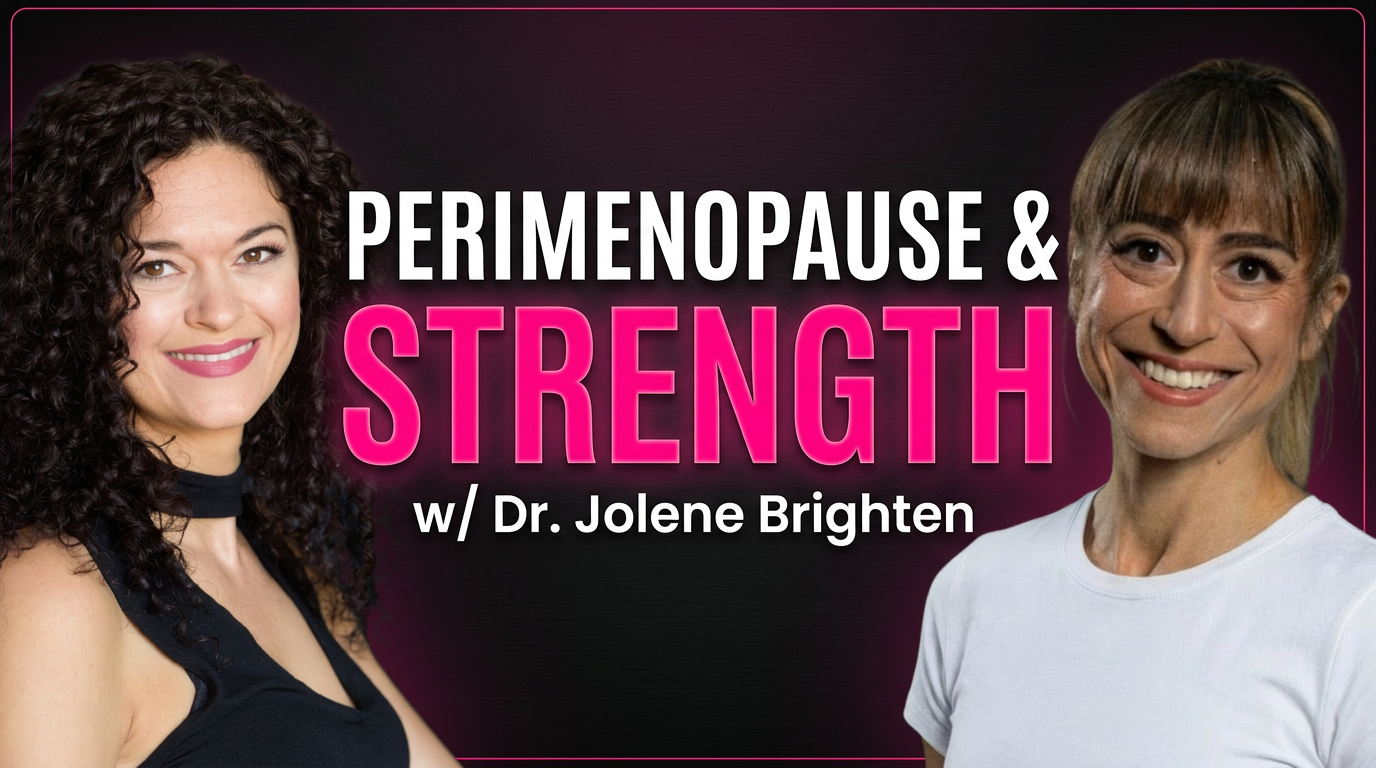
In this episode of the Redefining Strength podcast, I'm joined by Dr. Jolene Brighton, and I'm super excited to really dive into this episode because not only is she incredibly vulnerable, sharing of her struggles to really find her strengths sometimes in not seeking to be perfect and allowing her flaws to show, but she breaks down how as a woman it can be really hard to be our own advocate at time and really take agency in our journey. But how important it truly is to do that self-assessment and reflect on what you need and feel empowered to go after it. If you enjoy this episode, please leave a review and make sure to follow on Spotify or Apple Podcasts or even YouTube. This helps me bring you more amazing guests like Dr. Jolene Brighton. So let's just jump right in. How do you define the word strong?What does that word mean to you when you hear it and how has that definition shifted over the years?
Dr. Jolene Brighten (00:51):
Women. When I hear the word strong, I think women. I think we are not only built for strength in terms of our emotional strength, we are the caretakers and the lifegivers of the entire future of our species. But at the same time, we're forced to be strong in ways that we never really should have to be by medicine, by society altogether. And I'm always in awe of the resilience of women and the things that my patients have lived through. And I think over the years, something that I had the privilege to be a physician in my 20s, my 30s, working with women in their 40s, 50s, 60s, and recognizing that there's so much wisdom and so much strength and just so much incredible talent that evolves over our lifetime and that really begins to flourish as we enter the middle age, I'm middle aged, but the middle years of our life, right?
Cori Lefkowith (01:55):
It's seeing the power in that education that we've accumulated. And I love that you even mentioned the process of sort of overcoming all these different things because so often we think about the struggles as negative versus what really create our power.
Dr. Jolene Brighten (02:11):
As someone who has ... I mean, my audience knows I've lived through a lot of things I would never wish on anyone. And people are always like, "Don't regret the things that have happened to you because they made you. " And I'm like, "Yeah, I still don't want them. I still don't want it. " I really have come to see that with each challenge that you face, it's an opportunity to reexamine your life, to shift things and to cultivate what your actual strengths are. And I think sometimes as women, we're expected to be everything to everyone at all times. And you have to, especially when you're facing adversity challenges, the things that we have to hold together in the family dynamics in our society altogether when there's the loss of a loved one or caretaking in some capacity, but really in all of that, you have to reflect on what are your actual strengths and lean into that and then learn to delegate and give away what's not yours.
Cori Lefkowith (03:09):
I think that's hard though because we see ourselves as strong, right? But we also define strong as doing it all alone far too often. How do you
Dr. Jolene Brighten (03:17):
Embrace
Cori Lefkowith (03:18):
Asking for help or relying on others when the do it alone is the strong attitude we've been taught to believe we need?
Dr. Jolene Brighten (03:26):
I think in the US, we have to look outside of our culture because we were very much conditioned in capitalism for the benefit of capitalism. And just for everyone listening, I'm an entrepreneur. I'm not anti-capitalism in any way. However, we need to start looking at societies where women have support and what does that look like and how do they flourish? So take Japan, right? Blue zone. Everyone's like, "Look at what they eat." I would challenge you to look at how these women support each other, how these women age and we know men die before us and it's super sad. We're left alone and yet they have their cohort, they have the other women that they can lean on. And I think that we have to just start giving ourselves permission for that. I think it's very easy to fall in the trap. And look, I was in my 20s, 30s, I can do it all, I can have it all.
(04:25):
Then I realized we were never meant to do it all. We were not designed as a species to ever go it alone. We were always meant to have our tribe, our community, our gathering of people that bring different resources to support you. And I think that we have to just start looking at what are my strengths? And if I can be devoting more of my energy into my strengths, how does society, my family, everyone else benefit? If you're not someone who's able to say, "This is what I need," and you're still in that caretaking mode and thinking about everyone else, then reframe it of if you are spread too thin, then you are not able to give your gifts and contribute to society in that meaningful way. And so it's kind of selfish to keep doing it all. We need to lean in and we need to get that support.
Cori Lefkowith (05:17):
I think that reframe is really key of even seeing it as not asking for help as selfish because we don't want to be selfish, but also recognizing that if you're steering into your strengths and finding other people that have strengths that compliment your weaknesses, that creates a stronger system overall.
Dr. Jolene Brighten (05:33):
I absolutely agree.
Cori Lefkowith (05:35):
And we can really grow from that. But again, I think shifting that mindset is so hard. How did you find yourself being more willing to ask for help over the years?
Dr. Jolene Brighten (05:46):
Oh, I just got bitch slapped by the universe. That's what I call it. So it's something that you only have so much energy and it's very easy in your 20s and 30s to be doing it all. And then you start to run out of energy. As our hormones shift in perimenopause, and so what happens first? Our progesterone declines. Our mouth filter goes away, as my good friend, Dr. Carrie Jones likes to say, but basically your breaks go away. So you're more impulsive, you're more likely to interrupt. Estrogen becomes erratic and now your brain energy starts to struggle. The mitochondria, the powerhouses of our cells, as we all learned in sixth grade, they cannot make energy in the same way. They become inefficient. They produce more reactive oxygen species. They're not utilizing energy and the brain really struggles. And this is especially for anyone listening, if you have ADHD or you are autistic, this is 10 times, a thousand times probably worse for you.
(06:41):
And the research really validates that. You're hitting the worst of perimenopause much sooner and your symptoms are far more severe. So you are going to run out of energy in your brain as it goes through this great remodeling, which is perimenopause. Shout out to everyone who's already started their creatine, that can help tremendously. But I bring this up because the universe, the powers that be, they're going to choose for you or you're going to choose for yourself. I always say it's better that you choose to slow down than your body tells you to slow down because the body, oh my God, when it hits the breaks, it's going to be hard. So for me personally, my son developed an autoimmune condition of the brain called PANDAS. It's a pediatric neuropsychiatric disorder associated with strep. That happened, I was in my 30s and I remember just like collapsing on the floor and being like, "Something's got to give.
(07:36):
Something's got to give. I'm only sleeping four hours a night because this kid is so sick." And it was a breaking point for me. And it is something that I'm like, as much as I said, I would never want that. I think mostly because it happened to my child. If something happened to me, it's a lot different, but that really made me reevaluate my entire life, the trajectory I was on. And I was realizing that I was so successful by everybody else's metrics and I was doing everything that a successful doctor does and that everyone says is the pathway. And I realized I had to choose a different path and it wasn't just about I was unhappy, I was burning out. It was also about there's no way that I can take care of my child, priority number one, care for myself and survive this life if I don't change everything.
Cori Lefkowith (08:29):
I think that just speaks to how much we all do get distracted by outside expectations, outside successes, all these different things. And we stop paying attention to what our body and our mind is really telling us in those symptoms. It sounds like there was really this awakening to go back and really reflect on what you needed and wanted out of life and what was actually realistic for you, not only looking at potentially positives and opportunities in that, but even owning the negative a little bit.
Dr. Jolene Brighten (08:57):
Oh, absolutely. And having to own that, it was me who was influenced and it was me who made the decision. So I think it's really easy to be like, "Well, I did this because everyone told me to, and this was the right path because of everyone else telling me to, but I had to really own the fact that and you took a backseat in your own life and you let other people drive it and you have to take responsibility for that. You have to wake up to that because the only way that we change behaviors and habits is when we're first aware of everything." And that I think why sometimes it's so hard to change behavior and habits is because awareness, like I said, it's like a bitch slap from the universe. It hurts. Having to get in front of the mirror and be so boldly honest with yourself, we're not taught how to do that.
(09:48):
We're not given frameworks to do that. And it is something that I think is really hard to do, but you can't change something you can't name.
Cori Lefkowith (09:58):
It's so true. You can't. And you've got to take that honest step back and reflection. Otherwise, you are going to keep letting your life sort of just run itself or other people run it for you and you won't get out of it what you really want. How would you help someone have that framework to say, "Okay, I'm going to take a step back. I'm really going to look at what I want, where I'm going and how I feel with my life and make the changes that I need."
Dr. Jolene Brighten (10:21):
The first thing I actually will tell patients to do when they're dealing with chronic stress, because that is one of the things that sabotages our hormones across our entire lifecycle is I have them do a brain dump of like, what are all your stressors? Just write it down, set a timer for five minutes and just write it all over the page, doesn't even matter. Then I have them go through and circle what is actually important, what they actually need to own, what nobody else can do, not what they think no one else can do, but absolutely is just yours. So if you are someone who, your husband's gone at five o'clock in the morning and you've got to make sure your teenager gets out of bed and gets to school and all that, you're that person.That is something you have to do. You're there for them because moms, they're borrowing your brain until they're like 25 and that's just the reality.
(11:09):
It's so exhausting. So with that, circle everything you actually need to own. Then start to cross out what others have put on you, what you have taken on because you think no one else can do it better than you or you know they're going to screw it up. Sometimes we just have to let people screw it up. Listen, I got two sons and I have a husband. Men definitely don't think like women. They definitely don't do it. I make this joke sometimes that like when they're saying like, "I'm giving 100%," women have always been giving 150%. So to us, we're like, "You're not doing it right, you're not doing enough." It feels really stressful, right? But do you have to actually own that or can you give them the opportunity to learn to iterate on that? So crossing out all the things that don't apply to you and stop taking those things on.
(11:59):
If you're the parent that everyone expects you to do the bake sale every single year, or you're the one that at the office, everyone expects that like, "Oh, you're just the one who's going to make sure that everybody gets to the meeting on time." But you never signed up for that. Everyone just put that on you. You can say pass. You can say no more. So I think that's the first thing you have to do is free up your energy and get rid of the things that no longer serve you. Then I think you've got to carve out some time and whatever it looks like for you. Maybe you're going to have a meditation, light a candle, spritz yourself with some rosewater spray. Maybe you're going to go walking, maybe you're going to go away on a retreat, whatever it is that gets you into a place where you can actually exist in your body and exist in your brain without the static and then just be audacious, be wild, be delusional about what you want your life to look like.
(13:00):
I always joke that I am delusionally optimistic and I really am. Last year I had an emergency knee surgery. I had all these horrible things happen and I was like, "Wow, things are good." And I'm like, "Wow, I'm delusionally optimistic. Be that way about your life." And that's not to say I don't spend time in grief and I don't spend time doing that work, but I think you have to allow yourself to dream big and then write it down and hold yourself accountable. I give this tip to the neurodivergent women, the ADHD women, the perimenopausal women that I work with when they're trying to hold boundaries. And when you are cyclical, it is much harder to hold boundaries in your luteal phase and your brain just changes and it changes in a way that you might find yourself more people pleasing. Is that because you're bad?
(13:55):
No, that's because you might be pregnant and biologically speaking, your body's like, "Let's make sure we got people to take care of us because we're going to be vulnerable soon." So ancestrally, fantastic. Modern day age, horrible. We have not adapted. It's such an evolutionary mismatch. And so with that, what I recommend people to do is this is a good place to leverage AI. If you don't have a friend that you can talk to to say, "Check me on this, these are my boundaries." I think this is a good use of AI. I'm not a fan of AI for a lot of things. And for anyone who's going to come with like, "What about water?" I'm going to say, "Why are you not arguing against golf courses?" Golf courses are using way more water and nobody's taken up arms against them, although I would. I think we should grow more food.
(14:45):
So with that, in AI, you can actually make AI like your accountability partner. And what you can put in is say, "These are the things that matter most to me. These are my boundaries. These are my priorities." And then in this context of this conversation, these are the things that I want my life to look like. So when you find yourself in a position, maybe you are feeling depressed, maybe you're going through grief, maybe you're just low on energy, like brain energy is low, you're exhausted, you haven't had a good night's sleep. You find yourself in a vulnerable position. I want you to know that a lot of people will try to take advantage of you consciously or subconsciously when they find you in that state. You can actually plug that in. You can plug it into AI and say, "I was asked to do this thing.
(15:32):
Be brutally honest with me. How does this fit in? " And AI doesn't care about your feelings. It's going to pop up and say, "Here's what you told me mattered to you. Here's what you want your life to look like. Here's how this will help you move in that direction or how it's going to take more energy than it's worth. And here's the vulnerabilities." And you can go back and forth and have that conversation. But sometimes having something external reflect who you are can be so powerful in stopping you from saying yes to something that was so clearly a no. And all these people give advice out there where they're like, "If it's not a hell yes, then it's a hell no." That's great. I love the idea of it. In practice, it can be very difficult, especially when your attention, your energy is being pulled in all these directions and you're not getting that pause.
(16:24):
How many of us get five minutes when someone asks us to do something, we're like, "Let me just reflect on that. " No, people don't have patience for that and you feel the pressure of that.
Cori Lefkowith (16:34):
But the more we do, I think even practice it or the assessment of who and what we are and then focus on the things that are in alignment with that, the better off we're going to be. It's kind of the knowledge is power, but perspective is power. And that's what with the AI that you're describing, using that for reflection, you're getting perspective because we often don't know what we don't know, but it starts with first reflecting on who and what we are and what we want and being brutally honest in that way. And then understanding that knowing this, that alone is power, even if we don't fully know what to do with it yet, because then we can explore what will help us truly move forward and find the resources. But I think it's also in that recognizing when some of the do more, the task we're adding on, thinking we can do it better is also our desire for control because control and effort feel good.
(17:22):
And so it's kind of, I guess navigating the interesting interconnected components of our actions, our mindsets, how the mindsets reinforce the actions, the actions reinforce the mindsets, and then all the other external things that validate even how we feel.
Dr. Jolene Brighten (17:36):
I would give you a tip for that because often what we're doing is we're wanting to hit feel good chemicals. I tell people, put a to- do list and the first three things on your to- do list are things you've already done and just checking those off feels so good and it's a dopamine hit and your brain's going to be like, "Ah, yeah." And that's one way that we can give our brain what it's looking for without having to take on more. And to your point about the more you do this, so this AI tip is not for you to relegate all your power to AI. This AI tip is to actually reinforce your brain and your neuroplasticity to grow in a way that especially, listen, if you're in perimenopause, do this the most because your brain is remodeling and you can actually remodel it so that as you move into menopause and beyond, you are set up in a way that you want your brain to operate.
(18:34):
This is the same is true for postpartum. Postpartum is also brain remodeling. And I mean, we don't have any teenagers, but moms, teenagers are going through massive brain remodeling for like 10 years from the start of their period on. So these are all ... And then don't get to do this. This is how awesome women are. We get these major periods of brain remodeling. It's always spun by society as like your hormonal teenager who's like completely erratic. Oh, you're this weepy overprotective postpartum month. Oh, you're this high maintenance, crabby, radiaholic, perimenopausal woman. And really what you are is someone who's going through a brain remodeling. And we give grace, right? Boys will be boys, like two teenage boys going through that. We don't give women the same grace. But I say all of this because you have these windows of opportunity. They're also windows of vulnerability.
(19:27):
This is when depression, anxiety, suicidal ideation, these are at their highest. And so it's a very vulnerable window. And everybody looks at it from this perspective of like, it's vulnerable and therefore everything's going to be bad. Be careful, but it's also opportunity and it is the path that you choose that can make all the difference. And as I say all of this, I just want to acknowledge that there are a lot of external forces that are outside of our control. And so what I'm speaking to today is controlling what you can, but I do want to acknowledge that, man, I mean, as somebody who, like I literally described it as being bitch slapped by the universe, I just want to acknowledge that sometimes things land in your lap that have a really negative impact on your mental health and your outlook. And it takes a lot of strength for you to be able to step into that, own that pain, work through it, and then come out the other side the person you want to be.
Cori Lefkowith (20:26):
But it also speaks to not just accepting things as this is how they are, but seeking out knowledge and understanding of what's going on in your body, your life, how different events can be interpreted and even have been handled in other ways because that knowledge really is power to move forward and control what you can control. Because if we don't have any knowledge, we just write things off or we do say, "Oh, well, I'm just emotional. I'm just depressed." Not, "Oh, okay. Well, what are the opportunities in this stage of life or even in these hormonal shifts?" And I think that's also where we do become more susceptible to trying to find the quick fix that feels good, like seeking out supplements or any of those different things. How do you help people not get distracted, but also navigate the opportunity there as well?
Dr. Jolene Brighten (21:09):
Yeah. Well, and I want to just say for people listening, there's no shame in leveraging other things. So whether you're leveraging medications, supplements, talk therapy, cognitive behavioral therapy, leveraging other things is perfectly fine. But I think that we really have to work and cultivate being present within our own body. Something that my physical therapist, so let me just say this, you can be a doctor, you can tell your patients to do things and then you can realize that you haven't been doing that yourself somewhere along the lines you fell off. So body scans is something my physical therapist was like, "You have to get back into body scans." So for people listening, I have endometriosis and adenomyosis. These are chronic pain conditions, highly inflammatory. And I'm working with pelvic floor PT on the trigger points that have been with me probably since I was 10.
(22:06):
And she's like, "You got to do body scans because so often women in situations of stress, even if you're like an office meeting or at a party, you may not be aware of your body and you may be disconnecting from your body because we've been taught things from a young age like we're shameful, right? Our periods are shameful. Anything about the female body, we should feel shame about, and it's not good enough and you need to use all of these products." We also can feel like we have to detach because of having pain or because we just feel like our body isn't worth the attention. And so I would say doing body scans, and if you just start with when you wake up in the morning, head to toe scanning your body, how does my head feel? How do my eyes feel? How does my nose feel?
(22:56):
How do my ears feel? Just going through each body part and connecting to it and then doing that again before you fall asleep. It can actually be a great trick for falling asleep. I think it's even better if when you're out in society, when you're at work, you're also doing this. But if you just start there, it's a great way to get present in your body. Your body will actually give you these signs. Your body, whatever you're thinking, whatever you're feeling ... Let me explain this. Your brain learned at a very young age that it's too energetically expensive to take in all the inputs of the environment at a conscious level, but it is still taking in all the inputs of the environment and those are running in the background where you're doing everything you need to do, the big important stuff. And so your body will actually give you signs.
(23:48):
Your body will fill these things. A lot of women, shoulders are going up to their ears, a lot of tension in their shoulders, a lot of tension in their jaw, which I will say Dr. Deanna Mendez, she always says, "If you have tension in your jaw, you have tension in your pelvic floor." If you have tension in your pelvic floor, okay, sex might not be fun, so that sucks. But also if you're strength training, you may find that you're not actually able, you're like, "Why can't I actually lift as much? Why is exercise hurting? Why is it I can't sit on a bike and write it? " That can all be related to your pelvic floor, but also you're setting yourself up in the future for potentially urinary, fecal incontinence, like having other health issues. So my main point is start getting in tune with your body, do the body scans and be present in your body because what you may not pick up on consciously, you may not be aware in an interaction or things that are going on that like, "Oh yeah, no, this is a no for me.
(24:49):
" Your body will be saying, "This is a no for me.
Cori Lefkowith (24:52):
" And everything really is connected. And the more we start to step back and assess, the more we recognize sort of the trickle down effect of different things that are going on. Not to mention though, going back to what you had mentioned, if you don't slow down, your body basically tells you you have to, and the more we can proactively do it, the better. But this sounds like the best way to almost take that step back, but it is hard to make that change because again, we're in that go, go, go culture. How would you help somebody say, "Hey, no, this is very important because if I don't slow down now, eventually my body's sort of going to force me to.
Dr. Jolene Brighten (25:27):
" Yeah, I mean, I have definitely been there and I have had so many patients. And again, I'm so blessed to learn from my patients because I've had patients who are burning the candle at both ends. They're pushing, pushing, pushing. They end up with a reactivated Epstein-Barr. So you got mono as a child, reactivated and now they're down for the count for four months. They can't do anything. I've had other patients develop autoimmune conditions. What I want women to understand is that we have a very, very tiny amount of time on this planet. It is literally a blink and you deserve to get what you came for and to fill your best every day. And I want you to recognize that the debts that you are creating, the body will collect on. And so for someone who's listening in their 30s, they might be like, "Things are going fine." Do you want to end up in early perimenopause and your hormones in complete chaos at 36?
(26:26):
Because that's very real. And I think it's important for women to understand that we were designed to be more sensitive to our environment, more so than our male counterparts. And why is that? Because we not only are going to create life in our body, we're going to just state that life and then we have to feed that life with our own body. The environment must be safe for that. And so any stressors, your body doesn't know, oh my God, are we in a famine if you're fasting and you're choosing to skip meals? Are you forgetting meals because that happens too. Your body doesn't know if there is a real predator or if it's just your boss yelling at you or your toddler having a tantrum or somebody cutting you off or God, you have to be in traffic like two hours out of every day.
(27:14):
All of these stressors will shunt you into cortisol production. In your reproductive years, that's the expense of progesterone. Now your cycles are affected. Your PMS is worse. You are finding that your periods are getting unmanageable, you're not sleeping, you're feeling wired, but tired. As we move into perimenopause and menopause, our HPA axis, which is the brain, talking to the adrenal glands, is much more heightened and it's much, much easier. Your progesterone's declining, no more GABA. Now everything's danger. Listen to me now. If you are not strength training, start now because it's one of the best ways to make sure you have ample testosterone. In women, when testosterone gets low, the brain sees everything as a threat. It is hypervigilant. And why is that? Is it because it's betraying you? Absolutely not. It's because your muscle mass declines, your bone integrity declines, you are weak, you are vulnerable and now the entire system has to be on edge at all times being like, "Is that danger?
(28:19):
Is that danger? Is that dangerous? Let's just pretend it is danger because I'd rather not die." Your body's main objective is to keep you alive as long as possible. And so I think it's just super important for you to understand how stress is affecting your physiology. Not to mention, if you want to take your testosterone super fast, lose your libido, lose muscle mass. When you have low testosterone, you wake up, you don't have that get up and go. You're like, "I just don't have the energy to get up and go about my day." You feel bluesy, you feel more sad, you are a pushover. You are more likely to people please. You have a harder time holding your boundaries, your executive function. So your ability to actually plan things, but also follow through on things, it gets so much harder in the wake of low testosterone.
(29:10):
And I just think testosterone's like a super important hormone for women that we don't talk enough about that if you are under stress, roughly 50% of your testosterone's coming from your adrenal glands. They're also producing cortisol. They will always produce the survival hormone over a reproductive, feel good kind of hormone. And that is the same thing that will happen to the ovaries as well. And so I hope that this hormone talk is a motivation enough for you to understand just how important that all is.
Cori Lefkowith (29:44):
But I think it's recognizing we also have a lot more control than we give ourselves over that balance, so to speak, or balancing act, because I think so often we just think, "Well, this is the way it is. My hormone levels are changing. I can't do anything about it or I have this issue." And we don't recognize all the lifestyle factors and Even mindset factors I would say that we do have control over. What would you have someone start with from that more holistic standpoint? Not saying that they don't go on medication or do whatever else is needed, but I think just addressing the lifestyle factors that are actually within our control that we so often don't recognize the power of.
Dr. Jolene Brighten (30:17):
Absolutely. And I think what you're speaking to ... So one of the biggest myths in women's medicine is that perimenopause will just be hell and menopause means your life is over. And that's a lie. There's so much control that you have. And there is a ... Menopause is having its moment. And as someone who's been prescribing hormones for 15 years now, let me tell you, I love hormones. It's like, why I'm a hormone doctor? And I do prescribe hormones. But everyone who's telling you that this is the magic ticket, your golden ticket to health, they're a liar. Okay? They're a liar. It's about 20%. And it might be the 20% you need to get into the gym, right? Because if you are someone who's already in menopause, you have musculoskeletal syndrome of menopause, so you have lots of inflammation, joint pain. Your muscles won't grow.
(31:09):
Without estrogen, our muscles won't grow. They are very unhealthy and our appetite is out of control. This is why whenever people are like, "Oh, women just need to eat less and move more." I'm like, "That is not as profound as you think it is for a perimenopause and menopausal women because the hormones are influencing that. " And to say, "You just need to eat less when estrogen's appetite suppressant isn't there. Insulin is up." And you got all these changes saying, "You better eat everything in sight." It's not just willpower, right? Because these hormones, these chemical messengers, they are puppeteers in your brain on your behavior. And so I think it's just a real disservice when we don't marry those things together. So yes, hormones are fantastic, but not everybody wants to do them, and that's totally fine. Let me tell you what is going to help you overall lifestyle.
(32:03):
So first thing is the 25, 25, 25 is what I say. So minimum of 25 grams of protein at your meals. I would like to see you 30 or more, but I know if you're new to this, that's hard. And so 25, the most important meal of the day for protein is breakfast. So there is a theory in nutrition that we will continue to eat, have cravings, and consume everything in sight until we meet our protein requirements for the day. One of the ways that you can overcome that is starting your day with protein. But also there is research and we need a lot more showing that when protein starts in the morning, we have better insulin sensitization. We have better blood sugar control. That means cardiometabolic health, what is killing women? Heart disease. Okay. So we want to handle that, but we also are going to be filling full longer throughout the day, and it's going to be more effective at maintaining muscle mass to get your protein first thing in the morning.
(33:05):
So every single meal, we're going to hit 25 grams. We're going to aim for 25 grams of fiber during the day. So if you're someone who wants to front load and hit 10 in the morning, and then you want to hit 10 at lunch, and then you get five at dinner, like however you want to make it work, get 25 grams of fiber every day. Women who get 25 grams of fiber or more daily, not only do they maintain a healthier microbiome as estrogen declines, so does our microbial diversity, and then our increased risk of autoimmune disease and other things develop. We hate that. So diversity of fiber, diversity of their microbiome, but also less visceral adiposity. When we talk about belly fat, as a clinician, okay, you might be like, "I don't like this stuff I can pinch. I could really care less." If it is deep and it is packing around your organs, it is metabolically active and it is pushing you to the grave faster than just about anything else.
(34:01):
So fiber can combat that. The other thing is less than 25 grams of added sugar in a day. I'm not talking about eating an apple, having blueberries, I'm not talking about putting fruit on anything. I'm not talking about natural sugars. I'm talking about Starbucks drinks. Okay? Some of those are already pushing 30, 40 grams of sugar. I'm talking about how ... Look at your yogurt. I get pissed about yogurt. I don't know about you, but 16 grams of sugar. You are so lame. I'd rather you eat a cookie. Okay? That yogurt and those yogurt manufacturers are so lame. I'm not saying the people listening are lame. I'm saying food industry is lame for doing that. I'd rather you eat cake. I'd rather you have a truffle. I'd rather you have something pleasure inducing than waste your sugar on yogurt that you're trying to chase for protein anyways, and you probably don't really like it that much anyhow.
(34:57):
So why do we want to reduce that sugar? Less than 25 grams of added sugar a day means less risk of visceral adiposity. So when our estrogen declines, we are going to pack in more fat around our organs. When we do that, we become less sensitive to insulin. When we become less sensitive to insulin, every hormone goes into haywire, but also we become more inflamed. As we become more inflamed, now we have brain fog. Our brain just doesn't work at all. Our joints hurt all the time. Our skin is feeling itchy and amplified. Low estrogen can make your skin itchy, by the way. But with inflammation, it's all about where does it manifest in your body. And it is not that ... We've known this for decades. It's not necessarily that, oh, if you eat cholesterol, you're going to end up with heart disease. There are definitely populations where we have to be cautious about that.
(35:51):
It is more often, you have inflammation, you have immune system dysregulation, you are going to end up with heart disease. So that way of eating, that's the first place I would start. And if you're like, how do we even start with that? If you go to doctorbrighton.com/plan, B-R-B-R-I-G-H-T-E-N.com/plan, I put together a meal plan, a recipe guide that's not super intensive cooking that will help you hit your protein, your fiber goals, and make sure that you're minimizing the sugar intake, the added sugar. Well, also enjoying eating. I think I'm always like, we only get so many meals in our life. We should enjoy them. It shouldn't be like ... I grew up a dancer and they'd be like, "Eat boiled chicken and steamed vegetables and brown rice and never touch butter." And I look back at that and I'm like, "Dang, I should have been eating better food, especially being a teenager and burning so many calories." I'm like, "I should have been eating all of the things." So the other thing I would say that you'll also find in that plan is I go through a workout routine of where to start, especially if you're in perimenopause.
(36:57):
You have to strength train two to three times a week, and then you need to be doing something that challenges your VO2 max, like a Norwegian four by four, or doing some kind of sprinting. This is for your cardiovascular health, but this is also for your brain health. As your estrogen declines, the biggest thing women complain about is how their brain functions, because it doesn't anymore without estrogen. Estrogen helps with blood perfusion. Estrogen helps with mitochondrial function. You know what else also does that? Exercise. Estrogen helps so that we don't get depressed. You know what else does that? Exercise. Exercise is actually better than an SSRI, but how many doctors are like, "Just take the SSRI because I don't have any faith in you as a patient. I don't believe you're actually going to exercise. I don't think you'll actually follow through on this. " And that's where I'm always like, "Women, prove your doctor wrong." Prove them wrong.
(37:47):
If spite is your motivation, then let it motivate you.
Cori Lefkowith (37:51):
But that movement is so key and muscle is really magical for so many different factors to helping even with that insulin sensitivity and all those different things. So we need the training and the fueling to really line up. And I love that simple framework because I think it's a great place to start that really gets you fueling to feel your best, but also support that muscle growth. I think so often as we do get older, we do see shifts in where we're storing fat. I do have women coming to me being like, "I want to lose this fat around my middle I never had before." And so I think we go back into the dieting practices we've always used that worked in the past, and that usually leads to us slashing calories lower and doing more cardio, but that's also then what backfires and creates more hormonal issues that we don't even recognize.
(38:32):
So we're oddly making the hormonal issues we think we can't fix worse by the previous dieting practices. And moving forward, if we could just focus on strength and muscle, we'd really be much better off.
Dr. Jolene Brighten (38:46):
No, I definitely agree. I mean, if you have to choose in your week what exercise to do, I would say strength training and then getting out and just walking and not walking for fitness. I mean, if you can hit zone two and do that a few times a week, we love that. But when you walk, that cross-body action, I'm going to set my T down. So the cross-body action actually connects the two lobes of your brain. So if you've had a really stressful day, go for a walk and let yourself replay the stress of the day and the brain, the lobes, will actually start problem solving for you. You'll get your creative side, you'll get your logical side together, and that can help dissipate the stress more. Far better to do that in a walk than when you're trying to fall asleep at night, which is where just about everyone likes to replay the blooper reel of their life.
(39:38):
I
Cori Lefkowith (39:39):
Like that you call it blooper reel. Definitely have some blooper reels in there, but it's also, so it's all good, right? We're saying move for muscle, do these different dietary changes and you'll feel better. And we are like, "Yes, I want to do them." But then because of how bad we often feel when we're trying to make these changes or the thing motivating us to make these changes also often sabotages us for making the changes. But if we don't take action, then we won't see improvements in those mindsets and those feelings. So it's like, how do you break yourself out of that cycle of the mindset stops you from doing the action, the action though makes the mindset better, but until you can do the action, you won't want to do the action because the action even hurts at the start, that whole loop.
Dr. Jolene Brighten (40:22):
In perfect action is the perfect place to start. So I think it's especially as women, this is what happens all the time, right? Especially, I hate people who not mock the new year, new you crowd that's like, "I'm going to go to the gym. I'm going to do all this stuff." And then people are like, "Oh yeah, you'll be there for like a week." And why does that happen? Whenever I give patients a treatment plan, because I'm very holistic in my approach where I'm like, "We're changing nutrition, we're changing lifestyle, we're changing exercise, there's going to be supplementations, maybe there's going to be medication." That's a lot to take on. Often I will say to them, and depending on the patient, I might say, "Take a week or two and just look at it. Just put it on the fridge and every time you go to the fridge, you're looking at it, you're looking at it.
(41:06):
And then let's pick one thing, one thing that we're going to start." I mean, certainly if you're like hypothyroid, it's like, that's the one thing. We got to take a daily medication, right? That's the one thing we're going to do, but just pick one thing and challenge yourself to try to do it for the next five to seven days. And then once you've got that going, then you start the next thing. So in my online courses, I put people through five day challenges and people will be like, "Wow, I'm actually doing the things now." I'm like, "Yeah, if you just focus everything in on this one thing and then we're going to build now that that's coming in. " And for some people, it can take longer of like, I got to do this for two weeks and then I'm going to add something in.
(41:45):
I think you have to give yourself permission to be imperfect in the action and you have to take inventory of like what is the absolute most important thing that needs to happen right now. When it comes to exercise, I'm going to share this. So yesterday, everybody in my house has a cold. I'm like coming off of it or starting it. I don't know where I'm at with this thing because it's ebbing and flowing, but I don't feel great, but I'm like, consistency is key. If you want to maintain muscle mass, I'm about to be 45, I can't mess around. And I'm like, not every workout has to be the most intense workout. And so I went in and it was like, I'm doing my workout and I'm like, God, I just don't have the energy for it. And I was like, okay, I'm going to do less chest reps because I'm feeling really like I'm losing my form.
(42:34):
I'm feeling fatigue. My shoulder presses, I was like, "You know what? I don't feel like doing 10 reps. What if I try to go up five pounds and I just do five of them?" And I just started making these little deals in my mind with myself of like, "What if I just do this? What if I just try this? " And it was just something different and novel in a way that made me do it. Was it a perfect workout? No. Was it what I would do week after week? Absolutely not. And then the other thing I'll say is that I hit 25 minutes and I was like, "I'm hitting a wall. I don't feel good here." I stopped and I just gave myself permission to stop. If anybody on social media, if I recorded what I did, do all my people would be armed care experts telling me how that was the worst workout, how I should feel bad about myself, how that wasn't even worth the effort I put in.
(43:24):
Everybody would be lining up to say that, but I did something. I did something to remind my muscles that they better stick around, that there's no excuse for leaving. And then I gave myself permission to be like, "Okay, I have to pause here." I think often when we come into doing exercise, it's got to be perfect. It's got to be the perfect framework. Or if we go into nutrition, it's like, it's got to be perfect all the time. I will say, I study nutrition in my early 20s, I developed orthorexia from the food pyramid, the OG food pyramid, which by the way, was never based on science. So that was stupid. I was trying to get six servings of grains every day. Do you know what will make me inflamed and fill it garbage? Six servings of grains a day. Actually, for my body, it doesn't work to have all this.
(44:12):
And then I found out I was gluten intolerant. And I was like, oh my God, I was not listening to my body and I was trying to achieve the perfect, what other experts were saying was perfect for my body. And so I think that's another part. And you had sent over questions for me and one of them was like, I don't want to say, what do women get wrong, but it's something along those lines. But I think one of the biggest things that sets us up for failure is constantly giving away our power. It's constantly giving away the expertise to someone else, constantly centering men and allowing men to appropriate women's health. This happens so much in this fitness space, especially where like one woman sharing her perimenopause story gets like no traction. A man stills that content, talks about it and women fall over themselves.
(45:02):
I'm like, stop doing that because whether or not you're aware of this, it's actually that behavior that makes it to where women don't get funding for female led companies, for female specific companies, but men, if men make a period app, they'll get the funding. If men want to do research on the female body, they get the funding, not female researchers who actually understand how our bodies work. And I think it's so harmful that we give away our power to people who don't actually live in our body. And I've said it for years, but you're hard pressed to find doctors who will tell you, "You are the only one who lives in your body. You're the only one who knows what's normal." You have to ask what's true for you because while we have algorithms and protocols and things that work for most people, it might not work for you and you have to give yourself permission to say, "This doesn't work for me.
(45:52):
I have to find another way."
Cori Lefkowith (45:55):
It's recognizing that ultimately you know your body best and that you are your own unique combination of mindsets and different components that even impact things because our mindset's about our actions, about habits, like does impact what does work for us or doesn't work for us because belief is a big part of it. But it is doing that constant assessment and realizing that something is better than nothing. And often the most perfect actions are ones that seem imperfect at the time because they keep us in the routine, they keep us with a momentum moving forward. So it's really reflecting even on, I guess, how we're judging ourselves in terms of being perfect.
Dr. Jolene Brighten (46:29):
Absolutely. And I think as women, the bar is so much higher for us in terms of how we show up. I mean, you even look at social media. If a woman shows up with no makeup on, people are like, "Oh my God, you had a rough night and making all kinds of comments about her." I feel like we're constantly expected to be reaching this ideal and doing things perfectly, but it is consistent, imperfect actions that actually move the needle. It is not striving for perfection, then deciding if it's not perfect, it's not good enough, I'm just not going to do it. Consistency absolutely is the thing that wins. And we see that over someone's lifetime. I mean, the way that you consistently talk to yourself, you want to talk about an easy way to spike inflammation or drop inflammation, I always say, talk pretty yourself.
(47:20):
Say the words that you would say to friends because your body feels that and it hears that consistently through your lifetime if you are ... And by the way, today is the absolute perfect day to start if you're not doing any of the things we've talked about in this episode, but just being consistent, roughly 80% of the time. I mean, it's even something that ... I think about the steps, right? Everybody was told to get 10,000 steps a day. Research came out a couple years ago and was like, "Actually, that's not where it's at. It's 7,000." But how many people weren't even trying because they were like, "10,000 feels too much." 7,000 is actually how many steps we want to aim for. And anything beyond that is even better. It's like you just made a Sunday and then you go an extra thousand steps, you put whipped cream.
(48:07):
Oh, okay. You go another thousand steps, there's a cherry. You're just building on something that was already amazing as it was. And so I think that's also something to recognize is that science sucks in women's health. It's underfunded. Things are not specific to us. They're lying to us when they say, "Oh, we're including you in trials." Oh, are you? "You're including us when our hormones are more closely matched to men and then taking us out the rest of the time. "You're not actually including us in trials as it is now. And so that is why women have to reclaim their power, remind themselves who the hell they are and be the expert in their own body because what science is saying now, that might change in the future, but I need you to understand that the majority of health recommendations that are out there that science knows best are actually based on men or they're including women who no longer have periods who maybe are on the pill or only during the lowest point of their hormones in their cycle.
(49:08):
That's not encompassing you as an entire being.
Cori Lefkowith (49:12):
It's also recognizing that ultimately what's ideal is something that is an improvement off of what we're doing currently. And those small changes, just like what you talked with the challenges are what really build that consistency that adds up to results long term. Now, you've given so many great hips and I want to do a little rapid fire or not so rapid fire, rapid fire with you if you don't mind. You ready to jump in?
Dr. Jolene Brighten (49:33):
Let's go.
Cori Lefkowith (49:34):
All right. So first one is, my day isn't complete without ...
Dr. Jolene Brighten (49:40):
I'm going to use a supplement here. So it's without Radiant Mind. So let me explain though. So last year I had a pregnancy loss in my second trimester. It was really hard. And then I was thrust back into PMDD and that just sent me spiraling. And so normally I wouldn't say a supplement, but the phase of my life that I'm in right now, I am exercising, I am eating right, I'm getting the sleep, I'm doing everything right, but following that pregnancy loss and just being thrown into a very debilitating mental health condition, I have to lean on this supplement because I do need those to support my brain, but also I don't want to have to use an SSRI. And so this is something right now, and why I share this is because if you're someone who's like, " I have to take a medication, I have to take a supplement right now, and I am doing everything right, I just want you to hear it from me that sometimes that's what's necessary so that we can feel complete in our day while we work to resolve on the underlying issues.
Cori Lefkowith (50:55):
"I love that. It's understanding that each of us has unique needs and we need to meet our body where it's at right now. And then what's the biggest myth about women's health or hormones you wish people would stop believing? I know you slightly touched on this, but ...
Dr. Jolene Brighten (51:08):
Well, okay, I'll give you a different one, that there's no reason to tend to your detox pathways. So we are often told that you have liver and it detoxes itself, so there's no reason that you have to do anything. Your liver requires inputs. Your liver requires amino acids. We have to eat complete proteins. It requires minerals. It requires these inputs, including cruciferous vegetables. If you are a woman, you should be eating cruciferous vegetables most days of the week. We have to have those inputs so that we make the appropriate estrogen metabolites and we don't end up with things like tender breasts, super heavy periods, like having tissue stimulated that we don't want stimulated. We also are in an environment where we have lots of endocrine disruptors. This is well documented in the research, even though there's still lots of people denying it. We have to support our body to detox those things out.
(52:03):
I often think, so the kidneys are one of our main ways that we eliminate waste. You would never tell anyone," Don't worry about doing anything because your kidneys are going to move it out as if you don't need to drink water. We have to drink water. We have to eat in a way that feeds the inputs of our liver. We also have to include fiber. That's one of the main ways that we bind the estrogen and the hormones we no longer need, but also environmental toxins, our own metabolic waste and move it out. And so I think one end of the spectrum in the wellness world was like, everybody has to do these crazy drink swamp water detoxes. No, that's not necessarily true. I mean, you may need things like milk thistle, especially if you have certain liver conditions. You may need those kinds of inputs, but then we have the other side of the spectrum, which are people who don't actually understand nutrition science, but it's a weird thing that you put on a white coat and suddenly your opinion is expert on everything when sometimes it's just an opinion.
(53:00):
It's not actually an expert opinion, but they're saying there's no reason to ever worry about detox or do anything. If you look at the standard American diet, that's not giving your inputs of what you need for your detox. You're not getting enough fiber. You may be getting enough immuno acids if you are a meat eater, but you're certainly not going to be getting enough minerals, the B vitamins, everything your body needs to actually process these hormones appropriately. We often think about, there's a lot of great people who are talking in the perimenopause and menopause space, but their capacity to understand hormones in the full scope of the biochemistry is very limited. Many of them have just started prescribing hormones in the last handful of years, and they don't understand how certain inputs can affect your hormones. So if you're eating a highly inflammatory diet, you're talking very negatively to yourself, you're not exercising, and your inflammation's up, your testosterone is more likely to push into DHT.
(53:58):
The type of testosterone that is going to cause you to lose hair, get oily skin and acne, we hate that. We don't want that, but there are things that you can do within your lifestyle that can modulate your hormones and these detox pathways are definitely one of those.
Cori Lefkowith (54:14):
I think it's so key that we understand the nuance to everything. And I think that's a great perspective on that because we do think detox or not detox, not the nuance in how you do those different things. And off of that, what's the hardest lesson you personally learned?
Dr. Jolene Brighten (54:29):
You can have all the knowledge, influence, credentials, hell, all the money in the world, and you will still be gaslit and harmed in women's medicine. And this is a big reason why I do what I do. I've had serious harm done to me by doctors that I've trusted and I have vowed to take that pain, that rage, actually, it's a lot of rage and channel it into helping women so this never happens again. But I think this is just something important. I mean, as we look at actresses, we look at Serena Williams, we look at these big names, prominent women, look at me who has credentials and all the knowledge in the world. That doesn't stop a doctor from telling you everything's in your head. You're just being not hysterical, right? You're being anxious, you're being dramatic, you're attention seeking. It's not that bad. This is just how things are.
(55:22):
And I think as women, we have to wake up to the reality that nothing is going to save us from that, except us challenging the system day after day and supporting other women who are doing the same so that we can make that change happen.
Cori Lefkowith (55:37):
I love that. It really is about empowering yourself to seek out the knowledge you need and remembering that you do know your body best. All these tips have been so amazing. Where can people learn more about what you're working on currently and just connect with you?
Dr. Jolene Brighten (55:50):
Yes. So you can find me all over social media at drjolenebrighton. You can also find me at my main hub, drbrighton.com, D-R-B-R-I-G-H-T-E-N.com. And I am working on a new book. So if you've read Beyond the Pill, is this normal? You loved those. Something very special is coming in the works this year.
Cori Lefkowith (56:12):
Yay. And then in terms of one big takeaway from all the great tips that you've given, what would you want someone to take away and even take action on today?
Dr. Jolene Brighten (56:22):
I would say the biggest thing that I want you to take action on is really recognizing what is true for you and what is not. So of all of the practices that you are doing every day, I would challenge you to go through and say, "Is this actually serving me or is this just taking more energy from me? " We see these wellness influencers with their 36 step nighttime routine. If you're buying into that, if you're doing things like that, ask, "Is that actually working for me or is that taking energy from me? " Reassess what does your plate look like at most meals? What does your exercise look like? Is it serving you? Is it truly serving you? Not just looking good on paper, looking good on Instagram, looking good to your coworkers, looking over your shoulder. Are these the inputs you actually need so that you can live your best life?
Cori Lefkowith (57:18):
It's that self-reflection and focusing on what you need to truly move forward. Amazing tips. Thank you so much for joining me.
Dr. Jolene Brighten (57:25):
Oh, thank you so much for having me. It's been such a pleasure. I
*Note: This transcript is autogenerated there may be some unintended errors.
0 Comments