Show Transcript
(00:00):
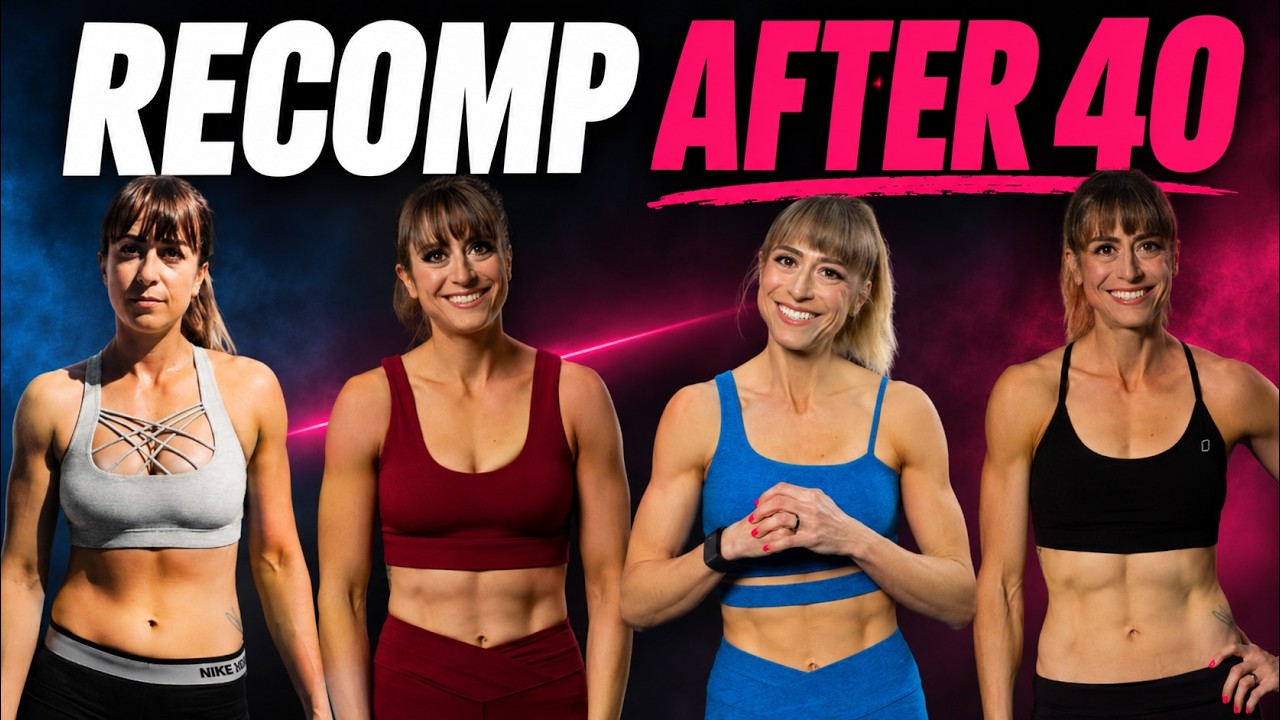
Is recomp even real? And what is it? How do I achieve it? Over this past month, I’ve gotten over 103 questions about recomp that kept popping up repeatedly. And today, rapid fire [music] Q&A style, I’m going to answer as many as I can in 10 minutes. These questions come from women 40 plus in perimenopause, menopause, and postmenopausal. Former cardio [music] queens who feared heavy weights, uh they underate for years, and data recomp was even possible for them. And I’ve been there myself. But it is possible, and I want to go over why and how. [music] So if that’s you, go for a walk, listen as you meal prep, or get comfy on the couch because your questions are about to be answered. And if you want more episodes like this, just let me know in the comments, share your question even there to be covered in future episodes. And also in my video
(00:48):
description or also the show notes, I’m going to link to my free Muscle First Body Recomp Guide. Now we’re going to start the timer and we’re going to get going. So is recomp even possible for me? I don’t care who or what you are, yes, recomp is possible for you. How you approach achieving recomp, which is losing fat as you build muscle or building muscle as you lose fat, might depend on where you’re starting from, your ultimate goal. Also your age does have influence in what you do in the habits that you have to implement as well as your training practices, previous previous dieting history. Off of that, I get asked a lot, is it too late to build muscle at 50, 55, or 60 plus? No, it is never too late to build muscle. Our age does make things more challenging. We can see anabolic resistance increase, which means that
(01:35):
we’re not able to utilize protein as efficiently as we get older. Also we just aren’t going to retain lean muscle the same way. Our metabolism changes, our lifestyle changes. But also we’re more advanced. Most of us have been training for decades at this point. And so to create that progression and that stimulus for muscle growth, we can’t just keep doing the same things we’ve always done. It’s why training design, it’s why different types of resistance, it’s why changing of tempos and changing a of motion, all these other things comes come into play, and it’s why I sort of push back on the lift heavy mantra, because lift having simply isn’t enough. Now, uh I’m eating uh 1,200 calories and I’m not losing. How is that possible? Recomp sometimes means taking a muscle building first approach. If you’re under eating, you can see your metabolism not only adapt down to that amount, when 1,200 calories your metabolism is
(02:23):
probably adapted down, which means not only is it hard to build muscle, your body’s going to resist it no matter how hard you’re training because it doesn’t have extra fuel to build. And the more muscle you have and the more your processes upregulate, the more your metabolism increases, the more you have to have more calories to support that. So if you’re not supporting that, you’re not going to end up building lean muscle, which helps you look leaner. You’re also not going to lose because your body adapts to what you’re giving it. And out of protection, it’s going to keep on fat as much as possible and even lose muscle if you don’t have enough calories coming in to support it. Not to mention you’re seeing metabolic adaptations, hormonal imbalance pop up if you’re under fueling. So you can be under eating and it cannot really be a calorie deficit for your body. And so in that process, cutting more is not going to work. You have to actually increase your calories. Why would eating more help me lose fat? It feels backwards. For exactly that reason. If your body has adapted to even
(03:11):
800 calories, which I’ve had clients coming in eating 800 calories, if it’s adapted to that, your body will find a way to function off of that, which means potentially losing muscle, slowing processes, uh hormonal imbalances because you can’t produce everything that you need to produce. You’ll fidget less, your hair will grow slower, your nails won’t grow the same way. You can see an impact in your immune functioning. All these processes regulate to function off of the amount you’re feeding yourself. So if it’s you’re feeding yourself less, you’re going to function off of less. Therefore, you won’t necessarily lose and you actually have to add calories to improve or turn back on some of these processes and build lean muscle, improve your metabolic health. So you have to eat more to fuel to actually have these functions go well because even fat loss is a process. You have to have energy to support that process. I added calories and the scale went up. Is that fat? Not necessarily. When you
(03:58):
increase your calories, especially if you increase carbs, you’re not only going to see water weight being stored, but glycogen storage. You also need this to happen in order to gain muscle. We can also see uh the scale go up as we’re seeing body recomp happen. If you gain 2 lb of muscle and even lose 1 lb of fat, you’re going to look dramatically different, but the scale is going to show a 1 lb increase. And we will build muscle before we lose fat. That is our body doing what it should be doing to not only thrive and see, you know, hormonal balance be achieved, uh sleep better, better energy, muscle come back on, but you will gain muscle before you lose fat because that is part of your body trusting that you are actually going to have that energy continuing to come in. If you’ve been under eating, you got to go through it. Sometimes you’re going to look a little fluffier, you’re going to gain weight before you actually lose. Eating more makes me feel bloated and tired. Is that normal at first? Yes, you’re retraining your body to eat more. Your body has learned to function off of
(04:46):
less, therefore it’s not used to the calories coming in. We do have strategies for making more like calorically dense meals over nutrient dense just and high volume, which you often want to implement for fat loss. It’s not that you’re eating not quality foods, but sometimes you have to go the route of how can I pack in more calories with a punch. Things like nuts do come into play, um more fats can come into play as well, how we break down those carbs as well, even using simple carbohydrates instead of just demonizing them. But you do have to retrain your body to eat more, which is a slow process of sometimes adding 50 to 100 calories at a time. So if you are bloated, you want to pay attention to the type of calories you’re consuming, but also breaking down meals potentially in different ways to help yourself retrain your body to eat more. Should I eat less on rest days? No. If you want to see recomp, your body often does need the calories even on uh days
(05:33):
you aren’t working out to repair and rebuild. You might find that you’re even hungrier after because of the demands of uh replenishing those glycogen stores, rebuilding and repairing, but also on those rest days we’re refueling to go into the next training session fueled so we can really push hard. Because so often if we’re depleting going into the next training session, we’re not going to be able to push progression in the way that we really should in order to see the gains we want, which I don’t think we recognize enough, especially when we are so focused on fat loss and eating less. We don’t recognize that our 120% in the gym isn’t a true 100% intensity and that’s why we’re not seeing the gains that we actually We’re not lifting as heavy as we actually could. We’re lifting as heavy as our energy is allowing because we’re underfueling. Do I need cardio at all or does it hurt muscle? Cardio is very important. Cardio has great health benefits. I don’t think it should be demonized during recomp. However, how you’re focusing your
(06:21):
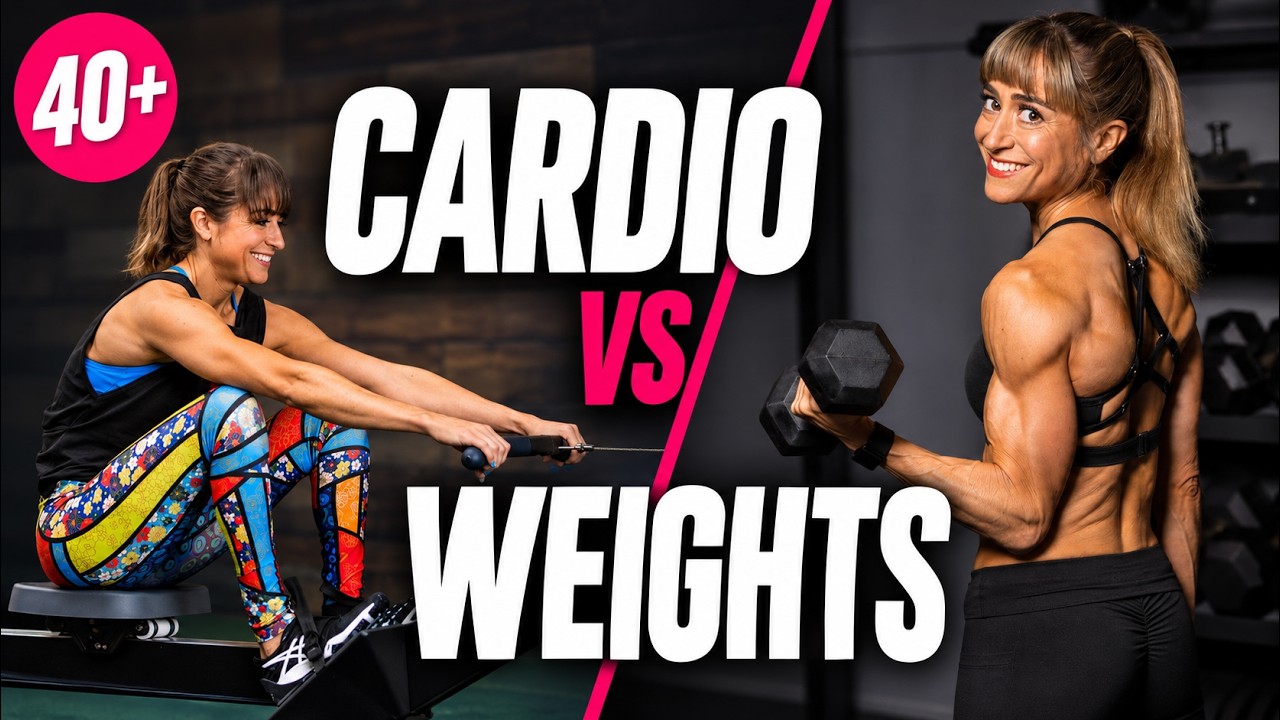
recomp. If you have more weight to lose, you might be focused more on uh losing fat while building muscle. If you’re closer to your leanest core or you’ve even been dieting for a while, you might be focused more on building muscle as you lose fat. And both of those will dictate different uses of cardio. If you are an endurance steady-state athlete, uh you’re doing triathlons, you’re doing marathons, those different types of things, you want to be conscious of how that’s going to impact how you need to fuel and how you dial in your strength work. And yes, if recomp is your main focus, you might want to dial back the mileage, but you’re not demonizing cardio. A strength workouts can be more metabolic in nature depending on how you’re dividing your schedule, but also we want a sprint. We want to do that power work. Those things are very key to not only building strength and muscle, but they’re key for our metabolic health, our brain health. They do really support actual recomp as well. Even HIIT is very important, especially in that
(07:08):
more fat loss phase. What’s the difference between HIIT sprint intervals and how long should they be? So HIIT uh HIIT and power work are more interval-based training. HIIT is going to be more things like those uh uh EMOMs and also uh the different time circuit trainings that we can see. Uh AMRAPs are very common for that. So it is a little bit longer in nature and the intensity is slightly lower than the actual all-out sprint work. Sprint work is very short intervals of work. It’s often longer rest. And when you get into power work within sprint work where it’s super explosive, that’s like 8 to 12 seconds of work with like at least 3 to 5 times the rest. So all can be used. HIIT is going to be a little bit more beneficial during say your fat loss phase versus sprints and even power work are going to be really great to still include during more of a muscle building focused recomp. But all are incredibly
(07:57):
powerful work. But the thing that we have to be very conscious of is that your HIIT workouts are not becoming an hour. You’re not just doing more because you feel sweaty and worked. HIIT sessions are often at 30 minutes. Often even you’ve 10 to 15, maybe 20 because you are having that higher 80% intensity and you are cycling through moves where you’re really pushing yourself to get out of breath, to have to work hard, right? If they are high intensity interval training. What does heavy actually mean for me? So heavy always depends on the reps and sets that you’re doing and also your starting point. If you’re doing say
(08:30):
eight to 12 reps and you can do 12 reps every time and probably could do a few more, I would urge you to go a little bit heavier. So it’s called double progression. But when you use double progression, what you do is you try and either increase the reps you can do with the weight or the weight that you can do with reps. So if I give a client rep a rep range of eight to 12 or 15 to 20 or whatever else it is, if they can hit the top amount of reps, I’m always going to urge them to go heavier. If in going heavier say it’s eight to 12 and they can only do eight, I might have them stay there until they can build back to 12. While you can have you know two to three reps in reserve, if you have more than that, you definitely need to go heavier. And especially the more advanced you are, the more I would even urge you if you are in that eight to 12 rep range to air on the side of sometimes only being able to do six in a row using rest pause. So you’re pausing for 15 to 30 seconds to then be able to get out eight and then from there building up further. If someone’s doing
(09:18):
higher rep ranges, I will often even urge them to use rest pause where they can only do a weight for like the 15 reps of the 15 to 20 and then they have to pause to get out all 20. But you want to make sure that you’re challenging yourself whatever for whatever rep and set scheme that you have. That’s what heavy is. And each week it should be incremental increases, not just you jumping massively or doing a ton more reps with it because that’s where we can get injuries and issues popping up. Can I spot reduce my arms or my belly? No, at least not in the way that we think. You can’t just go do a bazillion tricep exercises and expect your triceps to change or a bazillion crunches and expect your abs to change. However, if you are dialing in your strength work and you’re strategically and you are also dialing in your macros so that you’re making sure your nutrition’s supporting, you can help with spotlight pulses a little bit which is spot reduction by working an area. So if you
(10:04):
have a stubborn area, you work it with your strength workouts and then you do include even say walking afterwards where you’re utilizing more of the mobilized acids, but it’s not going to be spot reduced from just doing a bazillion isolation exercises. However, we do mobilize more fatty acids from the surrounding muscles that we work, so from from the surrounding tissues. So we can use that strategic cardio to our advantage, whether it’s sprints or whether it is walking afterwards as well. Heavy and low reps or light and high reps? A A you need to use both. The more advanced you are, the more you need to use a diversity of rep ranges, especially based on the muscles you’re trying to target, the moves you’re trying to use. Again, everything should always be heavy for the reps and sets you’re doing. I have bad knees, a bad back, or arthritis. Can I still lift heavy? Yes, but what rep range you might be working in might vary based on what you’re exactly doing, the moves you’re including, the injuries and aches and
(10:52):
pains you have. But again, there’s so many different ways to push progression, and sometimes heavy is using tempos or range of motion or even different tools to push that progression instead. That is how many I got there. I’m curious to actually count up how many I got. Hopefully I beat last time, which I think I got 20 in the 10 minutes, although this time I feel like I didn’t quite get there. But if you do have any other questions, comments, or concerns about recomp, do not hesitate to comment and ask them. I will try and go back through and answer any that I can and include them in future episodes as well. But if you haven’t yet, make sure to also check the show notes or video description to download that Muscle First Body Recomp Guide. It really helps you dial in your nutrition based on where you’re starting from and prioritize either muscle building first or fat loss first because while you can do both together, we always need a primary focus.