Show Transcript
(00:00):
I took the last month of your questions from social media, from emails, from DMs, and I had Claude actually help me boil it down to about 125 of the most common ones. So, today I’m jumping around and I’m answering as many as I can >> [music] >> with a 10-minute time limit. Sort of live stream style like my old coffee with Corey’s for those of you OGs who remember those on Facebook. There’s no script, no polish, just real answers. So, hopefully you walk away with feeling more confident and with what to do next. So, go for a walk, listen as you meal prep, or get comfy on the couch because the timer’s about to start and I’m going fast. So, if you need that gear icon to slow everything down, totally understand, but I want to see if I can maybe get through about 20 of these at least. We’ll see, I’ll tally them up at the end. Uh one last thing before I start. [music] If you do enjoy
(00:46):
this style of podcast, I’d love for you to leave a comment with not only which question and answer really helped you the most, but even a question for me to do next time. So, getting all set up. Got my checklist already. Setting that timer. Oh, no, I reset. See, this is live. All right, well, sort of live. Ready? We’re going. Okay, so first question, how many sets and reps should I do to build muscle? The annoying answer is it really depends. Uh it depends on your fitness level, your goals, but the general hypertrophy rep range is about six to 12 reps. Maximal strength, which you do also need, is one to five, and strength endurance is 15 to 20. I will tell you that if you want the best muscle-building results, don’t just stick in the 8 to 12, 6 to 12 rep range. Really use a diversity. That’s going to help you build the most lean muscle.
(01:35):
Is three to Is three sets of 10 actually enough? Yes and no. It can be if you’re really pushing so that you don’t have more than two to three reps in reserve. If you’re doing compound movements, that might be ideal, but I think too often we get into that three or sets of 10 and we don’t think about the diversity of other designs like 6 12 25 or compound burners. So, I honestly use that design and that basic layout very little other than for standard traditional like hypertrophy lifts uh in single set moves or someone’s at a very busy gym. Should I lift heavier for fewer reps or lighter for more reps? The answer is you should do both because you want that diversity and it also depends on the type of movement just like for building muscle with how many reps and sets should I do? It really depends on what type of movement you’re doing. A more isolated movement you might be higher rep and lighter weight but the weight shouldn’t feel light for the reps you’re
(02:21):
doing. If you’re doing more of a compound movement you might be lower in reps heavier in weights but you want that diversity to really help you work a muscle fully to fatigue to recruit more muscle fibers to also address even strength endurance maximal strength all the different types of strength out there which will help you see better muscle gains. And in terms of the sets going back to the reps and sets I did talk about the general but usually it’s between two and even five sets depending on how many reps you’re doing. The more reps the fewer sets you’re going to do. Uh jumping around to some let’s see nutrition ones. How much protein do I actually need each day? It really depends on your goals. If you’re in a calorie deficit if you’re working on fat loss your protein needs are actually going to be higher because it’s going to help you prevent any muscle loss during that deficit. If you’re in a surplus or even focusing more on maintaining your protein needs might go down. I like a general rule of thumb to start clients at about 30% of their calories coming
(03:10):
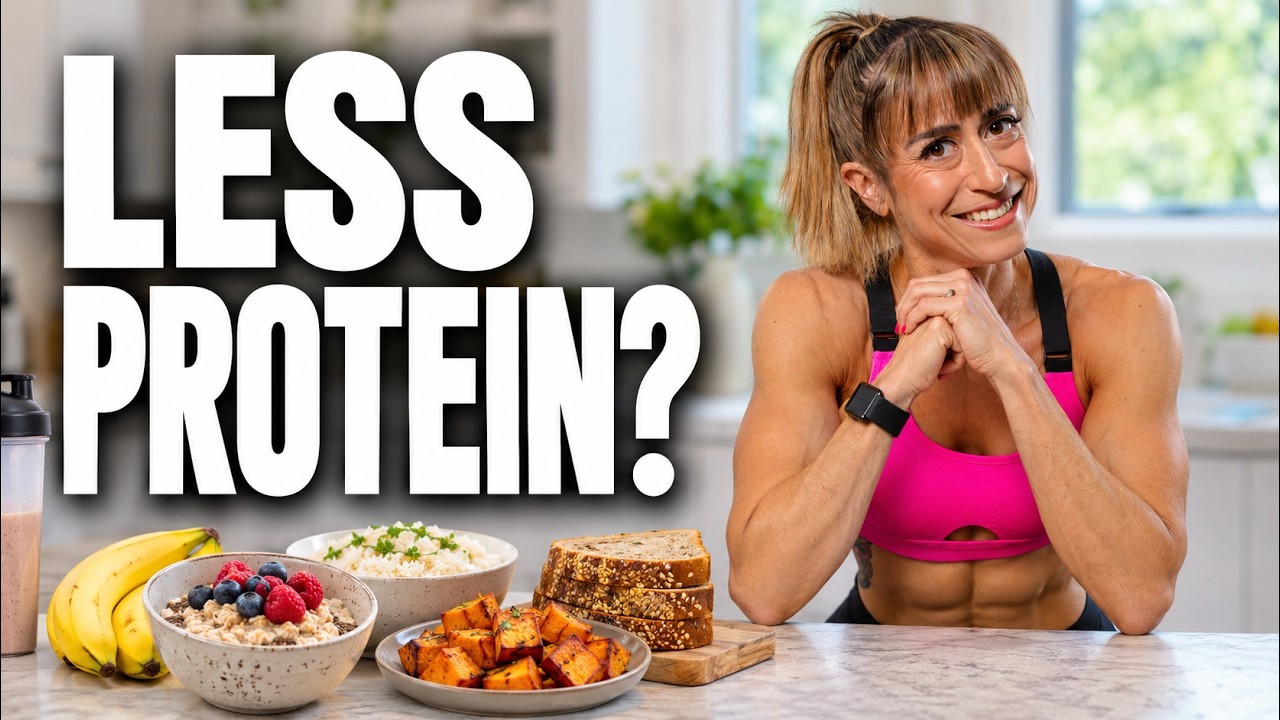
from protein. I find that that is a great place to really hit that high protein amount with still balance with the other macros. But I can tell you if you’re just starting out just track what you’re doing increase by 10 g you’re going to see some great benefits. Is eating more protein always better for muscle growth? The odd answer is no and I think this is something that’s very hard to accept because while our muscles require amino acids they require protein our protein needs actually go up in a deficit. So if you’re in a strategic build your percentage of your calories that might actually come from protein will go down but it’s because your calories overall go up and therefore you’re already getting enough protein. Plus carbs are protein sparing which means that they actually create that anabolic environment. They help you not necessarily need as much protein because you’re not going to have see the same muscle tissue breakdown with your glycogen stores being full or the same requirements of protein
(03:58):
because you’re getting enough of that stuff. So if your carbs are higher you might actually need lower protein. So, eating more protein is not always the answer and sometimes going too extreme in high protein diets can backfire, as much as I really am an advocate of high protein. Is animal protein better than plant protein for building muscle? So, the simple fact, and I’m going to sort of uh give a very politician answer to this, is whatever you are choosing to do in terms of your lifestyle, make that work. I never like to demonize anything and while there are some studies that show that animal proteins do have, because they are more options in terms of complete proteins, they have higher leucine contents, there is some something to potentially some animal proteins, but honestly I have plant-based clients who see amazing results, get a lot of high-quality food. So, I think really whatever your dietary choice, you can make it work and if you focus on protein, you’re going to see results. That’s my answer to that.
(04:47):
Uh jumping around a little bit more, should I lose fat first or build muscle first? The answer is it depends. If you have more weight to lose, you need to focus on fat loss first recomp. If you’re actually basically at your goal weight, you’re you define yourself maybe as more skinny fat, you’re looking for more definition, you want to take a muscle building approach to recomp. So, it really depends on where you’re starting from. Why am I losing weight but not looking more defined? Because maybe you’re trying to put yourself into too extreme a calorie deficit, you’re not controlling your macros, you’re doing too much cardio, you’re not really actually promoting optimal recomp in terms of your training, your nutrition, even your stress levels. So, while you’re losing weight, you might be losing as much uh muscle as you are fat. Can I lose fat without losing muscle? Yes and no. So, in the recomp process, what we’re trying to do is prevent as
(05:34):
much muscle loss as possible. If you have more weight to lose, there is going to be some muscle fluctuation. Even as you get closer to your goal, there’s some muscle fluctuation. It’s why at some point we do try and do that reverse diet out to go more into the muscle building side of recomp. So, yes, but you want to control for it as much as possible and that is possible to do. You can really optimize for losing fat without losing muscle. It just requires you to actually dial in your macros, not go to extremes with your deficit, not overdo the cardio. How much cardio should I do if my goal building muscles? It’s not a simple answer of how much, it depends on type as well. If you’re really focused on building muscle, walking is a great form of cardio and you can do that basically every day. It’s low intensity, de-stresses, helps you recover. Now, if you’re talking about that steady state endurance, it really depends too on how you’re
(06:20):
designing your strength workouts and your your nutrition as well. And I bring up so much nuance in it because I think so often we just say, “Oh, I can’t do this.” Yes, steady state cardio works against our muscle building goals a lot of times, so we have to be conscious of that, but there’s always strategies to balance in the things we love with the goals that we have. And yes, that we might want to focus more on muscle building during a lower uh mileage phase potentially if we are an endurance athlete. However, it’s not so much how much is also how you’re designing it because you can do sprints and see a great muscle building benefits. Uh sprints actually help with our metabolism as well and that power output which helps with us lifting more. So, it’s really about type as well. Should I do cardio before or after lifting? Again, depends on what your goals are. If you are training for an endurance race, put your cardio first because what we put first gets our most
(07:07):
attention and energy. However, if you are actually, you know, trying to build muscle, if you aren’t training for a race and you want to just get leaner and stronger, put your strength workouts first just because it’s a safer, you’re going to be fresh for those lifts so you can lift more and really give your 100% intensity because just because we feel like we’re giving 100% doesn’t mean we actually have 100%. So, you want to put first whatever you want to prioritize. How many rest days do I actually need each week? Really depends on the volume you’re creating in your workouts, how much you’re doing full body. I always say design for the time you have more than even focusing on how many rest days because depending on how you’re even cycling areas, you might be getting a lot more rest for areas because of the breakdown of upper or lower split. So, it really just depends. But I would say at least one full day of focused on mobility work, walking, restorative stuff because your brain even needs that. How do I know if I’m overtraining or
(07:54):
just not recovering enough? Same same two sides of the same coin. You are overtraining potentially if you’re under recovering because there’s always a way to adjust to recovery to account for the volume because if you’re training for a triathlon, the reality is you’re going to have a lot of training. So, you just need to make sure that your recovering modalities, your fueling all promote that. However, if you’re just doing more for the sake of doing more and you’re seeing your performance decline, you’re not seeing progress in terms of your recomp, you might want to consider are you able to actually do the recovery that you need for the volume that you’re including? So, that’s where you might cut back on volume as well. Is it okay to work out when I’m sore? Yes and no. Sometimes when we’re first starting out, we do have to work out a little bit when we’re sore, but then we just want to take that step back to make it a little bit more restorative movement, but we need to get in that groove. However, if you’re constantly sore, you want to really assess what’s going on with my recovery, why am I constantly sore, am I not creating that
(08:40):
progression in my workouts, am I doing too much, am I doing too much new? Should I take a deload week and how often? Really again, depends on how you’re designing your structure. Because I like to switch progressions every 3 to 6 weeks, I find that that first week of the progression often serves as a deload. I also like to use vacations and such uh strategically as one doing that mobility work, but it really just depends on how you’re creating that progression, but know that you can use it not just because of physical sort of burnout, but also mental. And the more you can do it proactively during even a busy time, the better off you’re going to be. Can poor sleep prevent muscle growth? Yes, sleep is very important, so is stress. We need to focus on these things as well and how we’re fueling and training to promote optimal sleep. Uh so, if you’re not sleeping well and you’re trying to do more in your training and not seeing results, really take a look at that recovery. Do I need to lift heavier weights during
(09:27):
menopause? So, during menopause, it is more important that we create that stimulus for growth. It’s important that we lift heavy, it’s important that we don’t fear that intensity, but we have to be strategic in our recovery as well. Really, I don’t think that menopause so much makes things different, it just highlights the practices we were probably getting away with earlier on and we don’t have as much margin for error. So, lifting heavy is still key. Potentially adjusting your volume might be important if you’re seeing a lot of inflammation, but again, it’s about adjusting all systems, focusing on that hydration, focusing on that nutrition. But yes, lifting heavy is super important because we can see anabolic resistance increase. It is harder to build and retain your muscle as we get older, so we have to optimize everything because the hormone environment is not as optimal. Should I stop doing HIIT during perimenopause? No, you should not stop doing HIIT during perimenopause. You need that intensity. You just need to be strategic with it. And too often, I
(10:15):
think early on we extend our HIIT workouts out beyond where they should really be, which is like 10 to maybe 20 minutes. We make them hour-long sessions that are slaughtering us, and then we can’t recover from them. And we have to watch when intensity verges into overtraining or just chronically elevated cortisol levels because our hormones are in flux. Is creatine actually worth taking if I’m trying to build muscle? Potentially. Always first to dial in your macros, focus on your protein, focus on getting enough calories, look at your strength workouts and how much cardio you’re doing. And then yeah, creatine is an amazing supplement that can be great for brain health as well. Will creatine make me gain weight? Potentially to start. It depends on the loading phase that you do. But part of that process of you gaining the water weight is actually what makes it work for the muscle building because you need that water weight and even glycogen storage in your muscles to help promote anabolic environment for muscle growth.
(11:03):
If I’m lifting heavier but using momentum, am I actually getting stronger? So, I will tell you if you get a little little ego, oh no! That’s it. Well, I guess we’re going to be left in the dark as to what my answer was for that. Hopefully, this provided a lot of great information for all of you. I’m curious to see how many I actually go through when I tally them up. But again, I would love to hear in the comments which answer really resonated with you, what question you might even want to hear on the next one, and if you even want to hear another one of these more live stream Q&As. Have a great day, guys.