Show Transcript
(00:00):
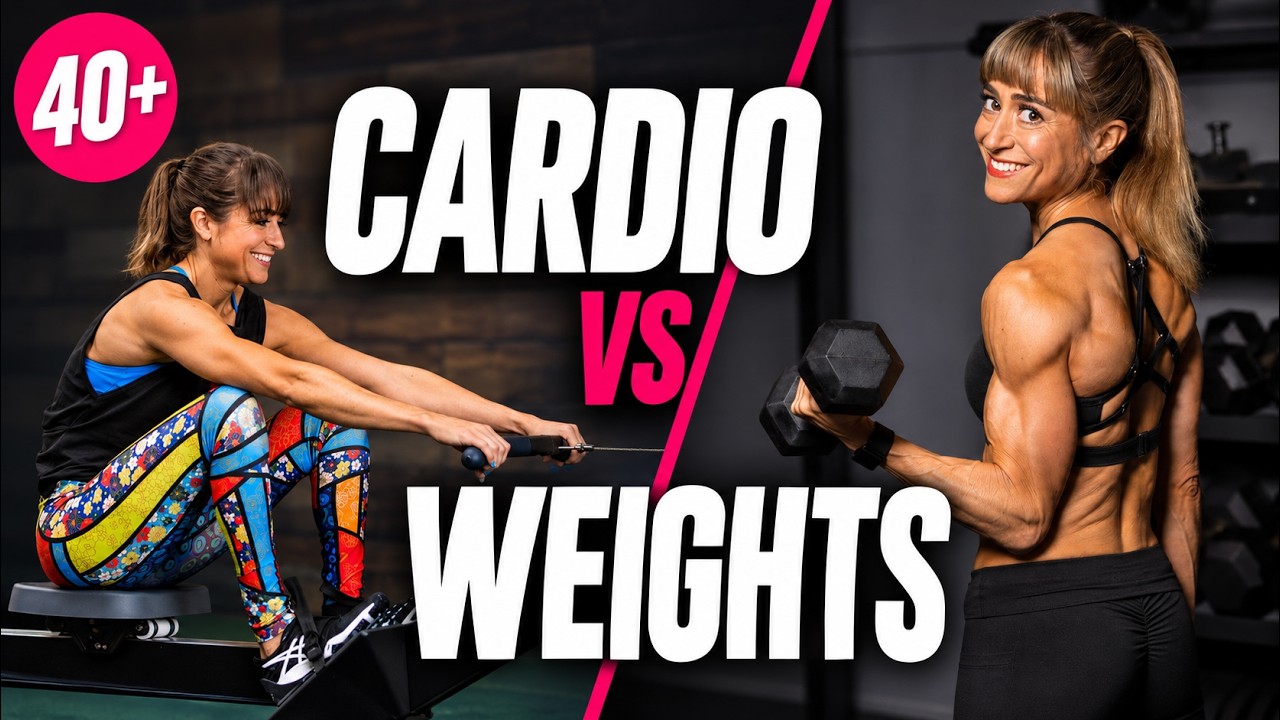
Should you lift heavy or should you do cardio as you get older? The answer, both. But I think we’ve gotten so caught up in debating which one is better that we’ve forgotten they serve different purposes. And if you want to build muscle, maintain your power, [music] and stay capable as you get older, you need to train for more than just burning calories. So go for a walk, listen as you meal prep, [music] or get comfy on the couch. Because today, I’m sharing five things I wish more women really knew about aging strong and lean. So I want to start with number one and this one is really to stop picking sides. And
(00:49):
it was actually interesting thing about this because I have been incredibly guilty of this recently pushing back on not only my own previous cardio bunny tendencies but just the fact that I know that is there for a lot of different women and I think a lot of other coaches in the industry have also been pushing on that too and we’re have this mantra of lift heavy stop doing as much cardio and part of it is stop doing as much and only in that one form but it does come across as only lift heavy and cardio has become demonized instead of recognizing that we aren’t really picking sides. We have to use the nuance and variation in both to our advantage, based on our goals, based on our training history, based on even our current fitness level and needs and even our schedule. But what we really want to accomplish will drive what we pick from each and how we implement them. We need to lift heavy.
(01:22):
We need to challenge oursel and that will be done in different forms. We need to do forms of cardio, but we also need to recognize that a it’s a cardioto strength continuum and that doing our strength workouts is working our our cardiovascular system. It is having cardio benefits and how you design the strength workouts can be more conditioning or less conditioning. But then also when we’re thinking about endurance steady state cardio, that’s very different in the outcome and impact especially depending on if it’s running or riding at an intensity versus walking is more steady state lower intensity. Right? So those things are very different in the outcomes they have, how they benefit us. But also even hit, sit, and power work, those are all slightly different and we so often lump them together because there there is some camaraderie between them and sprints are a form of, you know, interval training
(02:09):
as well and power is a form of sprints. But there’s very much a nuance to how we even want to use those different things. So I will tell you it’s not picking a side. You want to think I’m using my strength work. I’m including walking daily and getting those steps in. I’m including one to two, you know, interval sessions in different forms based on my goals per week. Maybe if it’s a little bit more fat loss, it’s more towards the HIT. Maybe if it’s a little bit more recmp with a muscle first approach, it’s with the sprints. And then I’m including power work as well. But you want to think about that diversity. And yes, I didn’t include necessarily the steadyst
(02:41):
state runs or rides because especially as we go through parmenopause and menopause and we see inflammation increase and then into postmenopausal years where a lot of us are really focused on that muscle mass retention. It’s not that we should fear those steady state uh conditioning drills because we do want to maintain our aerobic baseline. We can do a lot of that with walking but the impact can not necessarily be what our body really needs. It can fight against some of the muscle gains especially if we are struggling to build muscle. So it’s more that we want to be very conscious of how we include that. And if you love it, include it. You might even include it first if you’re training for a race before your strength work. As much as I really think strength work is valuable and we want to, you know, maintain lean muscle. So, it’s all about our goals and having intention for how we use it, but not demonizing any form, just understanding the cost and reward. So, if you’ve been fearing doing cardio because you’ve seen it’s bad for your muscle gains, or you’ve even been
(03:29):
fearing lifting heavy because you’re an endurance athlete and you really want to focus on your sport, there has to be a balance of both, especially if we want to age strong and feel our most fabulous and be functionally fit. Now, number two, lift heavy, but don’t only lift heavy. And I’m bringing this up because I’ve seen this mantra and even some fear when I’ve mentioned some of the higher rep range workouts type stuff and designs that I’ve, you know, used with my permenopausal, menopausal, even postmenopausal clients. There’s been some fear with the high rep ranges because of the push to low reps, compound moves, heavy weights. I love that. I’m a meatthead all the way. I compete in powerlifting. I love compound moves for lower reps and heavier weights. I think they’re incredibly key. Maximal strength working is important, but it’s more nuanced than that because a the more advanced you are, the more you probably have hit a ceiling if you’ve been lifting heavy for a while. So, you need to create progression in
(04:16):
different ways. And also, if you’re just starting out, your connective tissues might not be ready for those one rep max yet or those five rep maxes. So, you might have to do higher rep ranges to sort of build up, make sure that you’re actually having those proper recruitment patterns. There’s also nuance to it in what muscles you’re trying to target and especially if you’re trying to isolate more areas and work on those separate areas and you’re doing isolation moves then higher rep ranges might be valuable especially to recruit more muscle fibers so that you can work a muscle fully to fatigue. Even if you’re working say bench press and you really want to target your chest when you’re doing bench press there’s a good chance that your shoulders and triceps are going to be the limiting factor. So some higher rep work that isolates your pecs a little bit more in the form of say chest flies might be really important. Same goes for if you’re doing squats, you want to target your quads or even if you’re doing deadlifts and you want to get your glutes a little bit more. So, we have to understand that how or what
(05:03):
we’re trying to work has impact and the types of moves that we’re using have impact. And that even how we want to drive muscle growth and we want to use all three drivers. Mechanical tension, muscle tissue damage, and metabolic stress. And metabolic stress especially is going to require us to not only not just necessarily use heavy dumbbells or weights, but banded movements, uh more smaller ranges of motion and also higher reps. So all of that will have an impact in how we’re trying to drive muscle growth and we need that combination especially the more advanced we are but I would even argue starting out it’s incredibly important to build up strength endurance also create muscle hypertrophy or muscle gains and maximal strength all of those while they have overlapping areas in terms of reps and sets they are different rep and set ranges and layouts. So things like 61225 capitalize on all three compound burners. They’re using that maximal
(05:51):
strength, but they’re also using those high rep ranges to work a muscle that you maybe struggle to build to fatigue and failure. Now, we want to recognize that this is a little bit more strength endurance when we do do those high rep ranges. And you can’t just tone a muscle by doing a ton of high reps and that no matter what you’re doing, you need to challenge yourself. Like you can’t just stop at 15 reps because it’s 15 reps and be like, “Oh, well, I did the rep range, right?” You need to make sure that you’re actually working within two to three reps of failure when you’re doing that or even using rest pause to push a little bit past it to really see the benefit. But the lift heavy mantra has benefit in that we always want to be challenging yourself. It’s never light weights. It’s lighter weights because they’re in relation to the reps that we’re doing. So that’s really important when we’re thinking about lifting heavy and that diversity, not only in the rep range that we’re using, but also the type of equipment, the tempos, the range of motion. Those are progression. What
(06:38):
we’re trying to do with lift heavy is drive progression to challenge our muscles to have to rebuild and repair and grow stronger. Now with that and part of strength and part of the reason I say that it’s not only about lifting heavy is number three train your power. So power intervals are a type of sprint intervals but they’re about 8 to 12 seconds of work with at least three to five times rest. There is not anything going on here that’s trying to create fatigue or failure or make us really tired. Honestly, you should feel pretty fresh for all of them and at the end be like, I could probably do more. But it’s all about that maximal explosive output because we are working on the mind body connection or that neuromuscular control to recruit muscles quickly, efficiently, and effectively, which makes us stronger. But this is about the uh fast twitch, type two muscle fibers because when we sometimes do the higher rep ranges, we’re also working more slow twitch. But we want to think about some
(07:25):
of that fast twitch work because not only do we generally lose those muscle fibers first and then we end up uh not being as powerful, not being as strong, not being able to react in everyday life the way that we want, it’s where we can lose our balance more easily. We don’t catch ourselves when you know we trip and fall and that’s where we end up fracturing something. So we want to train power. It’s incredibly important to our agility, our reaction times, our coordination. But this is about training those those muscle fibers that we tend to lose and also that can help us create better muscle definition and I don’t want to use the word bulk but build we’ll say because so often when we want
(07:58):
to build our muscles a little bit we don’t see the value in this but powerwork is incredibly important for muscle hypertrophy as well not just all the reaction times which are essential too but there it can also help improve our metabolic health as well. So, I would tell you if you’re thinking power and now you’re also thinking, “Okay, well, Corey, I can’t jump. I can’t do impact.” I have a whole video on jumping that I will link to as well because it’s incredibly important in my opinion that we build up to some sort of impact where we start and how we do it. We know we might not start jumping. It might not be right for us, but too often we just villainize and demonize it when really working on the ankle mobility and the landing mechanics can help us build up to so much and safely so that we don’t step off a stair wrong and hurt ourel. But it doesn’t have to be impact power and even sprint work. It does not have to be running. Sprints are not by definition just running. They are an interval of work to rest that we are
(08:44):
creating. And the diversity in that even can help us see a lot of different benefits. There’s not just one sprint interval, but it can be done with medball work. It can be done with explosive lifting. It can be done with on the bike or with the rower. Uh you can yes do it running or even in the pool swimming. There’s lots of different ways to sprint and get that all out intensity and do that power work. Number four, and this isn’t a training one, but I think it’s really at the heart of what makes our training work or not work. And sometimes the reason we’re so frustrated working really hard in the gym and not seeing results. Stop underfueling your muscle. I don’t care if you’re trying to lose fat, you got to take that muscle first approach to fat loss. You got to fuel those gains. If you are fueling your training, you’re able to push harder, work at that true 100% intensity. Because so often in our training, we don’t realize that we are that depleted, that we really don’t feel that good training. And I can’t I can’t
(09:30):
tell you how many women come in eating more being like, “How am I losing weight eating more?” And then they realize like how much better they’re actually feeling in their workouts. I’m like, “Think about how much your numbers have increased. You’re actually able to build muscle. You’re not creating that bigger and bigger calorie deficit where your body is trying to hang on to things more and more or using the amino acid reserves, aka your muscles, to try and repair and rebuild. So, we need to make sure that we’re getting adequate calories. We need to make sure that we’re getting enough protein. And I will say our protein needs go up as we get older. We have anabolic resistance increase. We don’t have that margin for error we did when we were younger. We don’t have optimal hormone environment. We can still build just as much muscle. Studies have shown that post-menopausal women can build just as much strength as premenopausal women. However, it doesn’t mean that it’s as easy. But we can address that by just saying, okay, well,
(10:17):
if I utilize 30 grams before efficiently and I’m not utilizing that 30 grams as efficiently, why don’t I boost it to 40 grams at the meal? increasing that protein really helps. Making sure that we are actually eating enough carbs to even create that anabolic environment is key. Carbs are protein sparing. So, as you increase protein, you only want to increase it to a point because you still want to have the carbs and fat because it’ll give you other micronutrients that you need and essential um value. You need to make sure that you’re getting enough fat to promote hormone uh hormonal balance. So when you eat more carbs, you can get in things that have a lot of micronutrient-rich foods and that can also help you utilize protein more efficiently because they’re protein sparing. So make sure that you’re not undereating carbs. Even if you are seeing changes to your insulin sensitivity going through menopause or parmenopause and menopause, make sure that you’re still eating enough. Of
(11:06):
course, your balance will depend on your training. More cardio might mean more carbs. Less cardio, fewer carbs. And that’s where this can really come into play. and you can address and not have to fear the steadyst state endurance training that you’re doing potentially even when you want to see rec. Yes, it is going to fight against your muscle gains purely from the training component, but you can also address a lot of that in how you design your your strength workouts to maybe be less metabolic than the circuit training you were doing, but also in how you’re fueling. Getting more carbs might just be the answer. Eating a little bit more fuel might just be the answer to making everything work so you can do something you love while seeing the results that you want. And with that, the last one that I want to go over is exhaustion isn’t the goal. So often we try and eat less, train harder to see results faster, and end up burning out because we like sort of seek exhaustion. I would
(11:53):
think if a workout didn’t feel hard enough, it wasn’t good enough. But we can only train as hard as we can recover from. And we have to recognize that so often we say overtraining when it’s really underreovering. You’re not eating enough to support the training that you actually want to do. you’re not doing the mobility work or focusing on sleep enough or stress enough to promote you being able to train as hard as you do. And that’s where we do then, yes, have to adjust our training. Now, cortisol buzzword right now, but we often or I’ve often had people say, you know, I I don’t think I should be training this intensely. It’s elevating my cortisol levels. We we demonize something when training should be intense. There should be some cortisol elevation with it. What we need to make sure is it doesn’t become chronically elevated levels because we’re not having the proper recovery between. We’re doing too many intense sessions back to back for the same area and again we’re
(12:40):
underreovering. That’s the key. Underreovering. You can only train as hard as you can recover from. Noting that is essential. And that’s why I just want to give a shout out to my dynamic strength programs which are all designed with power work included, strength work included, and a diversity of strength designs so that if you’re doing more steady state cardio, you can account for that with slower lifts that don’t add to that metabolic or catabolic environment by being more metabolic in nature. But if you’re not doing that steady state cardio, you can even work on your conditioning if you don’t like that endurance sports or some of the other cardio forms through how you design your lifting workouts with more circuit training with the 61225 with more metabolic designs. But dynamic strength has all this sort of built in so that you can make sure that you’re recovering well. you’re doing that power work, especially before you’re lifting, and you’re making sure to even include the prehab that helps you recover faster and
(13:28):
see better gains out of your strength work while including a diversity of forms of progression and not having to make you pick sides. So, I would love to hear what really hit home for you and if you’ve been fearing cardio or even lifting heavy because of the different sides you see out there on social media and if this helped you embrace doing both.