Cori Lefkowith (00:00):
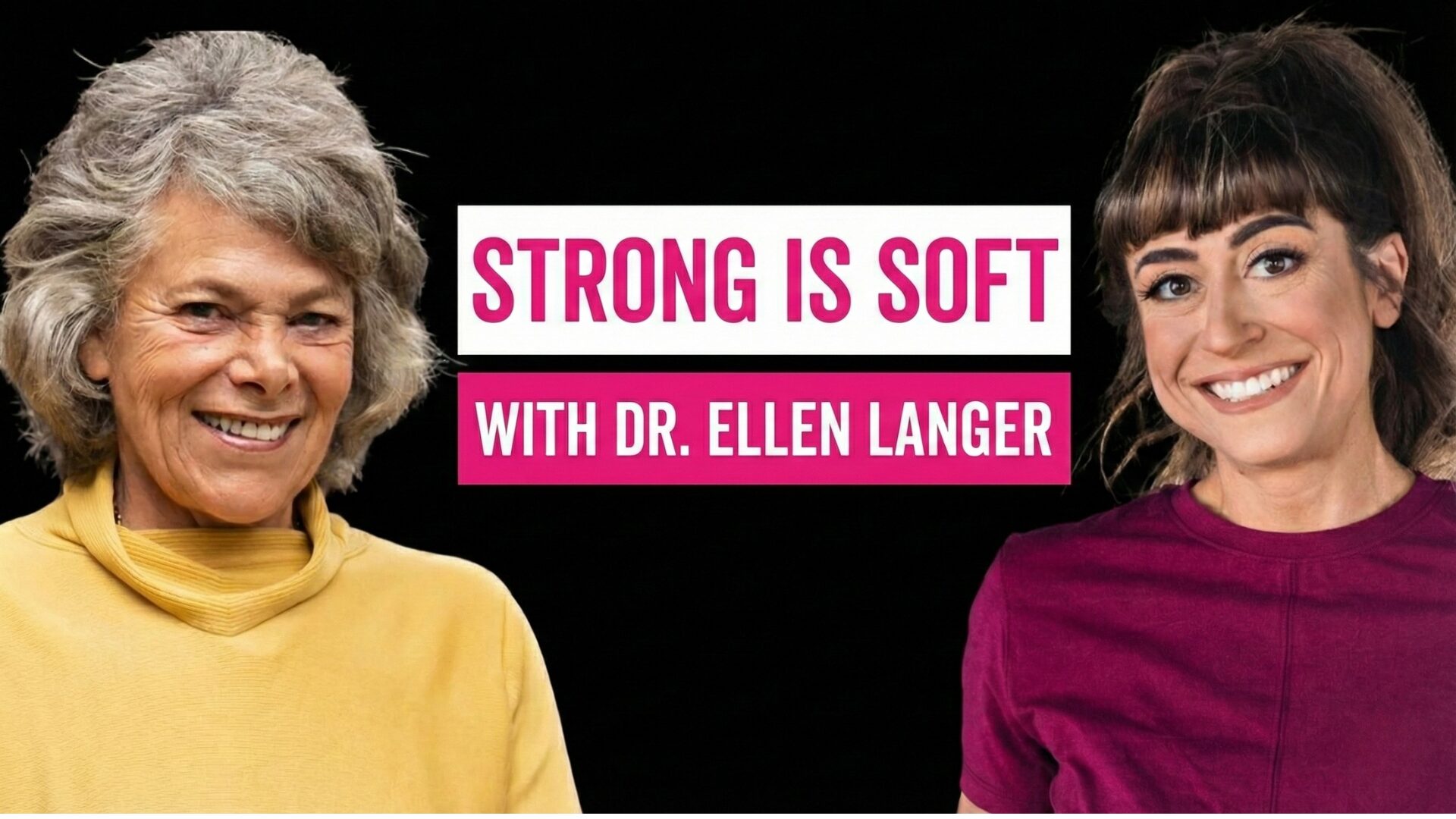
We spend hours in the gym training our bodies, but are we training like robots? If you're mindlessly going through the motions, you might be leaving your biggest gains on the table. Today on the Redefining Strength Podcast, my guest is Dr. Ellen Langer, the Harvard psychologist widely considered the pioneer of mindfulness in Western psychology for over 45 years. Her research has shown that the way we think, notice and interpret our lives doesn't just change how we feel. It changes measurable physical outcomes in the body. Her work has improved strength, vision, hearing weight, blood pressure, and even markers of aging, including a famous study where she reversed biological signs of aging and subjects simply by changing their environment. In this conversation we talk about why trying harder can actually backfire, why most tragedies are really just inconveniences and why you're always training a system, not just your body.
(00:50):
This episode completely changed how I think about mindset, not as motivation, but as a performance multiplier. So let's dive right in. I actually saw that you started a new series of one-liners that you're collecting, and the one that you shared was be confident in your uncertainty, and it got me to thinking about one-liners that have made a difference in my life, words that have made a difference in my life. And one of the big ones for me is act as if. And I thought it was really appropriate talking to you today to discuss that, but also the word strong, I'd like to start with that word because I think it means so many different things. What does strong mean to you, both physically and in living life and in mindset?
Dr. Ellen Langer (01:34):
Remaining soft. That's it. It's very hard to be soft. The more mindful you are, the more you understand other people's behavior from their perspective, you are less likely to take offense, you're less likely to be judgmental, and then it's easier to smile and remain soft.
Cori Lefkowith (01:57):
When we're talking about soft here, we're not talking about being weak or frail or afraid.
Dr. Ellen Langer (02:05):
It's very hard to be soft. I've imagine somebody's coming at you with words and it's abusive. The easiest thing to do, the mindless thing to do that we've all been taught is stick up for yourself, smack them back. And you say something negative to me, I return the insult to you and so on. And the more mindful you are, the less you're swayed by other people's craziness, so to speak.
Cori Lefkowith (02:33):
And that's so key, not only because we see such a change online with how people deal with each other, but also when you're working towards different goals, you're going to have people coming at you who don't agree with your pursuits. How do you navigate that and actually embrace being soft to be strong?
Dr. Ellen Langer (02:52):
Yeah. Well, the more mindful you are, the more you're aware of it. Things look different from different perspectives, so you're not as surprised by it. You're not offended by it. And in fact, I think the alternative perspective would lead me at least to inquire how did you come to that? What do you mean by that? And then begin a dialogue. Right now the world is crazy right now. We have two sides each think the other is stupid, wrong, evil and whatever else. And I think that's very sad. I think that what we should be doing is trying to find the sense in other people's behavior. And it's interesting. So I have as we'll probably talk about many, I've been doing this for over 45 years and I have many very exciting findings about health and wellbeing. The one thing I came to that for me was more important than anything else was the simple idea that people's behavior makes sense from their perspective or else they wouldn't do it.
(04:00):
Nobody wakes up in the morning and says, today I'm going to be aggressive, stupid, awkward, whatever. So every time we're casting aspersions, we're being mindless. And it turns out that each and every negative description has an equally strong positive alternative. So you don't like me because I'm so gullible, which I'm, but that's because I'm trusting. I don't like you because you're so damn inconsistent. But that's because you're flexible. And so once I look at you not as being inconsistent, but realize how flexible you are, it's very easy to embrace you to want to have more dialogue and a friendship with you. And so as soon as we see other people's behavior from their perspective, all our negative judgments go by the wayside and life becomes easier and happier.
Cori Lefkowith (04:57):
And with bringing up those sort of downsides to someone's upside or upsides to someone's downside, it can even help you embrace who you are and how you need to go about habit change.
Dr. Ellen Langer (05:09):
Habit, habit change. Well, I was going to say that understanding that other people's behavior makes sense or else they wouldn't do it. You have to use the same rules for yourself that anytime you do anything at that moment, you're doing it. It's the right thing to do or else you wouldn't do it. And so that we shouldn't be doubting ourself as often as we do. And so you say to me, you're so damn gullible. And then if I'm mindful and I'm aware that my behavior makes sense, I say, but that's because I'm trusting. So certainly we don't want to be negatively judging ourselves or anybody else, and that's the hallmark in some sense of our being mindless.
Cori Lefkowith (05:52):
And I like to think of this as why I love my one-liner that I mentioned at the beginning of act as if, because for me that was shifting the focus from the fake it till you make it, which I saw as sort of a negative label to it, to making it the person I wanted to become. The positive to it. And I feel like with what you're discussing here is also how we label things that can really hold us back from embracing some of the aspects of ourselves. Some things we see as flaws even.
Dr. Ellen Langer (06:21):
Yeah, it's interesting. Most people want to be perfect at whatever they're doing without realizing this is a mouthful, so stay with me. You can do things either perfectly mindlessly or imperfectly mindfully. So my favorite examples, when you're a little kid and you're in an elevator and you try to press that button and you can't reach it and the adult you're with picks you up and you press the button, the next time you get in the elevator you're a little taller, but you still can't reach it and this goes on until one day you can press the button after that, no adult that I know is excited about taking an elevator ride and pressing the button. Or alternatively, another one I use frequently as you're a golfer and oh, if I could only get a hole in one each time I swung the club. But if you did that, there'd be no game. So people need to embrace the journey. Recognize that mastering is more important than having mastered that. Once you think you know, no longer sit up and pay any attention and then life is dull and you're no different from a robot.
Cori Lefkowith (07:30):
You had so many good one-liners in there, I hope those are all coming in the series with that. How do you go about enjoying the journey, so to speak? Because I think we hear that a lot, and I know it's part of being more mindful, but it's also in most of our heads, easier said than done.
Dr. Ellen Langer (07:49):
Not really that once we evaluate ourselves, then we're being mindless. That the simple act of noticing things is life-giving literally and figuratively, enlivening, it's what you're doing when you're engaged. So you're happy as you're actively noticing. When you think you know it, you're not going to notice. And that's when the system in some sense turns itself off.
Cori Lefkowith (08:16):
So being mindful is being active present in the moment. And I want to go down this a little bit just in case someone's not sure of this definition of mindful,
Dr. Ellen Langer (08:25):
Okay, it's interesting. Lots of people say be in the moment, and that's very sweet, except it's empty. And the reason it's a sweet but empty instruction is because when you're not in the moment, you're not there to know you're not there. Sadly, all these decades of research I've been doing has suggested strongly that virtually all of us are not there almost all the time. And again, when you're not there, you don't know you're not there. Periodically we get little signs and we can notice other people's mindlessness before our own. And part of the reason for that is that parents schools, the world around us has taught us absolutes. And again, when you think you know something, if you knew what I was going to say next, why pay any attention to that? And the interesting thing is that uncertainty is the rule, not the exception that everything is always changing.
(09:26):
Everything looks different from different perspectives, so you can't now. And that is how to understand to be confident but uncertain because certainty is mindless. And so when people are uncertain in today's world, most feel, oh my goodness, I'm supposed to know, but I don't know, I'll pretend or I'll ignore the whole thing. I'll stay away so I won't be found out. No, once you change the attribution from a personal attribution for uncertainty, which is I don't know, but maybe I'm supposed to know to a universal attribution for uncertainty, I don't know. You don't know, nobody knows. And when you recognize that it's okay not to know well, to then you naturally sit up and pay attention to things and the act of this noticing feels good. And when you're having fun, you can't have fun. If you're a robot, robots don't experience positive emotions. The only way you can have fun is to notice. And again, we've been taught not to notice. My favorite example of this is a thing everybody thinks they know is how much is one plus one? Corey, how much is one plus one?
Cori Lefkowith (10:48):
Well, now I'm not sure, but two.
Dr. Ellen Langer (10:52):
Okay, but you see it's not always two. If you were going to add one pile of laundry to one pile of laundry, one plus one is one. If you take one cloud plus one cloud, one plus one is one wat of chewing gum plus one wat of chewing gum, one plus one is one. In the real world, one plus one probably doesn't equal two as of more often as it does. Now, another thing that most people, our education doesn't teach us typically about different number systems, but one plus one is two numerically. If you're using a base 10 number system, if you're using a base two number system one plus one is written as 10, oh my gosh, what does that mean? Next time somebody asks you, how much is one plus one, you can say 10, 2, 1. But knowing that you have these choices means you're going to pay attention to the context and give the answer that you deem most or most fun at that time. And so all of these absolutes that we've been learning lead us to be mindless. Now it's interesting, people want absolutes because then they think they know and then they think they don't have to be stressed, but what's happening is that people confuse the stability of their mindsets with the stability of the underlying phenomena. Things are changing now you want to hold it still and act as if you know you're actually giving up control. So people learn the absolutes to have control, but the very learning of these absolutes robs them of control. Sayer,
Cori Lefkowith (12:37):
It's so interesting the loop we find ourselves in where uncertainty is just a reality, but we don't like change because we don't like the unknown or the uncertainty of that change. And so we don't make the habit changes we need,
Dr. Ellen Langer (12:54):
Okay, but interesting that the biggest problem for people is that they don't understand that evaluations are in our heads, not in events, not in people. Events aren't good. They're not bad, they're nothing until we frame them. And so once you recognize that no matter what happens, there's a frame that a way to understand the situation so that it's positive for you, you can just sit back. You don't have to control everything. It doesn't matter. Whatever happens is fine and you really, I've lived, I'm 78 years old and I've lived most of my life like this and it's just nice. Whatever happens is good. I was talking on a podcast a while back and I was trying to explain this to people and I gave as an example, this was so cute. I said, okay, so if the internet goes out now, so it goes out now, I'll go and have lunch.
(13:54):
And then the funny thing was that the internet went out and I did go and have lunch. I mean for most things, and it's another one of my one-liners, my one-liners that I think I like more than all the others is ask yourself next time you get stressed, ask yourself, is it a tragedy or an inconvenience? It's almost never a tragedy. I banged the car, I burn the dinner, I missed the appointment, I got soaking wet in the rain. And so as soon as you recognize it's not a tragedy, you can almost laugh at yourself, you smile and then you just go through the day
Cori Lefkowith (14:34):
And you learn so much more in the reflection than even in the doing because in the reflection is where you really do determine if it's an obstacle or an opportunity. Yet it's hard for us to sometimes pause and reflect or we claim it is how would you help someone better realize that they're attributing the emotion or how they're interpreting the event?
Dr. Ellen Langer (14:57):
Okay, well there are two parts to that. The first is that emotions are choices and people don't recognize that next time you're feeling crazy and you're screaming, you're angry, whatever it is, you might ask yourself, why do I choose to behave this way? To experience an emotion, you have to have an understanding of the situation is emotional and the more mindful you are, the more ways you could understand it. So whatever it is that's got you so angry that a friend did, imagine a 3-year-old did it to you, no one's going to be angry in the same way. And so when your friend is behaving like a 3-year-old, if you understood it that way, you'd also not be angry.
(15:42):
So we have to choose how to be. The other aspect of this is that when you live this way long enough, a lot of my work was used in the beginning of cognitive behavior therapy, teaching people as you say, how to reframe something. But I myself don't reframe the negative. A frame doesn't occur to me in the first place. And so the more often you see things in a way that's pleasing to you, the less reframing you'll need, it just sort of naturally occurs. There's always an upside. And so in my book, the Mindful Body, it's interesting, I know sometimes when I speak this way, people say, what do you know from your ivory tower? And then I feel like, no, no, no. I've lived a full life. I mean I've had many things happen that were not so beautiful. One of these, I went to a friend's house for dinner and I came back late at night and all of my neighbors were outside because my house had gone up in smoke, so I had lost 80% of what I owned.
(16:57):
I moved into the Charles Hotel not having a house to live in, and I was a site with my dogs and it was Christmas Eve and I went out that night I came back to the hotel and the room was full of gifts, not from the management of the hotel, not from the hotel owners, but from the so-called little people, the chamber maids, the people who park my car, the waiters and waitresses. It was breathtaking. And every Christmas I remember how kind strangers can be and I don't remember anything that I lost in the fire except for one thing. And so net it was actually over time a positive experience and that was a very extreme sorts things, but it doesn't take much for the kinds of things that get most of us crazy to see how it might be an advantage. You lose the umbrella. Okay, well, it's an opportunity to see that now curls are in. You don't have to worry about your hair getting wet to start singing in the rain or to go buy whatever it is that you just lost, that people tend to freeze the moment. And if something happens to declare, oh my God, it's awful. When just pausing for a moment would reveal, it may very well be an opportunity. But to answer the question more directly, the more often you see the world in this mindful way, the less you have to intentionally do anything.
Cori Lefkowith (18:41):
The more you do, the more you do, you act as if until you're acting as you are.
Dr. Ellen Langer (18:46):
Lemme interrupt you for a sec. The act as if has built into it the understanding that you're not. So even that doesn't go far enough that to act with an awareness that you can become is different from acting a part that's not true. I mean, who are we except what we do. So you start doing it and that's who you are.
Cori Lefkowith (19:19):
I love that it's all about the action because you are the sum of your habits, the sum of your actions. And in that too, going back to the opportunity as well, because we can control so much through our mind and the actions that creates and the reflection that we do. So often we do see things as obstacles like health concerns. If someone gets a new health concern or has an injury, they say, now I can't do anything right? I'm doomed to gain weight or not be able to train the way that I want. I'd like to sort of explore how our mindset can help us overcome and see the opportunity in those different struggles that we might deem insurmountable.
Dr. Ellen Langer (19:59):
Okay, well I have so much to say about that, that I don't know where to begin, but you started talking about illness that there are several things. First of all, that people need to understand that diagnoses are probabilities. Science can only give us probabilities. So it means you sort of look like people who seem to have had this oftentimes who did whatever, which is very different from you will die or whatever we most fear, I guess that would be it. When you're diagnosed with a chronic illness, chronic typically means to people they have no control. But all the word chronic means is that the medical world doesn't have a ready treatment for us. There are many things that we can do. If you have a problem with one part of your body, the first thing I think you should do is build up the rest of your body.
(21:00):
It's all connected. Then I discuss a lot in the book my idea of mind body unity. I've been doing this for so long and the world went from seeing mind and body as separate to mind and body connected, not connected. It's one thing because if you have them connected, you still have the problem. How do you get from a thought, something immaterial to the body, something material? See, they're just words. If we see the mind and body as one thing, then wherever we put the mind, we're necessarily putting the body. And I have a host of very dramatic studies to support this idea. Now, when you're physically, there's something wrong with you. You don't want to throw your emotional life away because of it that the more mindful we are when we're mindful the neurons are firing and our data show it's literally and figuratively enlivening. So keeping yourself more mindful would help. They're from other labs, they have people doing this also supports the mind body, unity imagined exercise. So you can't lift your leg, but if you do exercise where you're imagining lifting your leg, C bizarrely that does virtually as much as actually being able to do with leg lifts or anything else, then I have a treatment that I describe towards the end of the mindful body.
(22:42):
I wanted to figure out how to help people help themselves. And to my mind, placebos are our strongest medication. Now think of a placebo. The doctor gives you nothing. You believe it's a something, and so you heal so clearly it's not the inner substance that's leading you to heal, you're doing it yourself. So how to get people to take control more directly. And so I came up with what I call attention to symptom variability. It's going to take a moment to see how you do this for yourself. First of all, when you're diagnosed with a chronic illness, people think that means that the symptoms stay the same or get worse. Nothing moves in only one direction. And by analogy, think of the stock market. When the stock market is going up, it doesn't go up in a straight line, goes up, goes down, a little goes up, it just goes up more than it goes down. And ours vary in the same way.
(23:46):
If you notice when you're feeling even a slight bit better, all of a sudden you feel, oh gee, I didn't know I could feeling better. And then you ask the question, why now do I feel a little better that several things happen? The first is with a chronic illness thinking there's nothing you can do now you have something you can do for yourself that feels good. Second, by noticing that the symptoms vary, that feels good. You thought you were always in maximal pain, for example. Third, by asking why now is it a little better? That sets you on a mindful search and that mindfulness itself is good for your health? And finally by looking for the why now is a little better or even a little worse. I believe you're more likely to find the cure, right? Well, it turns out that we've, so we would call people throughout the day, throughout the week with big diseases and ask them, how is a symptom now? Is it better or worse than the last time we call and why?
(24:57):
And we've gotten significant improvement for stroke, multiple sclerosis, Parkinson's, arthritis and big things with this very simple procedure. So now how do I liken this to taking care of yourself? So let's say you're going to do this. Most people have a smartphone set the phone to ring in a half hour. When it rings, you ask yourself, how is the symptom now? And is it better or worse a last time? Then set it to ring and hour and 15 minutes. Just keep varying the time over time. And so you don't need, in our research, we have somebody calling you. You can do this for yourself. And the good thing about the treatments that I come up with is there are no negative side effects. And it doesn't mean you can't also be seeking medical help, but you have something to do and where the consequences seem to be real and astounding in some sense
Cori Lefkowith (26:07):
It's helping build that noticing through repetition and either sort of repetition guided by somebody else or by setting that alarm yourself. Because we get good at what we consistently do. And you've even mentioned you don't have to reframe things in a daily basis. You just do it because you've done it enough. How can someone go down that path to build the habit consistently so that they are more mindful so that they can help themselves?
Dr. Ellen Langer (26:31):
Yeah, I know here we probably have a major disagreement, but we'll iron it out because habits are mindless. So be call it a routine, you can have a mindful routine because you don't want to do anything so religiously that if the doing of it on any particular occasion is going to be dreadful or harmful that you do it anyway. I mean you're driving, you're always supposed to say to the right of the double line on the road, now there's a tree that fell. It would be stupid to drive into the tree, right? You'd want to go around it. So you always want to be aware. Now this awareness, this mindful awareness is as what's happening when you're having fun. So you want to do it. You see, when we talk about habits very often it's sort of saying, here's this thing you hate to do.
(27:29):
You hate to go to the gym. How do I make myself go to the gym? Well, if you enjoyed going to the gym, you wouldn't have to make yourself go to the gym. You'd look forward to going to the gym like going and getting an ice cream or whatever it is you have fun doing alright. And so the more mindful you are, the easier it is to find how to enjoy whatever it is you're donating. We did this fun study forever ago where we had people who hated rock music and people who hated football and we had a lot of hating in there. We have all sorts of activities that people hate. And then we have a group of people who hate these activities, just do it. Listen to the rock music or whatever, or notice one new thing about it. Notice three new things or six new things. So women who don't like football, it doesn't matter what you notice, you can be noticing the rear ends of the football players, but the simple act of noticing gets you engaged and the neurons are fine and you have a good time. Alright, so anything you think, you don't find things about it that are fun, so you in fact look forward to it.
Cori Lefkowith (28:47):
It's something that I think definitely takes pausing to assess because in some of those things I was like, oh goodness, I don't like rock music. What do I like about that experience? And then I think about some of the different songs that Brian, my husband has showed me and how I love them because of the experience together. So there's always a way to shift that mindset.
Dr. Ellen Langer (29:08):
You could to write one yourself,
Cori Lefkowith (29:10):
Challenge, accepted
Dr. Ellen Langer (29:12):
Well, you'd listen to it differently. You have to understand, well what are they actually doing? If I'm going to try to do it, I need to know that and then deviate from it and make it original and so on.
Cori Lefkowith (29:22):
It's part of I guess even finding the appreciation in it, so to speak.
Dr. Ellen Langer (29:27):
Yeah, but I mean it's sort of amazing. You have people who wait for something to pull them in to make it exciting and sometimes they're fortunate something will happen so that they do get engaged, but we don't have to wait for that. All we need to do is notice. I mean it's amazingly simple. Now as active noticing does so many things, as I said, the neurons are firing. It's literally and figuratively enlivening. When you're mindful as a result of this mindful noticing, you light up in a way that people find you attractive, they find you charismatic, they see you as authentic, trustworthy, so you light up. You are more appealing to people. When you're mindful, you're able to take advantage of opportunities which other people are blind and avoid pitfalls that other people don't see in front of them. The things that you do bear the imprint of your mindfulness. It's a win, win, win, win, win.
(30:36):
It's hard for me to understand when anybody reads some of these books, my books hears me speak what it is that holds them back because it's not like you have to do anything. In my view, if you're going to do something, show up for it. And the way to show up for it is to recognize that it's brand new. This person you've been living with for 15 years, you think you know them. And if you watched in some sense couples fight, it's kind of fun where they can be saying to each other 24, 62, 19 because the arguments seem exactly, but they're not the same. I had this experience years ago, and it may seem farfetched, but it came to mind now. I was going out to a dinner with a friend of mine and she was a white girl who had an afro and I'm always early and she's always a little late and she comes out of the shower and I'm losing patience and she's combing her hair, but you can't see, I mean she notices one little curl that's not going in the direction she wants. There's always something different. There's always something to notice. And it's in that noticing that we stay in the present. That's clearly the only place to be.
Cori Lefkowith (32:11):
It's so interesting because I feel like so often when people think about mindset or just the mental side of change or life, they don't think about action, but really it is all action
Dr. Ellen Langer (32:29):
Being is a verb. So playing action,
Cori Lefkowith (32:35):
How, if you're thinking about your non-negotiables in the day, and I know you like that flexibility, right? We're not doing the rigid habits, we are being aware. Are there things that you make sure that you are doing or trying to keep in to, especially someone starting out, create that positive reflection or that assessment and constant assessment to be able to utilize everything that life is giving them in the best way to move themselves forward.
Dr. Ellen Langer (33:00):
It's actually very simple. Just be mindful. Now, there are two ways to be mindful. One is top down, one is bottom up. Top down is to recognize that uncertainty is the rule. Every time you're certain you're being mindless, things are constantly changing. Things look different from different perspective, but it's hard for people because all of their upbringing, all of their schooling has taught them the versions of one and one is two. The other way, bottom up is take things unit walk outside. So let's say you've been living where you're living for the past five, 20 years. So you think it just open the door and look, you're going to notice new things, the person you're living with. If you're not living with anybody, then your close friend, not your close friend, your employer or employee, notice new things about them. The more you notice new things about the thing you thought you knew, the more likely it is you're going to come to see you didn't really know it at all.
(34:07):
And that will generally bring you to the same place. Appreciating uncertainty. We need to exploit the power and uncertainty. And when we do that, we're not held back by our mindlessness. And the first question you asked me was about emotion. What people, if you ask yourself to robots experience emotion and of course not a robot's happy, of course not the robots feel good about themselves. Of course not. Well, if you want those things, you have to not be a robot. And that means you have to change from the mindless way. We've been taught to do things to be happy, driven, to be more mindful, noticing new things. And there's nothing frightening about it. Once we recognize that whatever we experience is a function of our views, the more mindful you are, the more potential views you have of things. And so you also, right now, most people race after something that they think is positive, run as fast as they can away from things that are negative.
(35:17):
When you recognize that positive and negative is in your head, just be still and enjoy whatever you're doing. It doesn't mean you can't go to the gym every day, but you're going to the gym because you enjoy it. My family, when I was growing up, I remember this conversation where my sister, older sister and her husband, we'd go every Friday night to my parents' house for dinner. And I heard her talking, she wasn't, didn't want to be there. And then I heard my mother expressing the same views. I call everybody together. I said, look, if nobody wants to do this, why should we have this ritual? And so then we stopped doing it, but then what happened is we all missed it and then we freely chose to come together for Friday night dinner. So it was the same thing, but with a very important difference that we didn't feel we had to be there. We were choosing to be there because it meant something to us.
Cori Lefkowith (36:26):
It truly is that power of choice in recognizing how much power of choice we have from the power of choice in our emotions to the power of choices in our words, and even how our words then dictate our interpretation of things. It's that power of choice so much
Dr. Ellen Langer (36:41):
And we don't have any choice when we're mindless. And it's interesting because people love choice, yet they run from doubt. But you can't have choice if you don't have doubt. And when you're making a choice, people have apoplexy because they think there's a rate choice to make. And what if I make the wrong choice? And it's too complicated for us to go into now, but I spend a lot of time in the mindful body explaining to people that rather than waste your time trying to make the right decision, what we should do instead is make the decision right. It makes no sense to make the right decision. You can't know in advance what each of the outcomes is going to be. And you can never test it because once you make a decision or a choice to take action, once you take action, you can't reverse it to see what the other alternative would've led to. Not only that, if we put into practice what I've been saying, no matter what happens, there's a way to make it the best of all possible worlds for you at this moment. So regret is mindless. Regret says in some sense that the other alternative would've been better. And even if you're mindless, the other alternative could have been worse or could have been the same. But being mindful, we know it is not good, bad or indifferent. It all depends on the way we understand it.
Cori Lefkowith (38:23):
It really does make you step back and pause just to assess because there's so much growth opportunity in everything basically that occurs in life.
Dr. Ellen Langer (38:32):
Yes.
Cori Lefkowith (38:33):
Well, I want to hit you with some not so rapid fire questions because sometimes I have more questions off of that, but to start my day isn't complete without
Dr. Ellen Langer (38:44):
Cup of coffee.
Cori Lefkowith (38:47):
I like that answer. I would agree. What's the biggest myth about mindfulness? You wish people would stop believing?
Dr. Ellen Langer (38:54):
You don't need to meditate to be mindful.
Cori Lefkowith (38:57):
It's the action, the noticing.
Dr. Ellen Langer (38:59):
Alright,
Cori Lefkowith (39:00):
What's the hardest lesson you've learned? I can definitely see that even in talking, I've noticed words I've used and different nuance of things that I'm like, whoa, that's a lot of room for reflection right there. So I'm getting growth opportunities out of this. And then when you need to reset or recharge, what's your go-to ritual?
Dr. Ellen Langer (39:24):
I don't experience that. So I don't have a go-to ritual if it's going to sound like a hallmark trivial, but a hallmark moment. But all we have are moments. That's it. And if you make the moment matter and you keep doing that, then your life matters. You, I mean oftentimes people are carried away and just take a deep breath and ask yourself, is whatever happened to tragedy or an inconvenience? What is it that you want to do right now? Or how to enjoy whatever it's doing right now. So I guess the go-to is to remind yourself that you're not a victim of circumstances, you're the creator of the circumstances. You experience
Cori Lefkowith (40:13):
The ritual which you are mastering. We won't ever say you've mastered anything because it's in the mastering that we grow. But the ritual is bringing yourself back to that mindful place.
Dr. Ellen Langer (40:26):
Yes. Okay, that's good.
Cori Lefkowith (40:28):
Yeah. What's something that instantly boosts your mood or brings you joy, which I think based on that would be just being mindful
Dr. Ellen Langer (40:37):
Or looking at my dog.
Cori Lefkowith (40:40):
That's a good one too. But that's also that action of taking it, interpreting the emotion, choosing the emotion too, which I agree with the dogs having two be Seans on
Dr. Ellen Langer (40:50):
A small whiskey.
Cori Lefkowith (40:53):
And what's one piece of advice you go back and tell your younger self?
Dr. Ellen Langer (40:58):
Well, as I said before, recognizing that behavior makes sense from the actor's perspective or else they wouldn't do. It means that whatever you said that you wish you didn't say or somebody says or did that they wish they hadn't done or you wish they hadn't done has another interpretation that's easier to live with. And that we also, I think that people are brought up in a world that's zero sum. It means if you have a winner, you have a loser. And I don't think that the world needs to be that way. One of my longer term goals, it won't be met in a lifetime, but I would like to, is to take the vertical where people like us sit on top and make it horizontal. Recognizing that everybody doesn't know something, everybody knows something else, everybody can't do something, everyone can do something else. And that we don't have to keep grading ourselves and other people and feel bad about what we can't do.
Cori Lefkowith (42:11):
No, that's amazing. I mean it's the reflection for your younger self that you wish you knew sooner. And I think honestly, we always wish we knew something sooner, but we have to live in the present and move forward with the growth that we've gotten. So that's amazing for all of us moving forward too. Now, just to wrap up, where can people find you if they want to connect and learn more from you?
Dr. Ellen Langer (42:32):
I think that all they have to do is Google my name or chat my name or whatever. And a lot of information will come up. I have a website, but on the website, I think it's Ellen Lanard me, but if you put in ellen lanard.com, it'll also get you there. And it has my art, my books, and I think it has some my podcasts. But if you just Google Ellen Lanard podcasts, then again, a lot of information comes forward.
Cori Lefkowith (43:06):
And we want to just talk really quickly about your book. Just if people are looking for more information to really dive into some of the techniques and tips that you talked about. Where can they get that?
Dr. Ellen Langer (43:16):
Well, wherever books are sold that if they, again, Google the mindful body thinking our way to chronic health of information, some fun. I spend a lot of time talking about language, a lot of surprising things people think, for instance, words like try is good, tell a child to try. Well, trying is better than giving up, but trying has built into it an expectation for failure. You wouldn't try to eat an ice cream cone, you'd just eat it. And forgiveness sounds good, but forgiveness, if you think about forgiveness that you have to first blame to end up forgiving. So our forgivers are our blamers. I think that there's a better way to be, which is if we understand that whatever that person did made sense from their perspective when they did it or else they wouldn't have done it, then we don't need to be blaming and forgiving.
(44:23):
So there's that kind. There's a lot of work in the book on this mind body unity. For example, the first study that we did on this was we had retrofitted a retreat to seem to be 20 years earlier, had elderly men live there as if they were their younger selves. So put their mind back in time. As a result, the hearing improved, their vision improved their strength, their memory, and they look noticeably younger. Many studies with that test, again, this mind body ity and the book started, I was writing a memoir. So I have lots of personal, very sexy stories in there and I'm very pleased with the book. I think people will like it. It's an easy read.
Cori Lefkowith (45:14):
Someone's about eating food and making yourself sick, if I
Dr. Ellen Langer (45:17):
Got that correct. Yeah. But the study about weight, that's kind of fun. I did with Allie Crumb now at Stanford. She was my student at Harvard where we took Chambermaids and first we asked Chambermaids how much exercise they get. And surprisingly, they said they don't get any exercise because they thought exercise is what you do after work and after work they're too tired. We divide them into two groups and we simply taught one group that they work was exercise, making it bad. It's like working in this machine at the gym and so on. So we have two groups now. One group that knows their work is exercise, the other group that doesn't. We took many, many measures before we started. And then at the end of the study they weren't eating any differently. One from the other, one group wasn't working any harder. Nevertheless, the group that simply changed their minds to see their workers exercise lost weight. There was a change in waist to hip ratio of body mass index and their blood pressure came down just by changing their mind. So they had lots of studies that people might enjoy
Cori Lefkowith (46:22):
Reading the power of the mind. And so off of that, what's one message that you hope listeners take away from this conversation?
Dr. Ellen Langer (46:32):
That mindfulness is easy. It's the essence of being alive. And so just don't become a robot. Get out of that robot uniform and learn how to be by exploiting the power of.
*Note: This transcript is autogenerated there may be some unintended errors.

0 Comments