But habits can be changed.
Avoidance can be confronted.
Fear can be replaced with skill…
And it all starts with meeting ourselves where we are NOW to move forward.
The problem is… most people unintentionally sabotage their own strength.
Not because they’re lazy.
Not because they don’t care.
But because the myths around aging are so loud…they start to feel like facts.
And these myths lead to 3 predictable problems:
People pull back intensity thinking it’s safer…When intensity is what keeps strength alive.
People avoid certain movements thinking they’re dangerous…When avoiding them is what weakens the patterns.
People blame age for everything which steals their agency and their power.
So today, we’re digging into the 7 most common myths people believe when they decide they’ve hit the age they consider “old.”
And I’m not just telling you what the myth is…
I’m telling you where the myth came from, why it feels true, and why it’s holding you back.
Starting with MYTH 1: “I shouldn’t push myself too hard.”
This myth came from a very outdated medical model.
For decades, people were told that aging = fragility.
Doctors used to recommend rest for almost everything – back pain, knee pain, fatigue – not because rest helps, but because movement was misunderstood.
And because “not pushing yourself too hard” sounds responsible, it became a cultural norm.
But here’s what’s actually going on: Your muscles, brain, and bones stay strong through progressive challenges.
When you stop pushing yourself:
You lose muscle
You lose neural efficiency
You lose coordination
You burn fewer calories
Your joints tighten from less movement and your mobility declines…
Not because you’re old because your body adapts downward when you stop pushing it to grow and become stronger.
This myth feels safe and easy which is also why we “accept it”…
But it’s actually the most dangerous one of all.
If you want your body to stay strong, you have to give it a REASON to stay strong.
USE IT OR LOSE IT!
You’re not punishing it. Or getting ego in lifting more.
You’re just creating a consistent challenge for yourself meeting yourself where you are at RIGHT NOW.
MYTH 2: “That move is dangerous.”
This belief is everywhere.
I see it repeated all of the time on moves I share…
“Squats are bad for your knees.”
“That would break my back.” commented on a deadlift variation…
Or…“Talk about a shoulder killer” on an overhead press.
And then these thoughts are only further ingrained when we personally do a move only to have a little twinge or tweak.
We think, “Oh no! This move must be too much for my old body. Better stop doing it!”
But here’s the truth: The move isn’t dangerous.
Doing a move you haven’t practiced…
A move you haven’t earned…
A move that doesn’t match YOUR needs and goals is.
Humans lose movement patterns the same way we lose languages we stop speaking.
If you stop practicing a movement:
- The neural pattern dims
- Stabilizer timing declines
- Mobility becomes restricted with inactivity
- And skill and coordination drop fast
It’s not the movement. It’s the lack of movement.
Training is the safest environment to practice these patterns intentionally, with control, before you need them in real life – where the loads are unpredictable.
This myth came from fear…not fact.
And the less you practice the movement, the more dangerous it actually becomes in daily life.
MYTH 3: “I shouldn’t lift heavy.”
This belief came from two places:
For decades, gyms were dominated by bodybuilding culture, which made heavier lifts feel intimidating or “not for beginners.”
Early exercise research rarely included adults over 50, so heavier loading simply wasn’t studied in them.
Caution filled the gap where evidence was missing.
But once researchers did study heavy lifting in older adults, the results flipped the script.
Heavy, progressive resistance training is one of the BEST things you can do for:
- Bone density
- Tendon and connective tissue resilience
- Fall prevention and balance
- Lean muscle retention
- Neural drive and power (aka coordination and reaction times)
- Metabolic health
- Overall strength and longevity
And here’s the part most people get wrong: “Heavy” doesn’t mean reckless. It doesn’t mean maxing out.
It means lifting weights you’ve earned, weights that challenge you enough to stimulate real adaptation.
If anything, the older you get, the more essential progressive loading becomes.
No weight should ever feel light. It should match your abilities, goals and reps and sets assigned.
MYTH 4: “I have health issues, so I shouldn’t train hard.”
This myth feels logical.
If something feels off…shouldn’t you be careful?
Yes.
But careful doesn’t mean inactive.
Many health issues people fear – inflammation, joint pain, high blood pressure, cognitive decline, osteoporosis – ALL improve with strength training.
Why?
Because muscle isn’t just tissue.
It’s metabolic, hormonal, and neurological medicine.
The idea that you should stop training because of health concerns is rooted in fear and a lack of guidance — not physiology.
You don’t stop training.
You train smarter, with modifications.
You train AROUND the issue, not away from it.
Movement heals what inactivity magnifies.
And if it feels hard to start? Keep going.
Regress to progress but realize you’ve got to get moving to feel your best!
MYTH 5: “Awkward moves aren’t for me.”
This myth comes from something subtle: Adults hate being beginners.
Kids expect to feel awkward. Adults expect competence.
We don’t like failing or feeling uncoordinated – I know I don’t.
And if you do enjoy lifting heavy, it can sting the ego to reduce the load and suddenly feel clumsy.
But here’s the truth:
If you wobble, lose balance, or feel awkward during single-leg work, rotational movements, or new tools…you’re not doing something wrong.
You’re doing exactly what your body and brain need.
Awkwardness = neural growth.
Those shaky, “I feel ridiculous” reps are the moments that sharpen:
- Balance
- Reaction time
- Stability
- Motor control
- Cognitive function
Avoiding awkward movements is basically avoiding brain training.
Want to stay sharp physically and mentally?
You need to feel awkward sometimes.
MYTH 6: “I can’t build muscle anymore.”
This myth feels true because, yes, building muscle does get harder with age.
Protein synthesis slows. Anabolic hormones decrease. Recovery becomes less efficient.
But “harder” does not mean “impossible.”
And honestly, it’s more accurate to say it becomes different, not doomed.
Most people don’t stop building muscle because of age. They stop because they never adjust their approach.
You can’t train like you did at 25 and expect the same results at 45, 55, or 65.
What you need changes…
More intensity paired with more recovery. More protein paired with more hydration. More intention with every rep and set. More mobility + warm-up so you can train hard safely. More consistency because progress compounds slower but steadier.
Age doesn’t stop growth.
It just requires you to train smarter and meet your body where you are.
And the sooner you start?
The more strength, muscle, and capability you KEEP.
MYTH 7: “I don’t recover as fast anymore, so I should do less.”
This myth is sneaky because it feels true.
Yes, we can only train as hard as we recover from.
But most people don’t actually have a recovery problem.
They have an inconsistency problem.
If every workout feels like “day one,” here’s what happens:
- Soreness and fatigue spikes
- Motivation drops
- Confidence plummets
And suddenly…age takes the blame.
But in reality, recovery improves when your training becomes predictable.
Your body loves rhythm.
It loves routine.
It adapts best when it knows what to expect.
You get better, and recover better, with a consistent plan in place.
Set a clear weekly schedule and repeat it for 3–9 weeks.
Progress the plan, yes, but stick to the framework.
Most people hold themselves back not because they’re “too old”…But because they’re constantly jumping to new workouts, new moves, new programs – and their body never adapts.
You don’t need to do less.
You need to do more consistently.
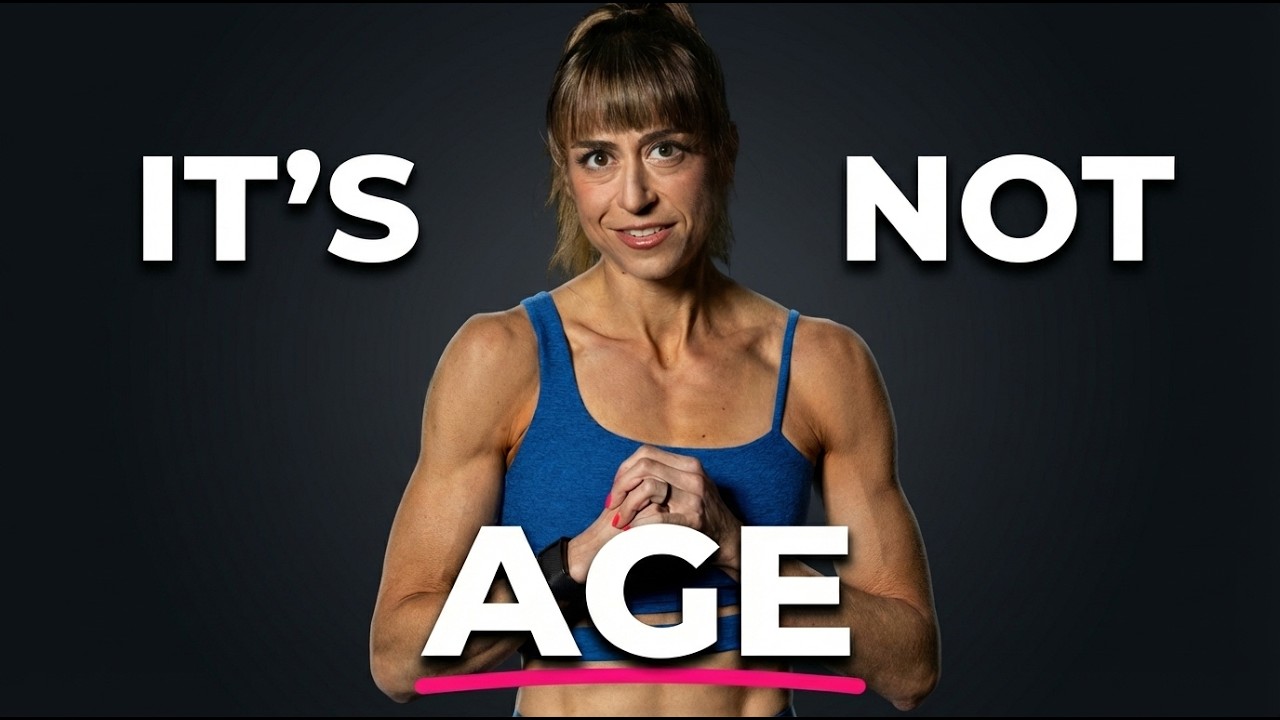
Aging isn’t the villain.
Our beliefs about aging usually are.
Yes, your physiology changes with time.
Your body isn’t the same at 50 as it was at 20.
But here’s the part we often forget:
Your muscles respond to tension NOT your birth year.
Your brain responds to challenge and learning, regardless of age.
Your bones respond to loading, at every decade of life.
Aging doesn’t erase your ability to grow, strengthen, adapt, or improve.
It simply changes the inputs your body needs to keep thriving.
You can let aging mean decline…
Or you can make this the chapter where you reclaim your strength, your confidence, and your capability.
You can let aging happen to you…
Or you can stay an active participant in your strength, your health, and your capability.
Choose effort. Choose consistency. Choose the habits that keep you living fully – not just longer, but better.
Ready to feel your most fabulous at any age? Click to learn more about my coaching and let me help!
–> LEARN MORE



0 Comments