The Foundation: Nutrition That Supports Fat Loss and Muscle
You can’t out-train a poor diet.
If you want the best and fastest fat loss results possible, your nutrition needs to support your training, not fight against it.

1. Create a Smaller Calorie Deficit
It’s tempting to do more—eat less, train harder, and push faster results.
But aggressive calorie deficits backfire, especially the closer you get to your goal.
They increase hunger, mood swings, muscle loss, hormonal disruption, and metabolic slowdown.
A smaller, sustainable deficit allows you to lose fat while preserving muscle—and actually stick with the plan.
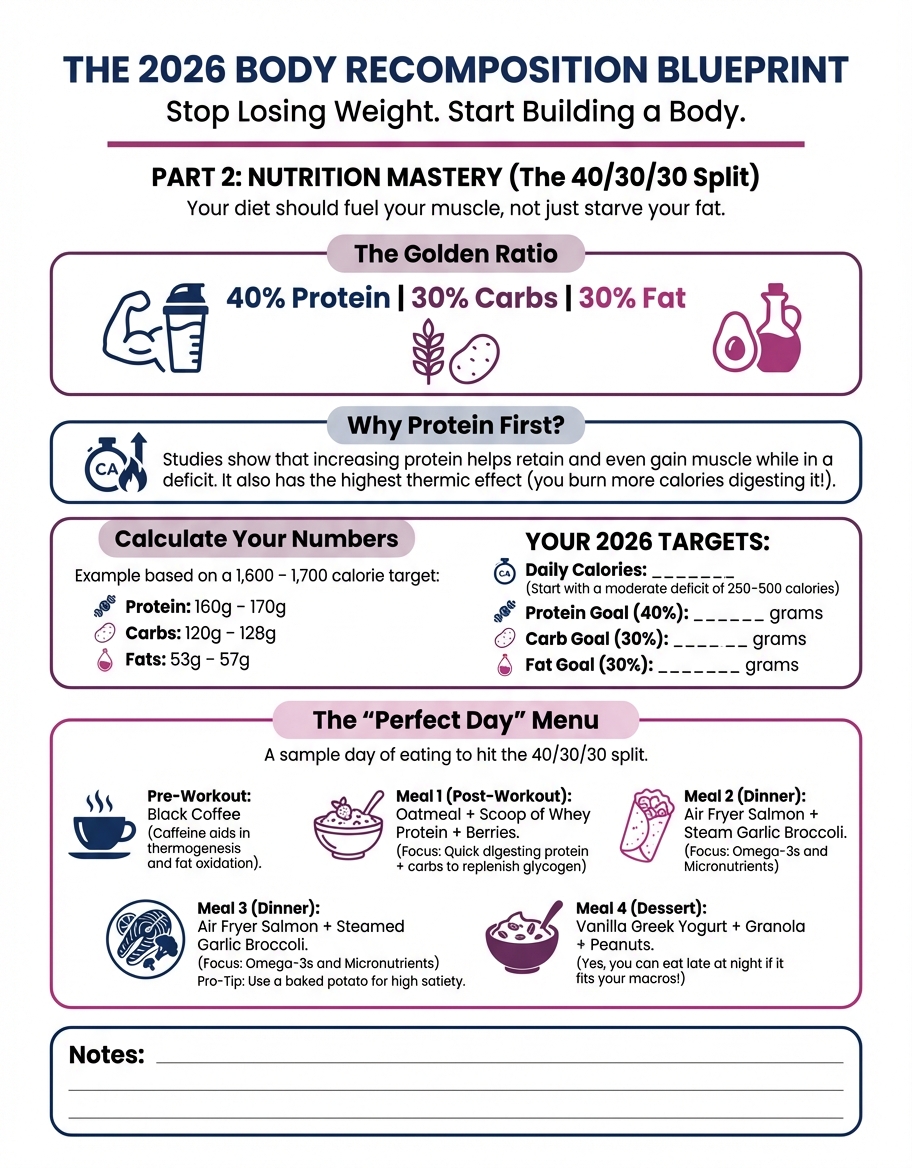
2. Prioritize Protein
While calories matter, protein changes everything.
Increasing protein intake has been shown to improve fat loss results, even during a calorie surplus, and helps preserve or even build muscle during a deficit.
Protein increases satiety, boosts energy expenditure through its thermic effect, and supports better body recomposition.
Adding protein won’t make you bulky—it may be exactly what helps you look leaner.
What This Looks Like in Real Life
When cutting, cycling macronutrient ratios every one to two weeks can be effective.
A common approach is a 40/30/30 split—40% protein, 30% carbs, 30% fat—within a calorie range of about 1,600–1,700 calories.
This typically equates to:
Keeping meals simple and repeating them throughout the week makes planning and grocery shopping easier.
Research suggests that excessive variety can actually promote overeating, while consistency supports adherence.
Including a few planned restaurant meals can also help you stay on track when life gets busy.
Meal Timing: What Actually Matters
There’s no magical meal timing strategy for fat loss. Six meals a day and intermittent fasting can both work—but only if they fit your schedule.
If you train early in the morning, fasting until the afternoon may hurt performance.
If you prefer sleeping in, forcing breakfast can lead to overeating later. Fuel based on your lifestyle.
A flexible approach works best: eat when hungry, fuel workouts appropriately, and focus on total daily intake.
Caffeine—especially from coffee—can enhance both cardio and strength performance and modestly increase fat loss through thermogenesis and fat oxidation.
For many, it’s the only pre-workout needed.
Structuring Meals for Performance and Recovery
Post-workout nutrition matters for recovery and muscle preservation.
Pairing fast-digesting protein with carbohydrates helps replenish glycogen and support muscle protein synthesis.
Simple, balanced meals—like oatmeal with whey protein and berries—are effective, filling, and easy to prepare.
Throughout the day, prioritizing lean proteins, whole-food carbs, healthy fats, and micronutrient-rich foods supports both performance and long-term results.
Including fish like salmon adds valuable nutrients such as vitamin D, B12, iodine, and selenium.
And yes—dessert can (and should) be included. Sustainability matters. Planning dessert into your macros can help prevent restriction-driven rebound eating.
Eating at night doesn’t cause fat gain if your overall calories and macros are on point.
Training for Fat Loss Without Losing Muscle
You can eat perfectly, but if your training doesn’t send the right signals, you’ll still lose muscle.
To look lean, you need to preserve—or even build—muscle while losing fat.
Too often, fat loss training shifts toward excessive cardio at the expense of strength.
While this can cause quick scale changes, it also leads to plateaus, softness, burnout, and rebound weight gain.
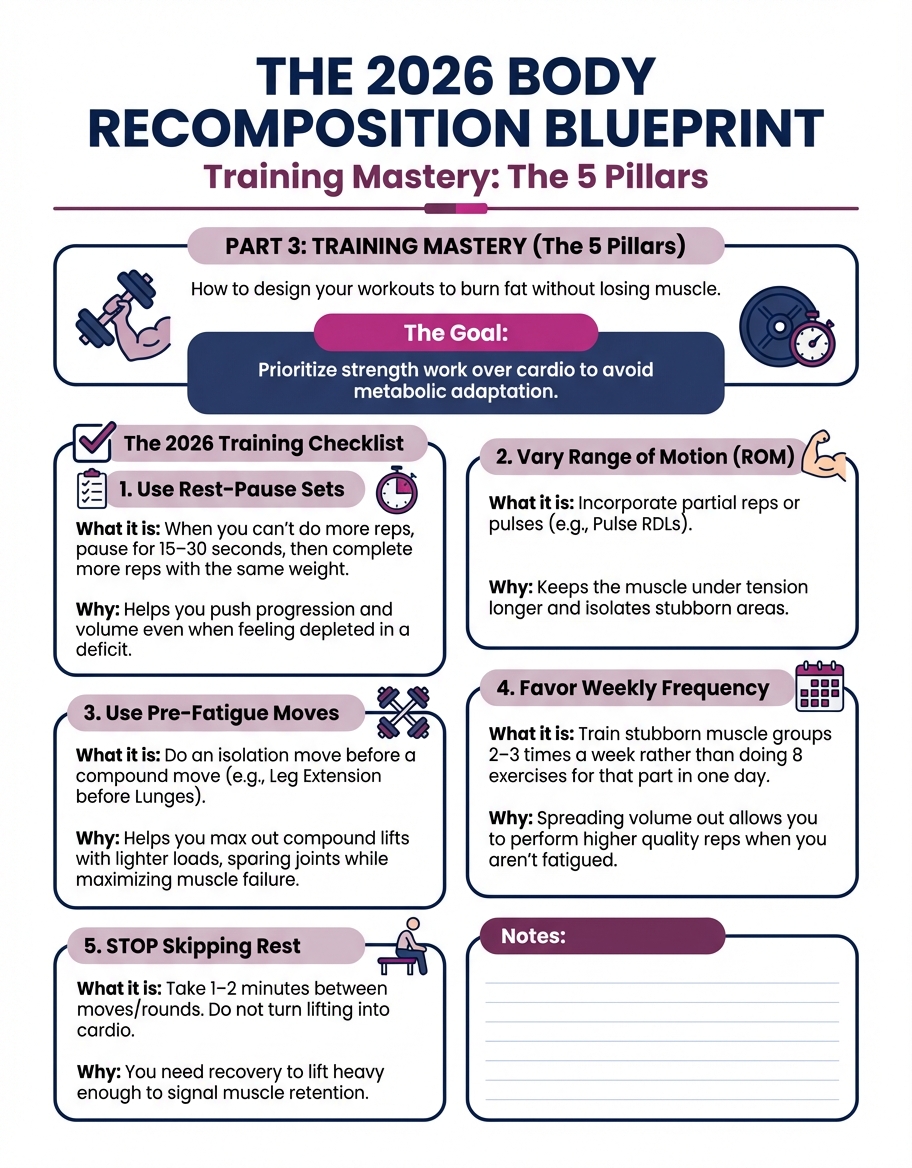
Here are five training strategies to help accelerate fat loss while maintaining lean muscle.
1. Use Rest-Pause Training
When progress stalls—especially in a calorie deficit—rest-pause sets can help you push progression without increasing load.
Perform reps to near failure, rest 15–30 seconds, then continue with the same weight for additional reps.
This allows you to maintain intensity and quality when energy is lower.
2. Manipulate Range of Motion
Progression isn’t just about adding weight. Increasing range of motion can improve mobility, strength, and muscle activation.
Partial reps and pulses can also increase time under tension and fatigue targeted muscles more effectively.
Combining full-range movements with partials helps maximize stimulus without excessive volume.
3. Use Pre-Fatigue Strategically
Isolation exercises performed before compound lifts can help stubborn muscles work closer to failure with lighter loads.
For example, leg extensions before squats can dramatically increase quad activation.
This approach is especially helpful during fat loss phases when recovery capacity is lower.
4. Favor Weekly Training Frequency
Instead of cramming excessive volume into one session, spread it across the week.
Training stubborn muscle groups two to three times weekly allows higher quality effort and better recovery.
You’ll get more out of fewer exercises performed with intention.
5. Don’t Skip Rest
Recovery is not optional.
Muscles rebuild during rest, not during workouts.
Skipping rest between sets turns strength training into cardio and compromises progression.
Allow adequate rest between sets and sessions to lift heavier, maintain performance, and avoid burnout.
The Big Picture
The faster you chase weight loss on the scale, the less you focus on true body recomposition.
As frustrating as it sounds, slow and steady wins—especially when muscle preservation is the goal.
Muscle is key to metabolic health and looking lean as you lose fat. The best results come from intentional training, smart nutrition, and consistency.
Let 2026 be the year you stop restarting. Build a body instead of chasing the scale—and everything changes.
–> Download The Recomp Guide




0 Comments